




Caulking Tools


 --%3E %3Csvg version='1.1' id='No-RB' xmlns='http://www.w3.org/2000/svg' xmlns:xlink='http://www.w3.org/1999/xlink' x='0px' y='0px' viewBox='0 0 100 100' enable-background='new 0 0 100 100' xml:space='preserve'%3E %3Cpath fill='%23CECECE' d='M79.44,0.95H20.56C9.78,0.95,0.95,9.78,0.95,20.56v58.87c0,10.79,8.82,19.61,19.61,19.61h58.87 c10.79,0,19.61-8.83,19.61-19.61V20.56C99.05,9.78,90.22,0.95,79.44,0.95z M65.38,58.24l9.38,29.58L49.69,69.78L24.5,87.82 l9.34-29.6L8.8,39.6l30.73-0.17c0,0,6.98-19.61,10-28.93c0.54,1.36,9.88,29.1,9.88,29.1H91.2L65.38,58.24z'/%3E %3C/svg%3E)


 --%3E %3Csvg version='1.1' id='Fill' xmlns='http://www.w3.org/2000/svg' xmlns:xlink='http://www.w3.org/1999/xlink' x='0px' y='0px' viewBox='0 0 100 100' enable-background='new 0 0 100 100' xml:space='preserve'%3E %3Cpath fill='%23F15C02' d='M79.44,0.95H20.56C9.78,0.95,0.95,9.78,0.95,20.56v58.87c0,10.79,8.82,19.61,19.61,19.61h58.87 c10.79,0,19.61-8.83,19.61-19.61V20.56C99.05,9.78,90.22,0.95,79.44,0.95z M65.38,58.24l9.38,29.58L49.69,69.78L24.5,87.82 l9.34-29.6L8.8,39.6l30.73-0.17c0,0,6.98-19.61,10-28.93c0.54,1.36,9.88,29.1,9.88,29.1H91.2L65.38,58.24z'/%3E %3C/svg%3E)


 --%3E %3Csvg version='1.1' id='With-RB' xmlns='http://www.w3.org/2000/svg' xmlns:xlink='http://www.w3.org/1999/xlink' x='0px' y='0px' viewBox='0 0 100 100' enable-background='new 0 0 100 100' xml:space='preserve'%3E %3Cpath fill='%23FBC8B4' d='M79.44,0.95H20.56C9.78,0.95,0.95,9.78,0.95,20.56v58.87c0,10.79,8.82,19.61,19.61,19.61h58.87 c10.79,0,19.61-8.83,19.61-19.61V20.56C99.05,9.78,90.22,0.95,79.44,0.95z M65.38,58.24l9.38,29.58L49.69,69.78L24.5,87.82 l9.34-29.6L8.8,39.6l30.73-0.17c0,0,6.98-19.61,10-28.93c0.54,1.36,9.88,29.1,9.88,29.1H91.2L65.38,58.24z'/%3E %3C/svg%3E)
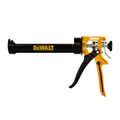


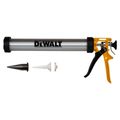
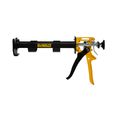
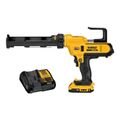
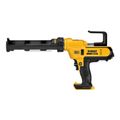


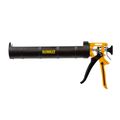
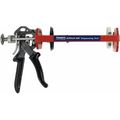


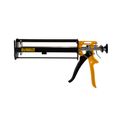


Caulking Tools are the guns and accessories used to apply sealants and adhesives from cartridges, ranging from basic manual triggers to cordless powered models. Manual guns remain the standard for most trade work, using a steel trigger and plunger mechanism to push product out of a standard cartridge. Cordless options, like a 10-ounce battery-powered caulk and adhesive gun, add consistent bead control for high-viscosity materials without the hand fatigue of repeated manual trigger pulls. Sausage-style guns handle larger, bag-style cartridges, commonly sized at 20 ounces, suited to high-volume jobs where reloading a smaller tube repeatedly slows work down. Specialty guns exist too, including 30-ounce firestop caulking guns built specifically for fire-rated sealant applications. Plumbers, HVAC installers, and general contractors rely on the right caulking tool to get consistent, even beads on everything from bathroom fixture sealing to firestop penetrations, where bead consistency directly affects both appearance and code compliance.
Subcategories
- Manual Caulking Guns: Manual caulking guns use a simple trigger and steel plunger to push sealant out of a standard cartridge, making them the most common style on job sites. A double-gripping power grip design adds a second gripping plate for smoother, more controlled bead application compared to a basic single-grip frame. Manual guns work with standard cartridge sizes and need no battery or air supply, which keeps them ready for quick touch-up work. Most trade professionals rely on a manual gun as a dependable backup to powered options.
- Cordless and Battery-Powered Caulking Guns: Cordless caulk and adhesive guns run on interchangeable power tool batteries, delivering consistent bead control for high-viscosity sealants and adhesives without manual trigger fatigue. A 10-ounce cordless gun fits standard cartridge sizes, making it a direct swap for a manual gun on the same job. Higher-powered cordless models push through thicker materials more smoothly than a manual trigger can manage over a long bead run. Cordless guns suit high-volume caulking days where hand fatigue from repeated manual triggering slows productivity.
- Sausage-Style Caulking Guns: Sausage-style guns load larger, bag-style cartridges rather than rigid tubes, with common sizes around 20 ounces holding more material than a standard cartridge. An aluminum barrel design handles the higher pressure needed to push product out of the flexible bag-style packaging. Sausage guns suit high-volume jobs where reloading a smaller cartridge repeatedly would slow down production. Commercial sealant and adhesive applications commonly spec sausage-style packaging to cut down on cartridge changes during large pours.
- Firestop and Specialty Caulking Guns: Specialty caulking guns, including 30-ounce firestop models, handle the higher-viscosity fire-rated sealants used to seal penetrations through fire-rated walls and floors. Larger cartridge capacity means fewer reloads when sealing multiple penetrations in a single mechanical room or corridor. Firestop applications require consistent, even beads to meet code and listing requirements, so a dedicated gun built for that viscosity range matters more than it does for standard caulk. Fire protection and mechanical contractors typically use a dedicated firestop gun separate from general-purpose caulking tools.
Buying Guide
Choosing a caulking gun starts with matching cartridge size to the sealant or adhesive, since manual and cordless guns typically fit common 10-ounce cartridges, while larger jobs call for a sausage-style gun built for bag-style cartridges. Material viscosity plays a role too: thicker sealants and adhesives push more smoothly through a cordless powered gun than through a manual trigger, especially over a long continuous bead where hand fatigue becomes a factor. Manual guns still make sense for occasional use, touch-up work, or jobs where carrying a battery adds unnecessary weight to a tool bag. Caulking Tools built for specialty applications, like firestop sealant, need a gun rated for that specific viscosity range, since standard guns may struggle to push thicker fire-rated compounds evenly. Bead consistency affects both appearance on finish work and code compliance on firestop penetrations, so a gun that delivers smooth, even pressure matters more on visible or inspected work than on rough-in tasks. Volume of daily use factors into the decision too: contractors running caulk guns all day benefit from a cordless model that reduces hand strain, while occasional use doesn't justify the added weight of a battery-powered tool. Frame material and trigger mechanism affect durability under repeated use, with steel triggers holding up better over time than lighter-duty plastic components. Matching cartridge size, viscosity rating, and frequency of use to the specific gun keeps beads consistent and reduces wasted material from an underpowered tool struggling through thick sealant.
Frequently Asked Questions
What is the difference between manual and cordless caulking guns?
Manual caulking guns use a hand-operated trigger and plunger to push sealant from a standard cartridge, while cordless guns run on power tool batteries to deliver consistent bead pressure without repeated manual squeezing. Cordless models help most on high-volume days or when working with thicker, high-viscosity materials.
What cartridge size fits a standard caulking gun?
Standard manual and cordless caulking guns typically fit 10-ounce cartridges, the most common size for construction and trade sealants. Larger sausage-style guns load bag-style cartridges around 20 ounces for higher-volume applications.
When is a sausage-style caulking gun the better choice?
Sausage-style guns suit high-volume jobs where reloading a standard cartridge repeatedly would slow down production, since the bag-style cartridge holds more material per load. Aluminum barrel construction on sausage guns handles the higher pressure needed to push the flexible packaging.
Why use a dedicated firestop caulking gun instead of a standard one?
Firestop sealants run thicker than standard caulk, and a dedicated firestop gun, often sized around 30 ounces, is built to push that higher-viscosity material evenly. Even beads matter for firestop work since penetration sealing has to meet code and listing requirements.
Does a cordless caulking gun improve bead consistency?
Cordless guns deliver steady, motor-driven pressure instead of the variable force of a manual trigger, which generally produces a more even bead over a long run. Consistent bead pressure matters most on visible finish work and on code-driven applications like firestop sealing.
