




Filters
SORT
Product Availability –
Brand –
Product Type –
Size –
Connection Type –
Length (Inches) –
Wall Thickness –
Review Score –
 --%3E %3Csvg version='1.1' id='Fill' xmlns='http://www.w3.org/2000/svg' xmlns:xlink='http://www.w3.org/1999/xlink' x='0px' y='0px' viewBox='0 0 100 100' enable-background='new 0 0 100 100' xml:space='preserve'%3E %3Cpath fill='%23F15C02' d='M79.44,0.95H20.56C9.78,0.95,0.95,9.78,0.95,20.56v58.87c0,10.79,8.82,19.61,19.61,19.61h58.87 c10.79,0,19.61-8.83,19.61-19.61V20.56C99.05,9.78,90.22,0.95,79.44,0.95z M65.38,58.24l9.38,29.58L49.69,69.78L24.5,87.82 l9.34-29.6L8.8,39.6l30.73-0.17c0,0,6.98-19.61,10-28.93c0.54,1.36,9.88,29.1,9.88,29.1H91.2L65.38,58.24z'/%3E %3C/svg%3E)
 --%3E %3Csvg version='1.1' id='With-RB' xmlns='http://www.w3.org/2000/svg' xmlns:xlink='http://www.w3.org/1999/xlink' x='0px' y='0px' viewBox='0 0 100 100' enable-background='new 0 0 100 100' xml:space='preserve'%3E %3Cpath fill='%23FBC8B4' d='M79.44,0.95H20.56C9.78,0.95,0.95,9.78,0.95,20.56v58.87c0,10.79,8.82,19.61,19.61,19.61h58.87 c10.79,0,19.61-8.83,19.61-19.61V20.56C99.05,9.78,90.22,0.95,79.44,0.95z M65.38,58.24l9.38,29.58L49.69,69.78L24.5,87.82 l9.34-29.6L8.8,39.6l30.73-0.17c0,0,6.98-19.61,10-28.93c0.54,1.36,9.88,29.1,9.88,29.1H91.2L65.38,58.24z'/%3E %3C/svg%3E)
Price Range –
Con-Stab Gas Fittings

 --%3E %3Csvg version='1.1' id='No-RB' xmlns='http://www.w3.org/2000/svg' xmlns:xlink='http://www.w3.org/1999/xlink' x='0px' y='0px' viewBox='0 0 100 100' enable-background='new 0 0 100 100' xml:space='preserve'%3E %3Cpath fill='%23CECECE' d='M79.44,0.95H20.56C9.78,0.95,0.95,9.78,0.95,20.56v58.87c0,10.79,8.82,19.61,19.61,19.61h58.87 c10.79,0,19.61-8.83,19.61-19.61V20.56C99.05,9.78,90.22,0.95,79.44,0.95z M65.38,58.24l9.38,29.58L49.69,69.78L24.5,87.82 l9.34-29.6L8.8,39.6l30.73-0.17c0,0,6.98-19.61,10-28.93c0.54,1.36,9.88,29.1,9.88,29.1H91.2L65.38,58.24z'/%3E %3C/svg%3E)

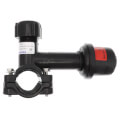
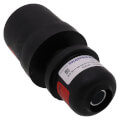

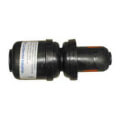
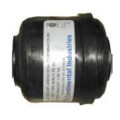
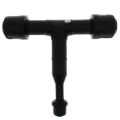
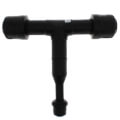
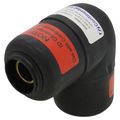
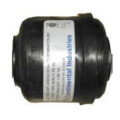
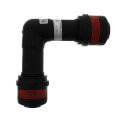
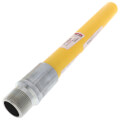
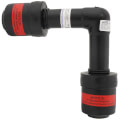
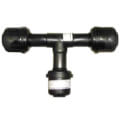
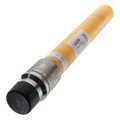
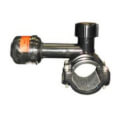
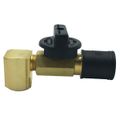
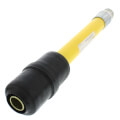
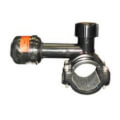
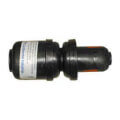
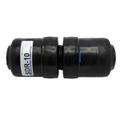
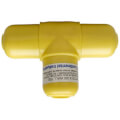
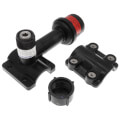

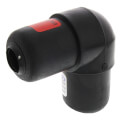
Con-Stab gas fittings are self-piercing connectors designed to terminate corrugated stainless steel gas tubing without the flaring, soldering, or threading that traditional gas connections require. A fitting of this style uses an internal probe that stabs through the corrugated wall of the tubing when the fitting is assembled, creating a mechanical and gas-tight seal in a single step. Plumbers and gas fitters use these connectors on appliance drops, meter set connections, and branch runs where flexible tubing routes gas piping through framing without the rigid bends that black iron pipe would require. Because the piercing action happens inside the fitting body, the technician does not need specialized flaring tools on site, which speeds up rough-in on jobs with several appliance connections. Correct tubing size and fitting selection matter here more than with most gas fittings, since a mismatched fitting will not seal properly against a tubing corrugation it was not designed for.
Subcategories
- Straight Connectors: Straight connectors join two lengths of corrugated gas tubing in a single run or terminate the tubing at a threaded appliance or shutoff valve connection. Each connector is sized to match the outside diameter of the specific corrugated tubing it is paired with, since the internal piercing mechanism depends on a precise fit. Gas fitters use straight connectors most often at appliance drops, where flexible tubing needs a clean transition to a rigid shutoff valve. Reusing a connector after disassembly is generally not recommended, since the piercing point does not reseal reliably a second time.
- Elbow and Tee Fittings: Elbow and tee fittings let a corrugated gas tubing run change direction or branch to feed a second appliance without cutting and re-terminating the tubing at every turn. Elbow and tee fittings use the same stab-style piercing connection as straight connectors, so the same tubing size and fit rules apply. Tee fittings are common on multi-appliance gas manifolds where one main trunk line feeds several branch runs to individual appliances. Matching fitting orientation to the actual framing layout before ordering avoids extra elbows or couplings added mid-job.
- Termination and Adapter Fittings: Termination fittings transition corrugated gas tubing to standard male or female pipe thread so it can connect to an appliance regulator, shutoff valve, or meter set assembly. Adapter fittings bridge between different tubing sizes when a main trunk line needs to step down to a smaller branch feeding an individual appliance. Both fitting types still rely on the internal piercing connection on the tubing side, with standard pipe thread on the appliance side. Applying thread sealant rated for gas service on the threaded end remains necessary even though the tubing side needs no additional sealant.
Buying Guide
Ordering the right Con-Stab gas fitting starts with confirming the exact outside diameter and corrugation pattern of the tubing already installed or specified for the job, since the internal piercing mechanism is built around a specific tubing profile and will not seal correctly on a mismatched size. Technicians new to stab-style gas fittings should also confirm local code acceptance before specifying them on a job, since some jurisdictions have specific listing or installation requirements for self-piercing gas connectors that differ from flared or threaded alternatives.
Planning the fitting count for a multi-appliance job means mapping out every branch and direction change before rough-in begins, since Con-Stab Gas Fittings are generally a one-time connection rather than a reusable one, and a miscounted order means a second trip for a missing elbow or tee. Keeping a small stock of the most common straight connectors and termination fittings on the truck reduces the odds of a job stalling over a single missing part. Pressure testing every stab-style connection after assembly is still standard practice, since a connector that was not fully seated during installation will not always show a visible sign of the problem before gas is introduced.
Frequently Asked Questions
How does a stab-style gas fitting create a seal without soldering?
An internal probe inside the fitting pierces through the corrugated wall of the gas tubing as the fitting is assembled, creating a mechanical connection that also forms the gas seal. No flame, solder, or separate sealant is applied to the tubing side of the connection. The threaded or appliance side of the fitting still uses standard thread sealant where applicable.
Can a Con-Stab fitting be reused after it is disassembled?
Reusing a fitting after the tubing has already been pierced is not recommended, since the piercing point does not reliably reseal on a second assembly. A new connector should be used any time a joint is broken apart for service or modification. Keeping spare connectors on hand for service calls avoids delays when a joint needs to be opened.
What tubing sizes work with these fittings?
Fittings are matched to specific corrugated tubing outside diameters and corrugation patterns, so confirming the exact tubing size before ordering is necessary for a proper seal. Mixing fitting sizes with an incompatible tubing profile will not create a reliable connection. Checking the tubing manufacturer's sizing chart alongside the fitting specification avoids a mismatch.
Are these fittings approved for use on all gas piping jobs?
Acceptance varies by local code and jurisdiction, so confirming approval with the local authority having jurisdiction before specifying stab-style fittings on a job is a necessary step. Some areas have specific listing requirements for self-piercing gas connectors that differ from flared or threaded fittings. Checking current code requirements before rough-in avoids a failed inspection.
How is a stab-style connection tested after installation?
A standard gas line pressure test, using soap solution or an electronic gas detector at each joint, confirms the connection sealed properly during assembly. A connector that was not fully seated during installation does not always show an obvious visual sign of the problem beforehand. Testing every joint, not just a sample, is standard practice on gas piping work regardless of fitting style.
