




Filters
SORT
Product Availability –
Size –
Review Score –
 --%3E %3Csvg version='1.1' id='Fill' xmlns='http://www.w3.org/2000/svg' xmlns:xlink='http://www.w3.org/1999/xlink' x='0px' y='0px' viewBox='0 0 100 100' enable-background='new 0 0 100 100' xml:space='preserve'%3E %3Cpath fill='%23F15C02' d='M79.44,0.95H20.56C9.78,0.95,0.95,9.78,0.95,20.56v58.87c0,10.79,8.82,19.61,19.61,19.61h58.87 c10.79,0,19.61-8.83,19.61-19.61V20.56C99.05,9.78,90.22,0.95,79.44,0.95z M65.38,58.24l9.38,29.58L49.69,69.78L24.5,87.82 l9.34-29.6L8.8,39.6l30.73-0.17c0,0,6.98-19.61,10-28.93c0.54,1.36,9.88,29.1,9.88,29.1H91.2L65.38,58.24z'/%3E %3C/svg%3E)
 --%3E %3Csvg version='1.1' id='With-RB' xmlns='http://www.w3.org/2000/svg' xmlns:xlink='http://www.w3.org/1999/xlink' x='0px' y='0px' viewBox='0 0 100 100' enable-background='new 0 0 100 100' xml:space='preserve'%3E %3Cpath fill='%23FBC8B4' d='M79.44,0.95H20.56C9.78,0.95,0.95,9.78,0.95,20.56v58.87c0,10.79,8.82,19.61,19.61,19.61h58.87 c10.79,0,19.61-8.83,19.61-19.61V20.56C99.05,9.78,90.22,0.95,79.44,0.95z M65.38,58.24l9.38,29.58L49.69,69.78L24.5,87.82 l9.34-29.6L8.8,39.6l30.73-0.17c0,0,6.98-19.61,10-28.93c0.54,1.36,9.88,29.1,9.88,29.1H91.2L65.38,58.24z'/%3E %3C/svg%3E)
Price Range –
Copper DWV Fittings



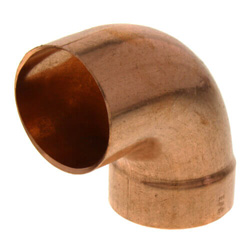
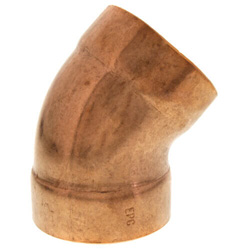
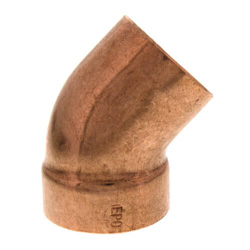


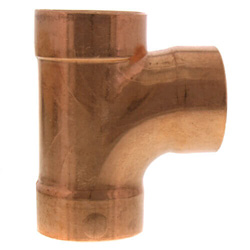


(FTG x C) (10)


(C x M) (2)



 --%3E %3Csvg version='1.1' id='No-RB' xmlns='http://www.w3.org/2000/svg' xmlns:xlink='http://www.w3.org/1999/xlink' x='0px' y='0px' viewBox='0 0 100 100' enable-background='new 0 0 100 100' xml:space='preserve'%3E %3Cpath fill='%23CECECE' d='M79.44,0.95H20.56C9.78,0.95,0.95,9.78,0.95,20.56v58.87c0,10.79,8.82,19.61,19.61,19.61h58.87 c10.79,0,19.61-8.83,19.61-19.61V20.56C99.05,9.78,90.22,0.95,79.44,0.95z M65.38,58.24l9.38,29.58L49.69,69.78L24.5,87.82 l9.34-29.6L8.8,39.6l30.73-0.17c0,0,6.98-19.61,10-28.93c0.54,1.36,9.88,29.1,9.88,29.1H91.2L65.38,58.24z'/%3E %3C/svg%3E)



Copper DWV fittings are the connectors plumbers use to join copper pipe in drain, waste, and vent systems throughout residential and commercial buildings. Because DWV lines carry wastewater and sewer gas rather than pressurized water, these fittings use a wider sweep and larger radius than pressure-rated copper fittings, which cuts down on clogs and lets gases vent freely. Contractors reach for copper DWV fittings when a job calls for corrosion resistance, a long service life, and compatibility with existing copper stacks in older buildings. Common styles include couplings, wyes, tees, elbows, and adapters that transition to cast iron, PVC, or no-hub connections. Copper's rigidity also makes it practical in exposed runs or tight mechanical rooms where support spacing matters. Picking the right fitting comes down to matching pipe diameter, sweep angle, and connection method to the rest of the DWV system.
Subcategories
- Copper DWV Couplings: Couplings join two straight lengths of copper DWV pipe in a stack or branch line without changing direction. Plumbers use them for repairs, extensions, and mid-run connections where the pipe continues straight through. Slip couplings allow for some axial movement during installation, which helps when working around existing framing. They stay stocked on any repipe or remodel job involving copper drainage.
- Copper DWV Wyes and Tees: Wyes and tees let a branch line tie into a main stack at an angle that keeps waste flowing smoothly toward the sewer or vent. A wye's sweeping branch reduces turbulence compared to a straight tee, which is why plumbing codes often call for wyes on drainage lines and reserve tees for vent-only connections. Contractors choose between sanitary tees and wyes based on whether the fitting carries waste or just vents air. Getting this choice right keeps a system code compliant and less prone to backups.
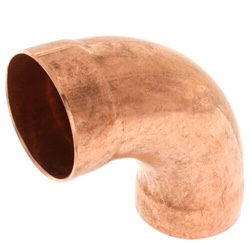
- Copper DWV Elbows: Elbows change the direction of a DWV run, most commonly in wide and tight sweep angles. A long-sweep elbow moves waste around a corner with less resistance than a short-turn fitting, making it the preferred choice on horizontal drain lines. Vertical stacks typically use tighter-radius elbows since gravity does more of the work there. Plumbers keep a mix of sweep angles on hand to route around joists, beams, and other obstructions.
- Copper DWV Adapters and Transition Fittings: Adapters let a copper DWV system tie into a different pipe material, such as cast iron, PVC, or a no-hub connection at a cleanout or stack termination. Renovation jobs often need this kind of transition when new copper branch lines feed an older cast iron main. Choosing the correct transition fitting prevents leaks at the joint and keeps the connection code compliant. Matching outside diameters between the two pipe materials is the key step before selecting an adapter.
Buying Guide
Selecting copper DWV fittings starts with confirming pipe diameter, since DWV sizing runs larger than supply-line copper and mismatched fittings will not seat properly. Matching the fitting diameter to the pipe on hand comes before comparing sweep angles or connection styles. Next, consider whether the fitting carries waste, vents air, or both, since local plumbing code often dictates where a wye is required instead of a tee. A sanitary tee that ends up on a horizontal drain run instead of a vertical vent stack can create a code violation and a slower-draining line, so checking local requirements before ordering saves a return trip to the supply counter.
Connection method matters as much as fitting shape. Copper DWV fittings are typically soldered, which calls for clean, dry pipe ends and the right flux and solder for drain applications. A tight mechanical room or an occupied building may call for slip fittings instead, since they avoid an open flame. Sweep radius is another factor: long-sweep elbows and wyes reduce turbulence and lower the chance of clogs, which matters most on horizontal runs carrying solids.
Renovation and repair jobs often connect new copper branch lines to existing cast iron or PVC systems, so keeping a stock of adapter fittings on hand avoids a mid-job supply run. Buying DWV fittings in the sizes and sweep angles a crew uses most often, rather than one-off as needed, keeps common repairs moving without delay. Copper's long track record in drainage systems also makes it a safe match for older buildings still running original copper stacks.
Frequently Asked Questions
What is the difference between a copper DWV wye and a sanitary tee?
A wye branches off a main line at a sweeping angle, which keeps waste flowing smoothly and is required on most horizontal drain connections. A sanitary tee has a tighter turn and is generally limited to vent connections or vertical stacks where code allows it. Using a tee where a wye is required can trap waste and violate local plumbing code.
Can copper DWV fittings connect to a cast iron stack?
Yes, with the right transition fitting or a no-hub coupling designed to bridge the two materials. The connection needs matching outside diameters and a properly rated coupling gasket. Renovation jobs commonly need this kind of transition when new copper branch lines feed an older cast iron main.
Why do copper DWV fittings use wider sweeps than supply fittings?
DWV systems rely on gravity rather than pressure to move waste, so a wide sweep keeps solids and liquids flowing without creating a spot where debris can catch. A tighter turn built for pressurized water would slow drainage and raise the risk of clogs in a DWV line. Wider sweeps also help sewer gas vent out through the stack instead of collecting at a sharp bend.
Are copper DWV fittings soldered or mechanically joined?
Most copper DWV fittings are soldered using flux and solder rated for drain applications, though slip and compression styles are available for jobs where an open flame is not practical. The joining method should match the rest of the system so pressure ratings and code requirements stay consistent. Mixing joint types on the same run is generally avoided unless a proper adapter is used.
How do I match a copper DWV fitting to an existing stack?
Start by measuring the outside diameter of the existing pipe, since DWV sizing is based on nominal pipe size rather than the copper tubing sizes used for supply lines. Confirm whether the connection point carries waste or only vents air, since that determines whether a wye or tee is appropriate. A local plumbing supply counter can confirm fitting compatibility for older or nonstandard stacks.
