




Filters
SORT
Product Availability –
Brand –
Product Type –
Diameter –
Arbor –
Blade Material –
RPM –
Review Score –
 --%3E %3Csvg version='1.1' id='Fill' xmlns='http://www.w3.org/2000/svg' xmlns:xlink='http://www.w3.org/1999/xlink' x='0px' y='0px' viewBox='0 0 100 100' enable-background='new 0 0 100 100' xml:space='preserve'%3E %3Cpath fill='%23F15C02' d='M79.44,0.95H20.56C9.78,0.95,0.95,9.78,0.95,20.56v58.87c0,10.79,8.82,19.61,19.61,19.61h58.87 c10.79,0,19.61-8.83,19.61-19.61V20.56C99.05,9.78,90.22,0.95,79.44,0.95z M65.38,58.24l9.38,29.58L49.69,69.78L24.5,87.82 l9.34-29.6L8.8,39.6l30.73-0.17c0,0,6.98-19.61,10-28.93c0.54,1.36,9.88,29.1,9.88,29.1H91.2L65.38,58.24z'/%3E %3C/svg%3E)
Price Range –
Cut-Off Saws & Discs


 --%3E %3Csvg version='1.1' id='No-RB' xmlns='http://www.w3.org/2000/svg' xmlns:xlink='http://www.w3.org/1999/xlink' x='0px' y='0px' viewBox='0 0 100 100' enable-background='new 0 0 100 100' xml:space='preserve'%3E %3Cpath fill='%23CECECE' d='M79.44,0.95H20.56C9.78,0.95,0.95,9.78,0.95,20.56v58.87c0,10.79,8.82,19.61,19.61,19.61h58.87 c10.79,0,19.61-8.83,19.61-19.61V20.56C99.05,9.78,90.22,0.95,79.44,0.95z M65.38,58.24l9.38,29.58L49.69,69.78L24.5,87.82 l9.34-29.6L8.8,39.6l30.73-0.17c0,0,6.98-19.61,10-28.93c0.54,1.36,9.88,29.1,9.88,29.1H91.2L65.38,58.24z'/%3E %3C/svg%3E)
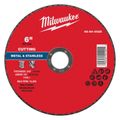
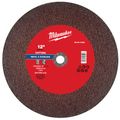
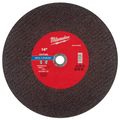
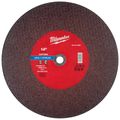
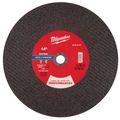
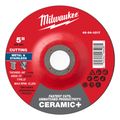
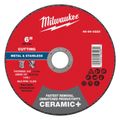
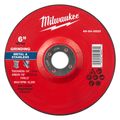
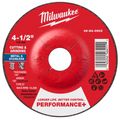

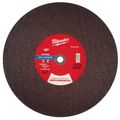
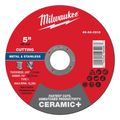
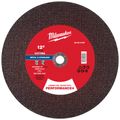

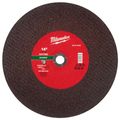
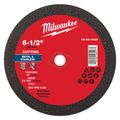
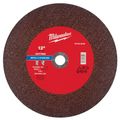
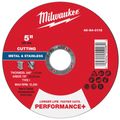
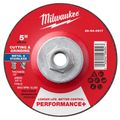

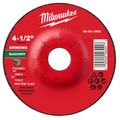


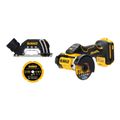
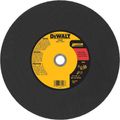

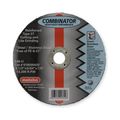

Cut-Off Saws & Discs cut through metal pipe, rebar, angle iron, and similar stock using a high-speed abrasive wheel instead of a toothed blade. Stationary chop saws commonly run a 14 inch diameter disc, and these larger discs carry a maximum operating speed rating of 4,400 RPM, well below the speed ratings used on smaller handheld cutting wheels. Arbor sizes vary by disc diameter and saw type, with stationary chop and gas-saw wheels typically bored to a 1 inch or 20mm center hole while handheld angle grinder wheels use a 7/8 inch bore. Every abrasive disc in this category includes internal fiberglass mesh reinforcement bonded through the resin body, a safety feature that helps contain the wheel if it fractures during use. Plumbers and HVAC installers rely on cut-off saws for fast, square cuts on steel and copper pipe, threaded rod, and strut where a band saw or reciprocating saw would be slower or less precise on site.
Subcategories
- Abrasive Chop Saws: Stationary abrasive chop saws mount a 14 inch disc on a pivoting arm and are built for shop or job-site cutting of steel pipe, rebar, and structural stock. Rated disc speed on these units tops out around 4,400 RPM to match the larger wheel diameter safely. Contractors use them where repeated, high-volume cutting of ferrous material is needed.
- Cut-Off Discs for Chop Saws: These are the 14 inch replacement wheels sized for stationary chop saws, built with a 1 inch or 20mm arbor bore to match the saw spindle. Fiberglass mesh reinforcement inside the resin bond helps the wheel hold together under load. Techs keep spares on hand since abrasive discs wear down and need replacement more often than the saw itself.
- Handheld Cutting Wheels: Smaller cutting wheels sized 4.5 inch to 5 inch fit angle grinders and use a 7/8 inch arbor bore in most cases. Installers reach for these for on-the-fly cuts on pipe, strut, or brackets where hauling a full chop saw to the work area isn't practical. Handheld wheels run at much higher RPM ratings than stationary chop saw discs given their smaller diameter.
- Die Grinder Cutting Discs: Compact 2 inch cutting discs with a 3/8 inch arbor are built for die grinders and rated for speeds up to 30,000 RPM. These see use on detail cutting jobs in tight spaces where a full-size grinder or chop saw won't fit. The small diameter allows the much higher RPM rating compared to larger discs.
Buying Guide
Match the disc diameter to the saw or grinder it's going on, since a wheel rated for one tool's arbor and maximum RPM isn't safe to force onto another. Stationary Cut-Off Saws & Discs typically run a 14 inch wheel with a 1 inch or 20mm arbor bore and a maximum rated speed around 4,400 RPM, while handheld angle grinder wheels use a smaller 7/8 inch bore and run at higher RPM ratings appropriate to their smaller diameter. Never install a disc rated for a lower RPM than the tool's no-load speed, since an overspeed wheel is a safety hazard that can fail during a cut. Consider the material being cut next: ferrous metal like steel pipe or rebar calls for a standard aluminum oxide or similar abrasive wheel, while stainless steel or other specialty alloys may call for a disc formulated to reduce heat buildup and discoloration. Confirm every wheel carries fiberglass mesh reinforcement bonded into the resin body, since this reinforcement is what keeps a cracked or worn disc from flying apart rather than just crumbling. For job sites doing high-volume cutting, a stationary chop saw with a supply of spare 14 inch discs cuts faster and more consistently than repeated handheld cuts, while a handheld wheel and grinder combination stays more practical for occasional or awkward-position cuts.
Frequently Asked Questions
What size disc does a typical stationary chop saw use?
Most stationary abrasive chop saws use a 14 inch diameter disc with a 1 inch or 20mm arbor bore. Confirming the arbor size before ordering replacement discs avoids a mismatch with the saw spindle.
What's the maximum RPM rating on a 14 inch cut-off disc?
Standard 14 inch chop saw discs carry a maximum operating speed rating around 4,400 RPM. Exceeding this rating on any tool setup is a safety risk and should never be done.
Can a handheld angle grinder wheel be used on a stationary chop saw?
No, handheld wheels are sized differently, typically with a 7/8 inch arbor bore versus the 1 inch or 20mm bore on stationary saw discs. The two aren't interchangeable without an adapter rated for that specific conversion, and mismatched discs shouldn't be forced onto a different arbor size.
Why does a cutting disc need fiberglass mesh reinforcement?
The fiberglass mesh is bonded inside the resin body of the wheel and helps contain the disc if it cracks or fails during a cut. Every disc in current production for cut-off saws and grinders includes this reinforcement layer for that reason.
What arbor size do die grinder cutting discs use?
Small 2 inch die grinder cutting discs commonly use a 3/8 inch arbor and are rated for speeds up to 30,000 RPM. Their compact size suits detail work and tight-space cutting that a full-size saw or grinder can't reach.
