




Filters
SORT
Product Availability –
Size –
Max Pressure (PSI) –
Review Score –
 --%3E %3Csvg version='1.1' id='Fill' xmlns='http://www.w3.org/2000/svg' xmlns:xlink='http://www.w3.org/1999/xlink' x='0px' y='0px' viewBox='0 0 100 100' enable-background='new 0 0 100 100' xml:space='preserve'%3E %3Cpath fill='%23F15C02' d='M79.44,0.95H20.56C9.78,0.95,0.95,9.78,0.95,20.56v58.87c0,10.79,8.82,19.61,19.61,19.61h58.87 c10.79,0,19.61-8.83,19.61-19.61V20.56C99.05,9.78,90.22,0.95,79.44,0.95z M65.38,58.24l9.38,29.58L49.69,69.78L24.5,87.82 l9.34-29.6L8.8,39.6l30.73-0.17c0,0,6.98-19.61,10-28.93c0.54,1.36,9.88,29.1,9.88,29.1H91.2L65.38,58.24z'/%3E %3C/svg%3E)
Price Range –
Dual Check Vacuum Breakers (Watts LFN9)



 --%3E %3Csvg version='1.1' id='No-RB' xmlns='http://www.w3.org/2000/svg' xmlns:xlink='http://www.w3.org/1999/xlink' x='0px' y='0px' viewBox='0 0 100 100' enable-background='new 0 0 100 100' xml:space='preserve'%3E %3Cpath fill='%23CECECE' d='M79.44,0.95H20.56C9.78,0.95,0.95,9.78,0.95,20.56v58.87c0,10.79,8.82,19.61,19.61,19.61h58.87 c10.79,0,19.61-8.83,19.61-19.61V20.56C99.05,9.78,90.22,0.95,79.44,0.95z M65.38,58.24l9.38,29.58L49.69,69.78L24.5,87.82 l9.34-29.6L8.8,39.6l30.73-0.17c0,0,6.98-19.61,10-28.93c0.54,1.36,9.88,29.1,9.88,29.1H91.2L65.38,58.24z'/%3E %3C/svg%3E)



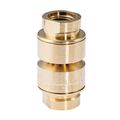


Dual Check Vacuum Breakers (Watts LFN9) protect potable water supplies from backflow contamination on hose bibbs, sillcocks, and similar low hazard connections by combining a dual check valve with an atmospheric vent. Installed directly on a hose connection or supply line, this style of backflow preventer stops contaminated water or chemicals from being siphoned back into the potable system if pressure drops or a hose is left submerged in a bucket or pool. Contractors specify this device on outdoor spigots, utility sinks, and similar fixtures where a hose connection creates a cross connection risk. Because it combines two independent check valves with an air gap vent, it offers a level of protection beyond a single check valve alone, without the size or complexity of a reduced pressure zone assembly. Correct installation orientation is important, since the vent needs to remain unobstructed to function as designed.
Subcategories
- Hose Bibb Vacuum Breakers: These attach directly to a standard hose bibb thread, providing backflow protection any time a hose is connected for watering, washing, or filling. Plumbers commonly add these during new construction or as an upgrade on older homes that lack any backflow protection at outdoor spigots.
- Sillcock Vacuum Breakers: Some sillcock designs integrate the dual check and vent function directly into the fixture body rather than as an add-on device, simplifying installation on new work. Contractors replacing an older sillcock often upgrade to one of these integrated units to meet current backflow prevention requirements in a single fixture.
- Replacement Parts & Repair Kits: Internal check components and vent parts wear out over time from repeated use and exposure to outdoor conditions, and rebuild kits let a technician restore function without replacing the entire device. Checking the vent for obstruction or debris is often the first troubleshooting step before ordering a full repair kit.
- Threaded Connection Accessories: Adapters and fittings help match the vacuum breaker's threads to non-standard hose bibb or sillcock connections found on older fixtures. Keeping a small assortment of these on hand avoids a return trip when a fixture's threads don't match the standard hose thread pattern.
Buying Guide
Selecting the correct dual check vacuum breaker starts with confirming it's rated for the intended application, since these devices are designed for low hazard cross connections like hose bibbs and utility sinks rather than higher hazard situations such as chemical injection or irrigation systems with fertilizer feeders, which call for a reduced pressure zone assembly instead. Using the wrong backflow device for the hazard level can leave a system without adequate protection even though something is installed.
Dual Check Vacuum Breakers (Watts LFN9) mount directly onto a threaded hose bibb or sillcock connection, so confirming thread compatibility before purchase avoids needing an adapter on-site. Orientation matters at installation, since the vent needs clear airflow to function; mounting the device in a location where it could be submerged or blocked defeats the purpose of the vent entirely.
Local plumbing codes may specify where dual check devices are required versus where a different backflow prevention method is called for, so checking the applicable code before a job is worth the extra step, especially on new construction or fixture replacements tied to an inspection. Keeping a stock of common thread sizes and a few repair kits on hand covers most residential and light commercial hose bibb and sillcock jobs without a special order.
Frequently Asked Questions
When is a dual check vacuum breaker required instead of a reduced pressure zone assembly?
Dual check vacuum breakers are intended for low hazard cross connections such as hose bibbs and utility sinks, while higher hazard situations like chemical injection systems or irrigation setups with fertilizer feeders typically require a reduced pressure zone assembly. Local plumbing codes ultimately determine which device is required for a given application.
Why does the vent on a dual check vacuum breaker need to stay unobstructed?
The vent is what allows air to enter the device if pressure drops, breaking any siphon effect that could pull contaminated water back into the potable supply. A vent that's blocked, submerged, or painted over can't perform this function even if the check valves themselves are working correctly.
How often should a dual check vacuum breaker be inspected?
These devices generally hold up well with minimal maintenance, but an annual visual check for debris around the vent and confirmation that water isn't leaking from the vent opening during normal use catches most developing issues early. Homes with heavy outdoor hose use may benefit from a mid-season check as well.
Can a dual check vacuum breaker be installed on any hose bibb?
It needs to thread onto a standard hose bibb connection, so older or nonstandard fixtures may need a thread adapter first. Confirming thread compatibility before the job avoids an extra trip for the correct adapter.
What causes water to drip from the vent opening during normal use?
A small amount of dripping during pressure fluctuations can be normal for this device design, but continuous or heavy dripping usually means a worn internal check component needs replacement. A repair kit typically resolves this without replacing the entire unit.
