




Filters
SORT
Product Availability –
Category –
Product Type –
Voltage –
Phase –
Review Score –
 --%3E %3Csvg version='1.1' id='Fill' xmlns='http://www.w3.org/2000/svg' xmlns:xlink='http://www.w3.org/1999/xlink' x='0px' y='0px' viewBox='0 0 100 100' enable-background='new 0 0 100 100' xml:space='preserve'%3E %3Cpath fill='%23F15C02' d='M79.44,0.95H20.56C9.78,0.95,0.95,9.78,0.95,20.56v58.87c0,10.79,8.82,19.61,19.61,19.61h58.87 c10.79,0,19.61-8.83,19.61-19.61V20.56C99.05,9.78,90.22,0.95,79.44,0.95z M65.38,58.24l9.38,29.58L49.69,69.78L24.5,87.82 l9.34-29.6L8.8,39.6l30.73-0.17c0,0,6.98-19.61,10-28.93c0.54,1.36,9.88,29.1,9.88,29.1H91.2L65.38,58.24z'/%3E %3C/svg%3E)
 --%3E %3Csvg version='1.1' id='With-RB' xmlns='http://www.w3.org/2000/svg' xmlns:xlink='http://www.w3.org/1999/xlink' x='0px' y='0px' viewBox='0 0 100 100' enable-background='new 0 0 100 100' xml:space='preserve'%3E %3Cpath fill='%23FBC8B4' d='M79.44,0.95H20.56C9.78,0.95,0.95,9.78,0.95,20.56v58.87c0,10.79,8.82,19.61,19.61,19.61h58.87 c10.79,0,19.61-8.83,19.61-19.61V20.56C99.05,9.78,90.22,0.95,79.44,0.95z M65.38,58.24l9.38,29.58L49.69,69.78L24.5,87.82 l9.34-29.6L8.8,39.6l30.73-0.17c0,0,6.98-19.61,10-28.93c0.54,1.36,9.88,29.1,9.88,29.1H91.2L65.38,58.24z'/%3E %3C/svg%3E)
Price Range –
Duplex Control Panels


 --%3E %3Csvg version='1.1' id='No-RB' xmlns='http://www.w3.org/2000/svg' xmlns:xlink='http://www.w3.org/1999/xlink' x='0px' y='0px' viewBox='0 0 100 100' enable-background='new 0 0 100 100' xml:space='preserve'%3E %3Cpath fill='%23CECECE' d='M79.44,0.95H20.56C9.78,0.95,0.95,9.78,0.95,20.56v58.87c0,10.79,8.82,19.61,19.61,19.61h58.87 c10.79,0,19.61-8.83,19.61-19.61V20.56C99.05,9.78,90.22,0.95,79.44,0.95z M65.38,58.24l9.38,29.58L49.69,69.78L24.5,87.82 l9.34-29.6L8.8,39.6l30.73-0.17c0,0,6.98-19.61,10-28.93c0.54,1.36,9.88,29.1,9.88,29.1H91.2L65.38,58.24z'/%3E %3C/svg%3E)
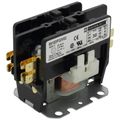

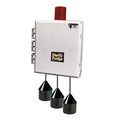
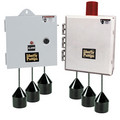
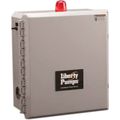

Duplex control panels operate two pumps working together in a single sump, sewage, or effluent pump station, alternating which pump runs first on each cycle to distribute wear evenly between them. If the lead pump can't keep up with incoming flow or fails outright, the panel automatically brings the second pump online, providing a built-in backup that a single-pump system doesn't offer. These panels typically include float switches or pressure sensors to detect water level, along with alarms that alert a property owner or facility manager to a high-water condition or pump failure. Duplex panels are common in commercial buildings, multi-family properties, and any application where pump failure would create a significant risk of flooding or sewage backup. Selecting a panel rated for the specific pump horsepower and voltage keeps the system operating safely and within its designed capacity.
Subcategories
- Simplex-to-Duplex Conversion Panels: Some duplex panels are designed specifically to upgrade an existing single-pump, or simplex, station into a two-pump system without replacing the entire basin or wiring infrastructure. These conversion panels simplify adding pump redundancy to a station that was originally built with only one pump in mind. Confirming the basin has enough physical room for a second pump is an important step before selecting a conversion panel. This approach can be more economical than replacing an entire pump station just to add backup capacity.
- Alternating Relay Panels: Alternating relay panels use an internal relay to switch which pump serves as the lead unit on each pumping cycle, spreading wear evenly across both pumps over time. Without this alternation, one pump would handle the bulk of the workload while the other sat idle except during high-flow events, shortening the primary pump's service life. Some alternating panels also allow manual override to run a specific pump for testing or troubleshooting purposes. Even wear distribution like this is one of the main advantages a duplex system offers over a simplex setup.
- Panels with Alarm Systems: Panels equipped with alarm systems add audible and visual warnings that activate when water reaches a high level or when a pump fails to respond as expected. Many models also include a set of dry contacts that can connect to a building's monitoring or building management system for remote notification. Early warning from an alarm gives a property manager time to call for service before a high-water condition turns into an overflow. Testing the alarm function periodically confirms it will work when actually needed.
- Float Switches and Level Controls: Float switches and other level controls tell the duplex panel when to start the lead pump, when to bring on the backup pump, and when to trigger a high-water alarm. Mechanical float switches remain a common, reliable choice, though some panels use pressure transducers or electronic level sensors for a similar function. Replacing a stuck or fouled float switch promptly prevents a pump from running dry or failing to start when needed. Keeping spare float switches on hand supports quick repairs on service calls involving pump station downtime.
Buying Guide
Match the panel's electrical rating to the specific pumps it will control, checking horsepower, voltage, and amperage requirements against the panel's specifications before ordering. An undersized panel can't safely run the pumps it's paired with, while an oversized one adds unnecessary cost.
Decide whether alarm functionality is a requirement for the application. Commercial buildings and properties where flooding or sewage backup carries significant risk generally benefit from a duplex control panel with both audible and visual alarms, along with dry contacts for remote monitoring.
Consider the basin and wiring layout when choosing between a full duplex system and a simplex-to-duplex conversion panel. Conversion panels can add pump redundancy to an existing single-pump station without a full basin replacement, provided there's room for the second pump.
Check what type of level control the panel uses. Mechanical float switches are widely used and straightforward to service, while electronic level sensors can offer more precise control in some applications.
Finally, confirm the panel includes manual pump testing or override functionality, since this feature makes routine maintenance and troubleshooting considerably easier without needing to wait for an actual high-flow event to test each pump.
Frequently Asked Questions
What's the difference between a simplex and duplex control panel?
A simplex panel controls a single pump, while a duplex panel controls two pumps and alternates which one runs first on each cycle, providing built-in backup if one pump fails or can't keep up with flow.
Can an existing simplex pump station be upgraded to duplex?
Yes, some conversion panels are designed to add a second pump and duplex control to an existing simplex station, provided the basin has enough physical room for the additional pump.
Why do duplex panels alternate the lead pump?
Alternating which pump runs first on each cycle distributes wear evenly between both pumps, helping avoid a situation where one pump handles most of the workload while the other sits idle.
Do duplex control panels include alarms?
Many duplex panels include audible and visual alarms that activate during a high-water condition or pump failure, and some also offer dry contacts for connecting to a remote monitoring system.
What type of level control do duplex panels use?
Most duplex panels use mechanical float switches to detect water level, though some models use pressure transducers or electronic sensors for similar functionality.
