




Filters
SORT
Product Availability –
Brand –
Phase –
Voltage –
Wattage –
Review Score –
 --%3E %3Csvg version='1.1' id='Fill' xmlns='http://www.w3.org/2000/svg' xmlns:xlink='http://www.w3.org/1999/xlink' x='0px' y='0px' viewBox='0 0 100 100' enable-background='new 0 0 100 100' xml:space='preserve'%3E %3Cpath fill='%23F15C02' d='M79.44,0.95H20.56C9.78,0.95,0.95,9.78,0.95,20.56v58.87c0,10.79,8.82,19.61,19.61,19.61h58.87 c10.79,0,19.61-8.83,19.61-19.61V20.56C99.05,9.78,90.22,0.95,79.44,0.95z M65.38,58.24l9.38,29.58L49.69,69.78L24.5,87.82 l9.34-29.6L8.8,39.6l30.73-0.17c0,0,6.98-19.61,10-28.93c0.54,1.36,9.88,29.1,9.88,29.1H91.2L65.38,58.24z'/%3E %3C/svg%3E)
 --%3E %3Csvg version='1.1' id='With-RB' xmlns='http://www.w3.org/2000/svg' xmlns:xlink='http://www.w3.org/1999/xlink' x='0px' y='0px' viewBox='0 0 100 100' enable-background='new 0 0 100 100' xml:space='preserve'%3E %3Cpath fill='%23FBC8B4' d='M79.44,0.95H20.56C9.78,0.95,0.95,9.78,0.95,20.56v58.87c0,10.79,8.82,19.61,19.61,19.61h58.87 c10.79,0,19.61-8.83,19.61-19.61V20.56C99.05,9.78,90.22,0.95,79.44,0.95z M65.38,58.24l9.38,29.58L49.69,69.78L24.5,87.82 l9.34-29.6L8.8,39.6l30.73-0.17c0,0,6.98-19.61,10-28.93c0.54,1.36,9.88,29.1,9.88,29.1H91.2L65.38,58.24z'/%3E %3C/svg%3E)
Price Range –
Electric Ceiling & Wall Heaters


 --%3E %3Csvg version='1.1' id='No-RB' xmlns='http://www.w3.org/2000/svg' xmlns:xlink='http://www.w3.org/1999/xlink' x='0px' y='0px' viewBox='0 0 100 100' enable-background='new 0 0 100 100' xml:space='preserve'%3E %3Cpath fill='%23CECECE' d='M79.44,0.95H20.56C9.78,0.95,0.95,9.78,0.95,20.56v58.87c0,10.79,8.82,19.61,19.61,19.61h58.87 c10.79,0,19.61-8.83,19.61-19.61V20.56C99.05,9.78,90.22,0.95,79.44,0.95z M65.38,58.24l9.38,29.58L49.69,69.78L24.5,87.82 l9.34-29.6L8.8,39.6l30.73-0.17c0,0,6.98-19.61,10-28.93c0.54,1.36,9.88,29.1,9.88,29.1H91.2L65.38,58.24z'/%3E %3C/svg%3E)





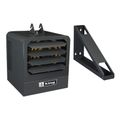

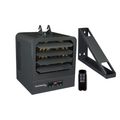


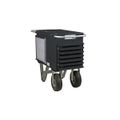


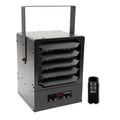

Electric ceiling and wall heaters are electric-resistance heating units mounted into a wall cavity or ceiling to provide zonal or supplemental heat without ductwork. Fan-forced wall models like Fahrenheat's FFC series draw between 750 and 2000 watts depending on voltage and deliver 50 CFM of airflow, making them a fit for bathrooms, bedrooms, and hallways where a small footprint matters. Larger commercial units, such as the FZL series, step up to 3000 or 4000 watts at 240 volts with 100 CFM output for mechanical rooms, vestibules, and entryways. Digital programmable models add a thermostat with separate weekday and weekend scheduling for more precise temperature control throughout the day. Electricians and contractors specify these heaters when running new gas or hydronic lines to a space isn't practical, since electric units only need a dedicated circuit rather than ductwork or venting. Matching wattage and airflow to room size keeps the space comfortable without oversizing the unit or overloading the circuit.
Subcategories
- Compact Fan-Forced Wall Heaters: Compact fan-forced wall heaters, like Fahrenheat's FFC series, run on 120 or 240 volt circuits and draw between 750 and 2000 watts depending on the model and voltage selected, delivering 50 CFM of airflow for zonal heating in small rooms. A built-in adjustable wattage feature lets installers set the output level without moving internal wiring, giving flexibility across different room sizes. Electricians commonly install these units in bathrooms, bedrooms, and hallways where a full ductwork run isn't practical. The compact grille size keeps the wall footprint small in tight spaces.
- Commercial Fan-Forced Wall Heaters: Commercial fan-forced wall heaters, such as Fahrenheat's FZL series, run on 240 volt circuits at 3000 or 4000 watts and move 100 CFM of heated air, built for larger spaces than residential models handle. These units target mechanical rooms, vestibules, entryways, lobbies, and hallways where a stronger heat output covers a bigger footprint. The higher wattage draw means the circuit needs to be sized accordingly during rough-in. Facility maintenance teams specify commercial models for entry points where doors open frequently and heat loss runs higher.
- Digital Programmable Wall Heaters: Digital programmable wall heaters, like Fahrenheat's FSSWH series, pair a 120 or 240 volt fan-forced heating element with an LED touchscreen thermostat that supports separate weekday and weekend schedules across four daily periods. Wattage output adjusts automatically between roughly 200 and 2000 watts depending on the model and heating demand, which keeps operation quieter than a single fixed-output unit. Property owners who want precise, scheduled temperature control without a separate thermostat installation choose this option. The programmable schedule also helps manage energy use in spaces that see intermittent occupancy.
- Ceiling-Mount Unit Heaters: Ceiling-mount unit heaters, such as Fahrenheat's FUH series, mount on a bracket that allows horizontal or vertical airflow, or any position between the two, making them adaptable to garages, workshops, and warehouses with varied ceiling layouts. A built-in single-pole thermostat adjusts from 45 to 135 degrees Fahrenheit, and the fan continues running after the heating element satisfies the thermostat until the element cools down. Contractors specify ceiling-mount units for large open spaces where wall-mounted heaters would take up usable wall space. A high-limit cutout shuts the unit off automatically if it overheats.
Buying Guide
Start by calculating the room's heat load, since wattage needs to match square footage and ceiling height to keep the space comfortable without overloading the circuit. Small rooms like bathrooms and bedrooms typically need a compact fan-forced wall heater in the 750 to 2000 watt range, while larger mechanical rooms, vestibules, and entryways call for commercial-grade units running 3000 to 4000 watts. Next, check available voltage at the installation point. Some electric ceiling and wall heaters run on 120 volts while others need a dedicated 240 volt circuit, so confirming panel capacity before ordering avoids a mismatch discovered mid-installation. Mounting location matters too. Wall heaters fit into a standard wall cavity and work well for defined rooms, while ceiling-mount unit heaters suit open spaces like garages and workshops where wall space is limited or airflow needs to reach a wider area. Consider control preferences next. Digital programmable models add scheduled temperature control across weekday and weekend periods, which helps manage energy use in spaces with predictable occupancy patterns, while simpler fan-forced models with a basic thermostat suit spaces that need reliable heat without programming. Airflow output, measured in CFM, affects how quickly a room reaches temperature, so pairing a higher CFM unit with a larger room keeps heat distribution even. Confirming wattage, voltage, mounting style, and control features against the room's size and use before ordering avoids an undersized or oversized installation.
Frequently Asked Questions
What wattage electric wall heater does a small bathroom need?
Small rooms like bathrooms typically pair well with a compact fan-forced wall heater in the 750 to 2000 watt range, such as Fahrenheat's FFC series, which also delivers 50 CFM of airflow. Available voltage at the installation point determines which specific model fits, since some run on 120 volts and others need 240. Matching wattage to room size keeps the space comfortable without overloading the circuit.
What's the difference between a residential and a commercial electric wall heater?
Residential models, like Fahrenheat's FFC series, typically run between 750 and 2000 watts on 120 or 240 volt circuits with 50 CFM of airflow, sized for bedrooms, bathrooms, and hallways. Commercial-grade units, such as the FZL series, step up to 3000 or 4000 watts at 240 volts with 100 CFM output, built for mechanical rooms, vestibules, and entryways. Circuit sizing needs to account for the higher wattage draw on commercial models during rough-in.
How does a digital programmable wall heater differ from a standard fan-forced model?
Digital programmable wall heaters, like Fahrenheat's FSSWH series, add an LED touchscreen thermostat that supports separate weekday and weekend schedules across four daily periods, while standard fan-forced models rely on a basic manual thermostat. Wattage output on programmable models adjusts automatically between roughly 200 and 2000 watts depending on demand, keeping operation quieter than a fixed-output unit. Spaces with predictable, scheduled occupancy benefit most from the programmable option.
Can an electric heater be mounted on the ceiling instead of a wall?
Ceiling-mount unit heaters, such as Fahrenheat's FUH series, mount on a bracket that allows horizontal or vertical airflow and work well in garages, workshops, and warehouses with open floor plans. Wall-mounted heaters fit into a standard wall cavity and suit smaller, defined rooms instead. Choosing between ceiling and wall mounting comes down to available wall space and how the heat needs to distribute across the room.
What voltage does an electric ceiling or wall heater need?
Voltage depends on the specific model; some electric ceiling and wall heaters, like certain Fahrenheat FFC units, run on a standard 120 volt circuit, while larger models such as the FZL and FSSWH series often require a dedicated 240 volt circuit. Confirming panel capacity and available circuits before ordering avoids a mismatch discovered during installation. An electrician can verify which voltage option fits the existing service panel.
