




Electronic Fast-Acting Fuses

 --%3E %3Csvg version='1.1' id='No-RB' xmlns='http://www.w3.org/2000/svg' xmlns:xlink='http://www.w3.org/1999/xlink' x='0px' y='0px' viewBox='0 0 100 100' enable-background='new 0 0 100 100' xml:space='preserve'%3E %3Cpath fill='%23CECECE' d='M79.44,0.95H20.56C9.78,0.95,0.95,9.78,0.95,20.56v58.87c0,10.79,8.82,19.61,19.61,19.61h58.87 c10.79,0,19.61-8.83,19.61-19.61V20.56C99.05,9.78,90.22,0.95,79.44,0.95z M65.38,58.24l9.38,29.58L49.69,69.78L24.5,87.82 l9.34-29.6L8.8,39.6l30.73-0.17c0,0,6.98-19.61,10-28.93c0.54,1.36,9.88,29.1,9.88,29.1H91.2L65.38,58.24z'/%3E %3C/svg%3E)



 --%3E %3Csvg version='1.1' id='Fill' xmlns='http://www.w3.org/2000/svg' xmlns:xlink='http://www.w3.org/1999/xlink' x='0px' y='0px' viewBox='0 0 100 100' enable-background='new 0 0 100 100' xml:space='preserve'%3E %3Cpath fill='%23F15C02' d='M79.44,0.95H20.56C9.78,0.95,0.95,9.78,0.95,20.56v58.87c0,10.79,8.82,19.61,19.61,19.61h58.87 c10.79,0,19.61-8.83,19.61-19.61V20.56C99.05,9.78,90.22,0.95,79.44,0.95z M65.38,58.24l9.38,29.58L49.69,69.78L24.5,87.82 l9.34-29.6L8.8,39.6l30.73-0.17c0,0,6.98-19.61,10-28.93c0.54,1.36,9.88,29.1,9.88,29.1H91.2L65.38,58.24z'/%3E %3C/svg%3E)





Electronic Fast-Acting Fuses are single-use circuit protection devices designed to open a circuit within milliseconds of a current overload, protecting sensitive electronic components before damage occurs. A fast-acting fuse rated around 10A typically clears in about 0.01 seconds at 200 percent of its rated current and in under 0.001 seconds at 1000 percent, fast enough to protect semiconductor devices that can fail within microseconds under a fault. Fast-acting fuses clear far quicker than time-delay, or slow-blow, fuses, which tolerate a brief current surge from motor startup before opening. Techs and electricians reach for fast-acting fuses on control boards, sensors, power supplies, and other circuits without inrush current at startup, where any overcurrent condition signals a real fault rather than normal operation. Fuses built to UL 248 must open at 135 percent of rated current during testing and are limited to continuous operation at no more than 75 percent of that rating, giving installers a consistent baseline for comparing fuses across manufacturers.
Subcategories
- Very Fast-Acting Fuses: Very fast-acting fuses open faster than standard fast-acting fuses, built for semiconductor and power electronics protection where a delay of even a few milliseconds risks component failure. Littelfuse's L25S series, for example, is rated at 250V AC and covers ampere ratings from 1A up to 800A. Design and instrumentation engineers specify this class on inverter, drive, and rectifier circuits where extremely sensitive components sit downstream of the fuse. Very fast-acting fuses trade off surge tolerance for speed, so they aren't a fit for circuits with normal startup inrush.
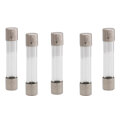
- Cartridge Fast-Acting Fuses: Cartridge fast-acting fuses use a cylindrical body with metal end caps, a format common across control panels, appliances, and general electronic equipment. The format makes them easy to swap in a standard fuse holder or block without soldering. Electricians stock a range of amperages in this style since it covers the broadest set of low-voltage circuit protection needs. Fast-acting cartridge fuses built to UL 248 must open at 135 percent of rated current during standard testing.
- Surface Mount Fast-Acting Fuses: Surface mount fast-acting fuses are soldered directly onto a circuit board, protecting individual components or board sections on densely packed electronic assemblies. Technicians working on control boards use this style when board space doesn't allow for a traditional fuse holder. Because these fuses are typically rated at lower currents, they suit small-signal and low-power circuits rather than main power feeds. Replacement requires desoldering the failed fuse and soldering in a new one of the same rating.
- UL 248 Listed Fuses: UL 248 listed fast-acting fuses have passed standardized testing that requires the fuse to open when current reaches 135 percent of its rated value. The same listing limits continuous operation to no more than 75 percent of the rated current, which is why fuses are typically sized above the circuit's normal running load. Specifying a UL 248 listed fuse gives a predictable, third-party verified response instead of relying on a manufacturer's own claims alone. The listing appears on the fuse body or datasheet as part of the agency approval markings.
Buying Guide
Match voltage rating first, then amperage, then response speed, in that order, since an undersized voltage rating is the most dangerous mismatch a fuse can have. A fuse rated below the circuit's actual voltage can fail to clear an arc safely even if the ampere rating looks correct on paper. Once voltage is confirmed, size the ampere rating to the circuit's normal operating current, keeping in mind that fuses built to UL 248 are limited to continuous operation at no more than 75 percent of their rated current. Electronic Fast-Acting Fuses fit circuits without meaningful startup inrush, such as control boards, sensors, and power supplies; a circuit with a motor or transformer that draws a startup surge usually calls for a time-delay fuse instead to avoid nuisance blowing. Response speed matters most on circuits protecting semiconductor components, where a standard fast-acting fuse may still be too slow and a very fast-acting rating is the safer call. Physical format needs to match the installed fuse holder or board footprint, whether that's a cartridge body, a surface mount package, or another housing style. Always replace a blown fuse with one of the same voltage, amperage, and speed rating; substituting a higher amperage fuse to stop nuisance blowing removes the protection the circuit was designed around and creates a real safety hazard downstream.
Frequently Asked Questions
What's the difference between a fast-acting fuse and a time-delay fuse?
Fast-acting fuses open within milliseconds of an overcurrent event, while time-delay, or slow-blow, fuses tolerate a brief surge before opening. Time-delay fuses use that tolerance to ride through the startup inrush of a motor or transformer without blowing unnecessarily. Fast-acting fuses fit circuits without a startup surge, like control boards and sensor circuits, where any overcurrent means a real fault.
Can a fast-acting fuse be used to replace a time-delay fuse?
Swapping in a fast-acting fuse where a time-delay fuse is specified usually causes nuisance blowing on any circuit with a motor, transformer, or other inrush current at startup. Voltage and amperage may match, but the speed rating is part of the circuit design and shouldn't be changed without checking the equipment manual. Sticking with the fuse type specified by the equipment manufacturer avoids both nuisance outages and reduced protection.
What does the UL 248 rating on a fuse mean?
UL 248 is the safety standard fuses are tested against in North America, covering construction, interrupting rating, and time-current performance. Fuses meeting this standard must open at 135 percent of their rated current during testing and are limited to continuous operation at no more than 75 percent of that rating. Looking for the UL 248 marking on the fuse body confirms it has passed third-party safety testing.
How is the right amperage picked for a fast-acting fuse?
Amperage should match the circuit's normal operating current, sized so the fuse operates within the 75 percent continuous-duty limit set by UL 248. Checking the equipment's nameplate or wiring diagram is the most reliable way to confirm the original fuse rating. Installing a higher amperage fuse than specified removes circuit protection rather than fixing a nuisance blowing problem.
Why does a fast-acting fuse keep blowing on a circuit?
Repeated blowing usually points to an actual overcurrent condition, such as a short circuit, failing component, or a fuse rating that's too low for normal operating current. Fast-acting fuses aren't designed to tolerate any startup surge, so installing one on a circuit with inrush current, like a motor, will cause repeat failures. Checking the circuit for faults before replacing the fuse again prevents a bigger failure down the line.
