




Electronic Fuses

 --%3E %3Csvg version='1.1' id='No-RB' xmlns='http://www.w3.org/2000/svg' xmlns:xlink='http://www.w3.org/1999/xlink' x='0px' y='0px' viewBox='0 0 100 100' enable-background='new 0 0 100 100' xml:space='preserve'%3E %3Cpath fill='%23CECECE' d='M79.44,0.95H20.56C9.78,0.95,0.95,9.78,0.95,20.56v58.87c0,10.79,8.82,19.61,19.61,19.61h58.87 c10.79,0,19.61-8.83,19.61-19.61V20.56C99.05,9.78,90.22,0.95,79.44,0.95z M65.38,58.24l9.38,29.58L49.69,69.78L24.5,87.82 l9.34-29.6L8.8,39.6l30.73-0.17c0,0,6.98-19.61,10-28.93c0.54,1.36,9.88,29.1,9.88,29.1H91.2L65.38,58.24z'/%3E %3C/svg%3E)

 --%3E %3Csvg version='1.1' id='Fill' xmlns='http://www.w3.org/2000/svg' xmlns:xlink='http://www.w3.org/1999/xlink' x='0px' y='0px' viewBox='0 0 100 100' enable-background='new 0 0 100 100' xml:space='preserve'%3E %3Cpath fill='%23F15C02' d='M79.44,0.95H20.56C9.78,0.95,0.95,9.78,0.95,20.56v58.87c0,10.79,8.82,19.61,19.61,19.61h58.87 c10.79,0,19.61-8.83,19.61-19.61V20.56C99.05,9.78,90.22,0.95,79.44,0.95z M65.38,58.24l9.38,29.58L49.69,69.78L24.5,87.82 l9.34-29.6L8.8,39.6l30.73-0.17c0,0,6.98-19.61,10-28.93c0.54,1.36,9.88,29.1,9.88,29.1H91.2L65.38,58.24z'/%3E %3C/svg%3E)


 --%3E %3Csvg version='1.1' id='Half' xmlns='http://www.w3.org/2000/svg' xmlns:xlink='http://www.w3.org/1999/xlink' x='0px' y='0px' viewBox='0 0 100 100' enable-background='new 0 0 100 100' xml:space='preserve'%3E %3Cg%3E %3Cpath fill='%23F15C02' d='M30.05,70.23l3.79-12.01L8.8,39.6l30.73-0.17c0,0,6.98-19.61,10-28.93c0.54,1.36,9.88,29.1,9.88,29.1h1.58 L93.71,7.18c-3.58-3.82-8.66-6.23-14.28-6.23H20.56C9.78,0.95,0.95,9.78,0.95,20.56v58.87c0,5.41,2.22,10.32,5.79,13.88 L30.05,70.23z'/%3E %3C/g%3E %3Cpath fill='%23FBC8B4' d='M93.71,7.18L60.98,39.6H91.2L65.38,58.24l9.38,29.58L49.69,69.78L24.5,87.82l5.55-17.59L6.75,93.32 c3.55,3.54,8.44,5.73,13.82,5.73h58.87c10.79,0,19.61-8.83,19.61-19.61V20.56C99.05,15.4,97.01,10.69,93.71,7.18z'/%3E %3C/svg%3E)
 --%3E %3Csvg version='1.1' id='With-RB' xmlns='http://www.w3.org/2000/svg' xmlns:xlink='http://www.w3.org/1999/xlink' x='0px' y='0px' viewBox='0 0 100 100' enable-background='new 0 0 100 100' xml:space='preserve'%3E %3Cpath fill='%23FBC8B4' d='M79.44,0.95H20.56C9.78,0.95,0.95,9.78,0.95,20.56v58.87c0,10.79,8.82,19.61,19.61,19.61h58.87 c10.79,0,19.61-8.83,19.61-19.61V20.56C99.05,9.78,90.22,0.95,79.44,0.95z M65.38,58.24l9.38,29.58L49.69,69.78L24.5,87.82 l9.34-29.6L8.8,39.6l30.73-0.17c0,0,6.98-19.61,10-28.93c0.54,1.36,9.88,29.1,9.88,29.1H91.2L65.38,58.24z'/%3E %3C/svg%3E)





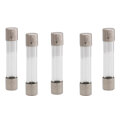
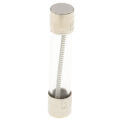
Electronic Fuses are protective components that shut down current flow to control boards, transformers, and other low-voltage circuits in HVAC and appliance equipment when an overcurrent condition occurs. Littelfuse's 312 series covers fast-acting 3AG glass fuses in ratings such as 1 amp, 3 amp, and 4 amp, all rated for 250V, designed to open quickly when current exceeds the rated threshold. The 313 series offers slo-blo time-delay protection in similar amperages, built to tolerate the brief inrush current that motors, transformers, and solenoids draw on startup without nuisance tripping. Techs replacing a blown fuse on a control board need to match amperage, voltage rating, and fuse type exactly, since a fast-acting fuse installed where a time-delay fuse belongs can trip repeatedly on equipment startup. Keeping a stocked assortment of common amperages and both fuse types on the truck cuts down on return trips for a part that costs little but stops a service call cold when missing.
Subcategories
- Fast-Acting 3AG Fuses (312 Series): Fast-acting fuses open immediately once current exceeds the rated amperage, making them the standard choice for protecting solid-state control boards from short circuits. Littelfuse's 312 series is available in ratings including 1 amp (312001P), 3 amp (312003P), and 4 amp (312004P), all rated for 250V in a 3AG glass body. Installers use fast-acting fuses on control circuits without significant inrush current, where an instant trip response protects sensitive components. Stocking a few common amperages from this series covers most control board replacement calls.
- Slo-Blo Time-Delay Fuses (313/315 Series): Slo-blo time-delay fuses tolerate a brief surge of current before tripping, which prevents nuisance blows on circuits with motors, transformers, or solenoids that draw extra current at startup. Littelfuse's 313 series includes 2 amp (313002P) and 3 amp (313003P) ratings, both rated for 250V in a 3AG glass body. Techs use time-delay fuses anywhere a fast-acting fuse would trip repeatedly during normal equipment startup. Confirming the circuit calls for time-delay rather than fast-acting protection prevents a repeat service call.
- Low-Amp Control Circuit Fuses: Low-amp fuses, rated at 1 amp or less, protect low-draw control circuits such as thermostats, ignition modules, and status indicator boards from small overcurrent events. The Littelfuse 312001P is a 1 amp fast-acting 3AG fuse rated for 250V, sized for these lighter-duty circuits. Using a low-amp fuse on a control circuit rated for less current than a standard 3 amp or 4 amp fuse protects the smaller traces and components typical of these boards. Matching amperage precisely to the circuit's rated draw prevents both nuisance blows and inadequate protection.
Buying Guide
Selecting Electronic Fuses correctly starts with matching three specifications exactly: amperage, voltage rating, and fuse type, since substituting even one of these can cause equipment damage or repeated nuisance trips. Amperage has to match the rating printed on the original fuse or specified in the equipment's wiring diagram. Installing a higher-amp fuse than specified removes the intended protection and risks damage to the control board during an actual fault, while a lower-amp fuse can blow during normal operation. Voltage rating matters even when the circuit runs at a lower voltage than the fuse's rating, since a 250V fuse like the Littelfuse 312004P works fine on a 120V or 24V control circuit as long as the amperage matches. Fuse type is where many replacement mistakes happen. Fast-acting fuses from the 312 series open the instant current exceeds the rated threshold, which suits control board protection where an immediate trip is desirable. Slo-blo time-delay fuses from the 313 series tolerate brief inrush current from motors, transformers, and solenoids without tripping, so installing a fast-acting fuse on a motor circuit can cause repeated nuisance blows during normal startup. Checking the equipment's service literature or the markings on the original fuse before ordering a replacement confirms both amperage and type. Stocking a small assortment covering both fast-acting and slo-blo fuses in common amperages like 1 amp, 3 amp, and 4 amp covers most control board and low-voltage circuit repairs without a special order.
Frequently Asked Questions
What is the difference between a fast-acting and slo-blo fuse?
A fast-acting fuse, like the Littelfuse 312004P, opens immediately once current exceeds its rated amperage, which suits control boards and circuits without startup surge. A slo-blo, or time-delay, fuse, like the Littelfuse 313003P, tolerates a brief current surge before tripping, making it the right choice for motors, transformers, and solenoids. Installing the wrong type can cause either a nuisance blow or inadequate protection during a real fault.
Can a higher-amperage fuse be used if the correct amperage is not on the truck?
Installing a higher-amperage fuse than specified removes the intended overcurrent protection and can allow damage to the control board during an actual fault condition. Matching amperage exactly to the original fuse or the equipment's wiring diagram keeps the circuit protected as designed. Carrying a small stock of common amperages, such as 1 amp, 3 amp, and 4 amp, avoids this situation on most service calls.
Does a 250V fuse work on a 24V or 120V control circuit?
A 250V-rated fuse, such as the Littelfuse 312004P, works safely on lower-voltage circuits like 24V or 120V systems as long as the amperage rating matches the circuit's requirements. The voltage rating on a fuse represents the maximum it can safely interrupt, not the operating voltage it requires. Matching amperage remains the priority when selecting a replacement fuse for a low-voltage control circuit.
Why does a fuse keep blowing on a motor or transformer circuit?
A fast-acting fuse installed on a circuit with a motor, transformer, or solenoid often blows repeatedly because these components draw a brief surge of current during startup that a fast-acting fuse interprets as a fault. Switching to a slo-blo time-delay fuse, such as the Littelfuse 313003P, tolerates that startup surge without tripping. Confirming fuse type against the equipment's original specification resolves most repeat-blow situations.
What amperages are commonly stocked for electronic fuse replacement?
Common amperages for control board and low-voltage circuit fuses include 1 amp, 2 amp, 3 amp, and 4 amp, available in both fast-acting and slo-blo time-delay types. Littelfuse's 312 series covers the fast-acting ratings, while the 313 series covers slo-blo ratings in similar amperages. Stocking both types across these common amperages covers most service calls without a special order.
