




Filters
SORT
Product Availability –
Brand –
Review Score –
 --%3E %3Csvg version='1.1' id='Fill' xmlns='http://www.w3.org/2000/svg' xmlns:xlink='http://www.w3.org/1999/xlink' x='0px' y='0px' viewBox='0 0 100 100' enable-background='new 0 0 100 100' xml:space='preserve'%3E %3Cpath fill='%23F15C02' d='M79.44,0.95H20.56C9.78,0.95,0.95,9.78,0.95,20.56v58.87c0,10.79,8.82,19.61,19.61,19.61h58.87 c10.79,0,19.61-8.83,19.61-19.61V20.56C99.05,9.78,90.22,0.95,79.44,0.95z M65.38,58.24l9.38,29.58L49.69,69.78L24.5,87.82 l9.34-29.6L8.8,39.6l30.73-0.17c0,0,6.98-19.61,10-28.93c0.54,1.36,9.88,29.1,9.88,29.1H91.2L65.38,58.24z'/%3E %3C/svg%3E)
 --%3E %3Csvg version='1.1' id='With-RB' xmlns='http://www.w3.org/2000/svg' xmlns:xlink='http://www.w3.org/1999/xlink' x='0px' y='0px' viewBox='0 0 100 100' enable-background='new 0 0 100 100' xml:space='preserve'%3E %3Cpath fill='%23FBC8B4' d='M79.44,0.95H20.56C9.78,0.95,0.95,9.78,0.95,20.56v58.87c0,10.79,8.82,19.61,19.61,19.61h58.87 c10.79,0,19.61-8.83,19.61-19.61V20.56C99.05,9.78,90.22,0.95,79.44,0.95z M65.38,58.24l9.38,29.58L49.69,69.78L24.5,87.82 l9.34-29.6L8.8,39.6l30.73-0.17c0,0,6.98-19.61,10-28.93c0.54,1.36,9.88,29.1,9.88,29.1H91.2L65.38,58.24z'/%3E %3C/svg%3E)
Price Range –
Expansion Tank Valves

 --%3E %3Csvg version='1.1' id='Half' xmlns='http://www.w3.org/2000/svg' xmlns:xlink='http://www.w3.org/1999/xlink' x='0px' y='0px' viewBox='0 0 100 100' enable-background='new 0 0 100 100' xml:space='preserve'%3E %3Cg%3E %3Cpath fill='%23F15C02' d='M30.05,70.23l3.79-12.01L8.8,39.6l30.73-0.17c0,0,6.98-19.61,10-28.93c0.54,1.36,9.88,29.1,9.88,29.1h1.58 L93.71,7.18c-3.58-3.82-8.66-6.23-14.28-6.23H20.56C9.78,0.95,0.95,9.78,0.95,20.56v58.87c0,5.41,2.22,10.32,5.79,13.88 L30.05,70.23z'/%3E %3C/g%3E %3Cpath fill='%23FBC8B4' d='M93.71,7.18L60.98,39.6H91.2L65.38,58.24l9.38,29.58L49.69,69.78L24.5,87.82l5.55-17.59L6.75,93.32 c3.55,3.54,8.44,5.73,13.82,5.73h58.87c10.79,0,19.61-8.83,19.61-19.61V20.56C99.05,15.4,97.01,10.69,93.71,7.18z'/%3E %3C/svg%3E)

 --%3E %3Csvg version='1.1' id='No-RB' xmlns='http://www.w3.org/2000/svg' xmlns:xlink='http://www.w3.org/1999/xlink' x='0px' y='0px' viewBox='0 0 100 100' enable-background='new 0 0 100 100' xml:space='preserve'%3E %3Cpath fill='%23CECECE' d='M79.44,0.95H20.56C9.78,0.95,0.95,9.78,0.95,20.56v58.87c0,10.79,8.82,19.61,19.61,19.61h58.87 c10.79,0,19.61-8.83,19.61-19.61V20.56C99.05,9.78,90.22,0.95,79.44,0.95z M65.38,58.24l9.38,29.58L49.69,69.78L24.5,87.82 l9.34-29.6L8.8,39.6l30.73-0.17c0,0,6.98-19.61,10-28.93c0.54,1.36,9.88,29.1,9.88,29.1H91.2L65.38,58.24z'/%3E %3C/svg%3E)
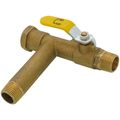
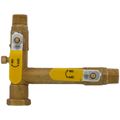
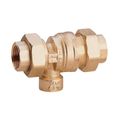
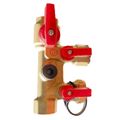

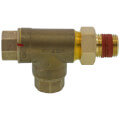
Expansion tank valves connect and isolate an expansion tank from the rest of a hydronic heating or water heater system, letting a technician service or replace the tank without draining the whole loop. As water heats, it expands, and an expansion tank absorbs that extra volume to keep system pressure from spiking. A dedicated isolation valve at the tank connection lets a tech shut off flow to the tank alone, check tank pressure, or swap out a failed bladder without shutting down the entire boiler or water heater. Many valves in this category also include a drain or purge port so trapped air or water can be released before the tank is removed. Contractors working on residential boiler systems and commercial hydronic loops rely on these valves to make routine tank maintenance faster and less disruptive to the rest of the system. Choosing the right valve size and connection type keeps the shutoff reliable and matched to the existing piping.
Subcategories
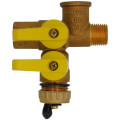
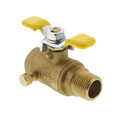
- Standard Isolation Valves: Standard isolation valves provide a simple on/off shutoff between the system piping and the expansion tank. Technicians use them to stop flow to the tank while performing a bladder check or tank swap. These valves typically thread directly into the tank's mounting connection. A basic ball or gate valve design keeps operation straightforward for routine service calls.
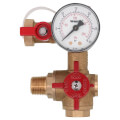
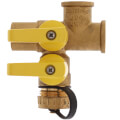
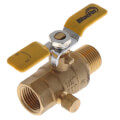
- Valves with Integrated Drain/Purge Ports: These valves combine isolation with a built-in port for draining residual water or purging air before tank removal. That extra port saves a step compared to isolating the tank and then hunting for a separate drain point nearby. They are common on commercial hydronic installations where minimizing system downtime during tank service matters. Confirming port thread size against existing fittings avoids an extra adapter.
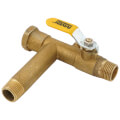
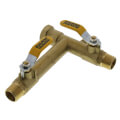
- Tank Tee Fittings: Tank tee fittings combine the isolation valve with the tee connection that ties the expansion tank into the main line, consolidating what would otherwise be several separate fittings. Contractors favor these on new installations since they reduce the number of joints that could leak. They also simplify future tank replacement because the isolation point is already built into the fitting. Sizing should match the main line diameter as well as the tank's connection thread.
Buying Guide
Selecting expansion tank valves starts with matching the connection size and thread type to both the existing system piping and the expansion tank being installed or serviced. A mismatched thread means an adapter is needed, which adds another joint and another potential leak point to the system.
Consider whether the valve needs an integrated drain or purge port. On a system where the tank gets serviced regularly, that built-in port saves time by letting a technician release trapped air or residual water without hunting for a separate bleed point. On a system with easy access to a nearby drain, a standard isolation valve without the extra port may be all that is needed.
For new installations, a tank tee fitting that combines the isolation valve with the tee connection reduces the total number of joints in the system, which can mean fewer future service points and less risk of a slow leak developing over time. Retrofits on an existing system, by contrast, usually call for a standalone isolation valve sized to match whatever connection is already in place.
Material compatibility with the system's water chemistry and operating temperature should also factor into the choice, since a valve rated for one application is not automatically appropriate for every hydronic or domestic water heating loop.
Expansion tank valves are a small part of the overall system cost, but choosing the wrong size or connection type can turn a routine tank swap into a bigger repair job, so it pays to confirm compatibility before ordering.
Frequently Asked Questions
Why does an expansion tank need its own isolation valve?
An isolation valve lets a technician shut off flow to just the expansion tank so it can be serviced, tested, or replaced without draining or shutting down the entire heating system. Without it, any tank work requires isolating a much larger section of piping.
What is a tank tee fitting used for?
A tank tee fitting combines the tee connection and isolation valve into a single fitting when tying an expansion tank into the main line. It reduces the number of separate joints needed compared to installing a tee and a valve independently.
Do these valves need a drain or purge port?
A built-in drain or purge port is useful on systems serviced often, since it lets trapped air or residual water be released without finding a separate bleed point nearby. Systems with easy access to an existing drain may not need this feature.
Can I replace an expansion tank without shutting down the whole system?
With a properly installed isolation valve at the tank connection, the tank can typically be isolated and serviced without draining or shutting down the rest of the hydronic loop. Without a dedicated valve, a larger section of the system usually has to be shut down first.
How do I know what size valve I need?
Valve size should match both the connection thread on the expansion tank and the diameter of the existing system piping. Checking the tank's specification sheet and the piping it connects to before ordering avoids needing an extra adapter.
