




Filters
SORT
Product Availability –
Voltage –
Duct Size –
0" Ps –
0.2" Ps –
0.4" Ps –
0.6" Ps –
0.8" Ps –
1.0" Ps –
1.5" Ps –
Review Score –
 --%3E %3Csvg version='1.1' id='Fill' xmlns='http://www.w3.org/2000/svg' xmlns:xlink='http://www.w3.org/1999/xlink' x='0px' y='0px' viewBox='0 0 100 100' enable-background='new 0 0 100 100' xml:space='preserve'%3E %3Cpath fill='%23F15C02' d='M79.44,0.95H20.56C9.78,0.95,0.95,9.78,0.95,20.56v58.87c0,10.79,8.82,19.61,19.61,19.61h58.87 c10.79,0,19.61-8.83,19.61-19.61V20.56C99.05,9.78,90.22,0.95,79.44,0.95z M65.38,58.24l9.38,29.58L49.69,69.78L24.5,87.82 l9.34-29.6L8.8,39.6l30.73-0.17c0,0,6.98-19.61,10-28.93c0.54,1.36,9.88,29.1,9.88,29.1H91.2L65.38,58.24z'/%3E %3C/svg%3E)
FR Series Inline Round Centrifugal Exhaust Fans



 --%3E %3Csvg version='1.1' id='Half' xmlns='http://www.w3.org/2000/svg' xmlns:xlink='http://www.w3.org/1999/xlink' x='0px' y='0px' viewBox='0 0 100 100' enable-background='new 0 0 100 100' xml:space='preserve'%3E %3Cg%3E %3Cpath fill='%23F15C02' d='M30.05,70.23l3.79-12.01L8.8,39.6l30.73-0.17c0,0,6.98-19.61,10-28.93c0.54,1.36,9.88,29.1,9.88,29.1h1.58 L93.71,7.18c-3.58-3.82-8.66-6.23-14.28-6.23H20.56C9.78,0.95,0.95,9.78,0.95,20.56v58.87c0,5.41,2.22,10.32,5.79,13.88 L30.05,70.23z'/%3E %3C/g%3E %3Cpath fill='%23FBC8B4' d='M93.71,7.18L60.98,39.6H91.2L65.38,58.24l9.38,29.58L49.69,69.78L24.5,87.82l5.55-17.59L6.75,93.32 c3.55,3.54,8.44,5.73,13.82,5.73h58.87c10.79,0,19.61-8.83,19.61-19.61V20.56C99.05,15.4,97.01,10.69,93.71,7.18z'/%3E %3C/svg%3E)
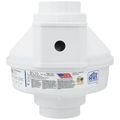
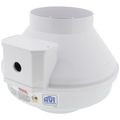
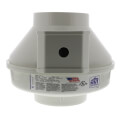
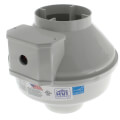


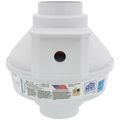
FR Series Inline Round Centrifugal Exhaust Fans are duct-mounted ventilation fans built to move air through round ductwork in bathroom, kitchen, and whole-house exhaust applications where a ceiling or wall-mounted fan can't handle the required airflow. Part of the Fantech Inline Duct Fans lineup, these units mount directly in the duct run rather than at the grille, which keeps fan noise farther from the occupied space. The centrifugal wheel design generates higher static pressure than a typical axial fan, making it a better fit for longer duct runs or systems with several bends. Contractors commonly specify this series for remodels where duct length or layout rules out a standard in-line propeller fan. Matching the fan's duct diameter to the existing ductwork, rather than resizing the run to fit the fan, keeps installation straightforward and preserves the system's airflow rating.
Subcategories
- Duct Mounting Kits: Duct mounting kits secure an FR Series fan inline within round ductwork using clamps, sleeves, or flanged couplings sized to the fan's specific duct diameter. Installers use these kits to create an airtight connection between the fan housing and the surrounding duct, which keeps the system's static pressure rating accurate. A loose or improperly sealed connection at the fan can reduce airflow at the grille even when the fan itself is functioning correctly. Selecting a kit that matches the exact duct diameter avoids the need for field-fabricated adapters.
- Speed Controls: Speed controls let a contractor adjust an FR Series fan's airflow to match the specific duct run and grille size on a given job. Variable speed control is useful in retrofit work where the original ductwork wasn't sized for the replacement fan's maximum output. Wall-mounted and inline controller options exist depending on where the contractor needs the adjustment made accessible. Setting the fan below its rated maximum can also reduce operating noise in occupied spaces.
- Backdraft Dampers: Backdraft dampers prevent outside air or exhaust from other fans in the system from flowing backward through an idle FR Series fan. Bathroom and multi-fan exhaust systems benefit most from this component, since backdraft without a damper can let cold air or odors enter the space when the fan isn't running. Dampers are typically sized to the same duct diameter as the fan itself. Regular inspection is worthwhile in systems that run intermittently, since a stuck damper blade can restrict airflow even when the fan is operating.
- Replacement Motors: Replacement motors restore airflow to an FR Series fan after the original motor wears out from years of continuous or near-continuous run time. Motor replacement is usually more economical than replacing the entire fan housing, particularly on larger models where the housing and centrifugal wheel remain in good condition. Confirming the motor's voltage, horsepower, and mounting configuration against the original nameplate data prevents an improper fit. Technicians should verify the wheel and motor shaft are compatible before completing the swap.
Buying Guide
Sizing an inline exhaust fan correctly starts with calculating the required airflow in cubic feet per minute for the space being ventilated, then checking that figure against the fan's rated output at the expected static pressure for the duct run. A duct system with several elbows or a long straight run adds resistance that lowers a fan's real-world airflow below its rated free-air number, so accounting for that resistance up front avoids installing an undersized unit. FR Series Inline Round Centrifugal Exhaust Fans are commonly chosen over standard in-line propeller fans specifically because the centrifugal wheel holds airflow better against this added resistance, which matters most in commercial bathrooms, long kitchen exhaust runs, and whole-house ventilation retrofits. Confirming the duct diameter before ordering keeps the installation straightforward, since resizing an existing duct run to fit an oversized fan adds labor and material cost that wasn't part of the original job scope. Noise level matters as much as airflow for many residential jobs, so checking the fan's sone rating against the space's intended use, such as a primary bathroom versus a utility closet, helps avoid a callback over noise complaints. Pairing the fan with the correct speed control and backdraft damper for the application rounds out a complete installation, since a fan alone won't perform to its rated specification without properly sized ductwork and accessories supporting it.
Frequently Asked Questions
How do I size an FR Series inline fan for a bathroom exhaust duct?
Start with the required airflow in cubic feet per minute for the room's square footage, then check that number against the fan's rated output at the expected static pressure for the duct run. Longer duct runs or runs with several elbows reduce real-world airflow below the fan's free-air rating, so building in a margin for that resistance is standard practice. Matching the duct diameter to the fan's connection size keeps the installation straightforward.
What's the difference between a centrifugal inline fan and a standard propeller fan?
A centrifugal wheel design generates higher static pressure than a typical axial or propeller fan, which lets it maintain airflow over longer duct runs or through more elbows. Propeller fans work well for short, straight duct runs but lose performance quickly as duct resistance increases. Centrifugal inline fans are the better fit for commercial bathrooms, long kitchen exhaust runs, and whole-house ventilation systems.
Can an FR Series fan motor be replaced without replacing the whole unit?
Replacement motors are available separately and are usually more economical than replacing the entire fan housing. Confirming the original motor's voltage, horsepower, and mounting configuration against the nameplate data before ordering prevents a fit issue. The housing and centrifugal wheel typically outlast the motor on these units.
Does an FR Series fan need a backdraft damper?
A damper is recommended in any system where the fan shares ductwork with other exhaust points or where outside air pressure could push air backward through an idle fan. Bathroom and multi-fan systems benefit most, since backdraft without a damper can let cold air or odors enter the space when the fan isn't running. Dampers are sized to match the fan's duct diameter.
How much noise does an FR Series inline fan produce?
Noise output varies by model and speed setting, and is typically rated in sones on the product specification. Mounting the fan farther from the occupied space, which is easier with an inline design than a ceiling-mounted fan, reduces perceived noise regardless of the rated sone level. Checking the sone rating against the room's intended use helps match the right model to a primary bathroom versus a utility space.
