



Filters
SORT
Product Availability –
Category –
Brand –
Category –
Series –
Product Type –
Material –
Color –
Width (Wall Opening) –
Height (Wall Opening) –
Overall Size –
Review Score –
 --%3E %3Csvg version='1.1' id='Fill' xmlns='http://www.w3.org/2000/svg' xmlns:xlink='http://www.w3.org/1999/xlink' x='0px' y='0px' viewBox='0 0 100 100' enable-background='new 0 0 100 100' xml:space='preserve'%3E %3Cpath fill='%23F15C02' d='M79.44,0.95H20.56C9.78,0.95,0.95,9.78,0.95,20.56v58.87c0,10.79,8.82,19.61,19.61,19.61h58.87 c10.79,0,19.61-8.83,19.61-19.61V20.56C99.05,9.78,90.22,0.95,79.44,0.95z M65.38,58.24l9.38,29.58L49.69,69.78L24.5,87.82 l9.34-29.6L8.8,39.6l30.73-0.17c0,0,6.98-19.61,10-28.93c0.54,1.36,9.88,29.1,9.88,29.1H91.2L65.38,58.24z'/%3E %3C/svg%3E)
 --%3E %3Csvg version='1.1' id='With-RB' xmlns='http://www.w3.org/2000/svg' xmlns:xlink='http://www.w3.org/1999/xlink' x='0px' y='0px' viewBox='0 0 100 100' enable-background='new 0 0 100 100' xml:space='preserve'%3E %3Cpath fill='%23FBC8B4' d='M79.44,0.95H20.56C9.78,0.95,0.95,9.78,0.95,20.56v58.87c0,10.79,8.82,19.61,19.61,19.61h58.87 c10.79,0,19.61-8.83,19.61-19.61V20.56C99.05,9.78,90.22,0.95,79.44,0.95z M65.38,58.24l9.38,29.58L49.69,69.78L24.5,87.82 l9.34-29.6L8.8,39.6l30.73-0.17c0,0,6.98-19.61,10-28.93c0.54,1.36,9.88,29.1,9.88,29.1H91.2L65.38,58.24z'/%3E %3C/svg%3E)
Price Range –
Floor Registers & Grilles


 --%3E %3Csvg version='1.1' id='No-RB' xmlns='http://www.w3.org/2000/svg' xmlns:xlink='http://www.w3.org/1999/xlink' x='0px' y='0px' viewBox='0 0 100 100' enable-background='new 0 0 100 100' xml:space='preserve'%3E %3Cpath fill='%23CECECE' d='M79.44,0.95H20.56C9.78,0.95,0.95,9.78,0.95,20.56v58.87c0,10.79,8.82,19.61,19.61,19.61h58.87 c10.79,0,19.61-8.83,19.61-19.61V20.56C99.05,9.78,90.22,0.95,79.44,0.95z M65.38,58.24l9.38,29.58L49.69,69.78L24.5,87.82 l9.34-29.6L8.8,39.6l30.73-0.17c0,0,6.98-19.61,10-28.93c0.54,1.36,9.88,29.1,9.88,29.1H91.2L65.38,58.24z'/%3E %3C/svg%3E)
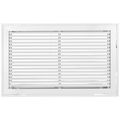
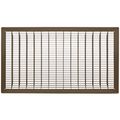
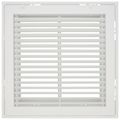
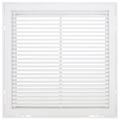
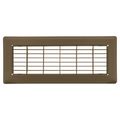

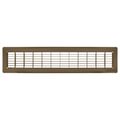
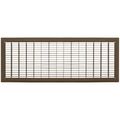
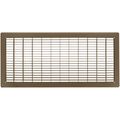
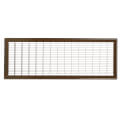


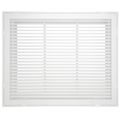
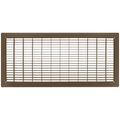
Floor registers and grilles are the visible covers installed over supply and return duct openings in a floor, directing conditioned air into a room while protecting the ductwork below from debris and foot traffic. A supply register includes adjustable louvers or a damper that let occupants direct airflow and control how much conditioned air enters the space, while a return grille is typically a fixed, louvered cover that allows room air to pass back into the return duct without any adjustment mechanism. Installers select these covers based on duct opening size, floor material, and expected foot traffic, since a register mounted in a hallway or entryway needs a sturdier frame than one placed under furniture in a bedroom. Materials range from steel and aluminum to solid wood and cast iron, each suited to different budgets, finish preferences, and durability needs. Matching the register or grille finish to flooring and trim is as much a part of the selection process as getting the duct opening size correct.
Subcategories
- Steel Floor Registers: Steel floor registers are the most common choice for standard residential installs, offering a durable, budget-friendly option that holds up well under regular foot traffic. Most steel registers include an adjustable damper lever that lets occupants open, close, or partially restrict airflow into the room. They come in a range of standard duct opening sizes and finish colors, including options meant to blend with common flooring tones. Steel construction resists warping better than wood, making it a practical choice for high-traffic areas like hallways and entryways.
- Wood Floor Registers: Wood floor registers are chosen primarily for their appearance, matching hardwood flooring in homes where a metal register would stand out visually. They typically include a metal damper mechanism set into a solid wood frame, combining the airflow control of a standard register with a finish that can be stained to match surrounding trim. Wood registers are better suited to lower-traffic rooms, since the frame is more prone to wear and cracking under heavy foot traffic than steel or cast iron. Sizing still follows the same duct opening dimensions as metal registers, so measuring the existing opening remains the first step regardless of material.
- Return Air Grilles: Return air grilles cover the openings where room air is pulled back into the ductwork to be reconditioned, and unlike supply registers, most return grilles do not include a damper since airflow direction control is not needed on the return side. They are sized to the return duct opening and often larger than supply registers to accommodate the higher volume of air moving through a return path. Louver angle and blade spacing affect how much noise the grille produces at a given airflow rate, which matters more on returns since they typically handle more air than a single supply register. Filter-back return grilles, which hold a disposable filter behind the louvered face, are a common upgrade for homes without a dedicated central filter location.
- Cast Iron and Decorative Registers: Cast iron and decorative registers are chosen for older or historic homes where matching an existing architectural style matters as much as the airflow function. They hold up exceptionally well under heavy foot traffic and resist warping, cracking, and fading better than most other materials, though they weigh considerably more than steel or aluminum equivalents. Decorative patterns range from simple geometric designs to ornate Victorian-style scrollwork, giving homeowners options that coordinate with period-appropriate trim and flooring. Because cast iron registers are heavier and often sold in less common sizing, confirming the duct opening dimensions carefully before ordering avoids a mismatch that is harder to return given the material's weight and cost.
Buying Guide
Selecting the right Floor Registers & Grilles starts with measuring the existing duct opening rather than the visible trim or frame of the current cover, since register sizing is based on the rough opening dimension, not the overall face size of the grille. Getting this measurement wrong is one of the most common ordering mistakes, since a register that is even slightly undersized will not seat properly and one that is oversized will not cover the opening cleanly.
Material choice should match both the room's foot traffic and its style. Steel and aluminum registers handle daily wear well and cost less, making them a practical default for hallways, entryways, and other high-traffic areas. Wood and cast iron options cost more but match hardwood flooring or period architecture more convincingly, and cast iron in particular holds up to heavy use better than either steel or wood despite its added weight and expense.
Supply registers need a functioning damper mechanism so occupants can control airflow into the room, while return grilles generally skip the damper since airflow direction is not adjustable on the return side. Homes without a dedicated central return filter sometimes benefit from a filter-back return grille, which adds basic filtration at the return opening itself. Finish color and louver style are largely a matter of matching existing flooring and trim, and ordering a single unit to check the color match against the room before purchasing enough registers for an entire floor can prevent a larger, harder-to-return mismatch.
Frequently Asked Questions
How is a floor register or return grille properly sized?
Measure the rough duct opening in the floor, not the visible frame or trim of the current register, since sizing is based on that opening dimension. Most manufacturers list registers by the actual duct opening size they are designed to cover, with the overall face size slightly larger to overlap the flooring around the opening. Measuring twice before ordering avoids the most common sizing mistake.
What is the difference between a supply register and a return grille?
A supply register includes an adjustable damper that lets occupants control how much conditioned air enters the room, while a return grille is typically a fixed louvered cover without a damper, since airflow direction is not adjustable on the return side. Return grilles are also often sized larger than supply registers to handle a greater volume of air moving back into the ductwork. Confirming which type is needed before ordering prevents installing a register where a grille belongs, or the reverse.
Which material holds up best in high-traffic areas?
Steel and cast iron registers hold up better than wood in hallways, entryways, and other heavy foot traffic areas, since both resist warping and cracking under repeated pressure. Cast iron offers the most durability of the common options but comes at a higher cost and weight. Wood registers are better suited to lower-traffic rooms like bedrooms, where appearance often outweighs the need for heavy-duty durability.
Can a return grille include a filter?
Filter-back return grilles hold a disposable filter behind the louvered face, giving homes without a dedicated central filter location a way to add basic filtration at the return opening. These grilles need periodic filter changes, similar to a central system filter, to avoid restricting airflow. Standard return grilles without this feature rely entirely on filtration elsewhere in the system.
Do floor registers need to match throughout a home?
Matching finish and style throughout a home is a common preference for a cohesive look, though it is not required for the system to function properly. Rooms with different flooring types or trim styles sometimes call for different register materials or finishes to blend appropriately in each space. Ordering a single sample register to check the color and finish against existing flooring before purchasing enough for an entire home helps avoid a mismatch.
