




VGG & VGD Series Gas Valves


 --%3E %3Csvg version='1.1' id='No-RB' xmlns='http://www.w3.org/2000/svg' xmlns:xlink='http://www.w3.org/1999/xlink' x='0px' y='0px' viewBox='0 0 100 100' enable-background='new 0 0 100 100' xml:space='preserve'%3E %3Cpath fill='%23CECECE' d='M79.44,0.95H20.56C9.78,0.95,0.95,9.78,0.95,20.56v58.87c0,10.79,8.82,19.61,19.61,19.61h58.87 c10.79,0,19.61-8.83,19.61-19.61V20.56C99.05,9.78,90.22,0.95,79.44,0.95z M65.38,58.24l9.38,29.58L49.69,69.78L24.5,87.82 l9.34-29.6L8.8,39.6l30.73-0.17c0,0,6.98-19.61,10-28.93c0.54,1.36,9.88,29.1,9.88,29.1H91.2L65.38,58.24z'/%3E %3C/svg%3E)



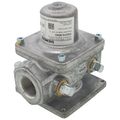


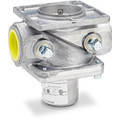


VGG & VGD Series Gas Valves are Siemens-manufactured safety shutoff valves built for commercial and industrial gas burner applications. The VGG10 designation covers single valve bodies, while VGD20 and VGD40 designations cover double valve bodies that place two shutoff valves in series inside one housing. Sizes range from 3/4 inch NPT up to larger threaded and NPT connections such as 2-1/2 inch and 3 inch, covering everything from small commercial boilers to larger industrial burner trains. On VGD20 double valve bodies, the inlet valve uses a flat disc built purely for safety shutoff, while the outlet valve uses a contoured disc designed to pair with a pressure-regulating actuator. The valve line works alongside SKP series electro-hydraulic actuators to provide safety shutoff, gas pressure regulation, and air/gas ratio control in a single gas train. Burner technicians rely on this series when a job calls for redundant shutoff protection built into the valve body itself rather than added through separate components downstream.
Subcategories
- VGG10 Single Valves: VGG10 single valve bodies provide one shutoff valve per housing and come in sizes from 3/4 inch NPT up to 2-1/2 inch NPT. Smaller commercial boilers and burners that do not require redundant block valves typically spec this line. A single valve body keeps the gas train shorter and reduces the number of connection points compared to a double valve setup. Pairing the valve with an SKP series actuator adds pressure regulation on top of the basic shutoff function.
- VGD20 Double Valves: VGD20 double valve bodies place two shutoff valves in series inside one housing, available in sizes such as 1-1/2 inch and 2 inch. The inlet valve uses a flat disc built solely for safety shutoff, while the outlet valve uses a contoured disc that pairs with a pressure-regulating actuator. Burner trains that require redundant block valves for code compliance commonly spec this line instead of two separate single valves. Combining both functions into one body simplifies the physical gas train layout.
- VGD40 Double Valves: VGD40 double valve bodies scale the same two-valves-in-series design up to larger burner trains, with sizes including 2-1/2 inch threaded and 3 inch NPT connections. Larger industrial boilers and burners that need higher gas flow capacity spec this line over the smaller VGD20 series. Redundant shutoff and pressure regulation both live inside the same housing, matching the VGD20 design at a bigger scale. Technicians working on larger gas trains rely on this series when flow capacity outgrows the VGD20 line.
Buying Guide
Start with the code requirement, not the burner size. Many commercial and industrial gas burner installations require redundant block valves for safety compliance, which points toward a VGD20 or VGD40 double valve body rather than a VGG10 single valve. Jobs without that redundancy requirement can often use the simpler VGG10 line and add pressure regulation through a separate actuator instead.
Sizing follows the gas train, not general rules of thumb. VGG & VGD Series Gas Valves span from 3/4 inch NPT on the smallest VGG10 bodies up to 3 inch NPT on the largest VGD40 bodies, so matching the valve size to the existing pipe size in the train avoids a reducer or adapter that adds another failure point. Confirming whether the connection is NPT or threaded flange style also matters, since VGD40 bodies come in both configurations depending on size.
Actuator compatibility closes out the decision. Valve bodies in this series pair with SKP series electro-hydraulic actuators to add gas pressure regulation and air/gas ratio control on top of basic shutoff, so specifying the valve body alone without confirming actuator compatibility leaves the gas train incomplete. Technicians replacing an existing valve should match both the valve body designation and the actuator series to the original equipment rather than substituting a similar-looking part from a different line.
Frequently Asked Questions
What is the difference between a VGG10 and a VGD20 gas valve?
A VGG10 valve is a single valve body with one shutoff valve inside the housing. A VGD20 valve is a double valve body with two shutoff valves in series, one using a flat disc for safety shutoff and the other using a contoured disc for pressure regulation. Jobs requiring redundant block valves for code compliance typically spec the VGD20 line instead of the VGG10.
What sizes are available in the VGG and VGD series gas valves?
VGG10 single valve bodies range from 3/4 inch NPT up to 2-1/2 inch NPT. VGD20 double valve bodies include sizes such as 1-1/2 inch and 2 inch, while VGD40 double valve bodies scale up to 2-1/2 inch threaded and 3 inch NPT connections. Matching the valve size to the existing gas train pipe size avoids adding a reducer fitting.
What actuator works with VGG and VGD series gas valves?
VGG and VGD series gas valves pair with SKP series electro-hydraulic actuators. The actuator adds gas pressure regulation and air/gas ratio control on top of the valve body's basic safety shutoff function. Confirming actuator compatibility alongside the valve body designation keeps the gas train complete.
What is the difference between VGD20 and VGD40 double valves?
Both VGD20 and VGD40 valves place two shutoff valves in series inside one housing, but VGD40 bodies scale up to larger sizes such as 2-1/2 inch threaded and 3 inch NPT connections. Larger industrial burner trains that need higher gas flow capacity typically spec the VGD40 line over VGD20. Both share the same flat-disc-inlet, contoured-disc-outlet design.
Why would a job need a double valve instead of two single valves?
A double valve body such as the VGD20 or VGD40 places both shutoff valves inside one housing instead of requiring two separate VGG10 bodies plumbed together. Combining both valves into one body simplifies the physical layout of the gas train and reduces the number of connection points. Code requirements for redundant block valves are often satisfied more directly with a double valve body than with two single valves pieced together.
