




Filters
SORT
Product Availability –
Used With –
Review Score –
 --%3E %3Csvg version='1.1' id='Fill' xmlns='http://www.w3.org/2000/svg' xmlns:xlink='http://www.w3.org/1999/xlink' x='0px' y='0px' viewBox='0 0 100 100' enable-background='new 0 0 100 100' xml:space='preserve'%3E %3Cpath fill='%23F15C02' d='M79.44,0.95H20.56C9.78,0.95,0.95,9.78,0.95,20.56v58.87c0,10.79,8.82,19.61,19.61,19.61h58.87 c10.79,0,19.61-8.83,19.61-19.61V20.56C99.05,9.78,90.22,0.95,79.44,0.95z M65.38,58.24l9.38,29.58L49.69,69.78L24.5,87.82 l9.34-29.6L8.8,39.6l30.73-0.17c0,0,6.98-19.61,10-28.93c0.54,1.36,9.88,29.1,9.88,29.1H91.2L65.38,58.24z'/%3E %3C/svg%3E)
 --%3E %3Csvg version='1.1' id='With-RB' xmlns='http://www.w3.org/2000/svg' xmlns:xlink='http://www.w3.org/1999/xlink' x='0px' y='0px' viewBox='0 0 100 100' enable-background='new 0 0 100 100' xml:space='preserve'%3E %3Cpath fill='%23FBC8B4' d='M79.44,0.95H20.56C9.78,0.95,0.95,9.78,0.95,20.56v58.87c0,10.79,8.82,19.61,19.61,19.61h58.87 c10.79,0,19.61-8.83,19.61-19.61V20.56C99.05,9.78,90.22,0.95,79.44,0.95z M65.38,58.24l9.38,29.58L49.69,69.78L24.5,87.82 l9.34-29.6L8.8,39.6l30.73-0.17c0,0,6.98-19.61,10-28.93c0.54,1.36,9.88,29.1,9.88,29.1H91.2L65.38,58.24z'/%3E %3C/svg%3E)
Price Range –
Gaskets





 --%3E %3Csvg version='1.1' id='No-RB' xmlns='http://www.w3.org/2000/svg' xmlns:xlink='http://www.w3.org/1999/xlink' x='0px' y='0px' viewBox='0 0 100 100' enable-background='new 0 0 100 100' xml:space='preserve'%3E %3Cpath fill='%23CECECE' d='M79.44,0.95H20.56C9.78,0.95,0.95,9.78,0.95,20.56v58.87c0,10.79,8.82,19.61,19.61,19.61h58.87 c10.79,0,19.61-8.83,19.61-19.61V20.56C99.05,9.78,90.22,0.95,79.44,0.95z M65.38,58.24l9.38,29.58L49.69,69.78L24.5,87.82 l9.34-29.6L8.8,39.6l30.73-0.17c0,0,6.98-19.61,10-28.93c0.54,1.36,9.88,29.1,9.88,29.1H91.2L65.38,58.24z'/%3E %3C/svg%3E)



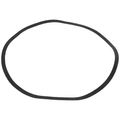
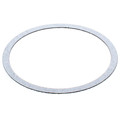

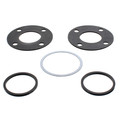

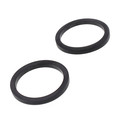


Gaskets are the sealing components installed between two mating surfaces, such as flanges, valve bodies, or equipment covers, to prevent leaks under pressure, vacuum, or temperature cycling. Plumbing and HVAC contractors keep an assortment on hand because a worn or improperly sized gasket is one of the most common causes of a slow leak at a flanged connection or access panel. Material selection matters as much as size, since a rubber gasket rated for water service won't necessarily hold up in a high-temperature boiler or refrigerant application. Matching the gasket's inside diameter, outside diameter, and thickness to the mating flange keeps the seal tight without over-compressing the material during installation. Because gaskets are a low-cost, high-consequence part, having the right one on the truck often saves a second trip back to the supply house mid-repair.
Subcategories
- Flange Gaskets: Flange gaskets seal the joint between two bolted pipe flanges on water, steam, or process piping. Full-face and ring-style versions distribute bolt load differently across the flange face, so matching the style to the existing flange type keeps the seal even under pressure. Rubber, fiber, and spiral-wound materials are common depending on service temperature and fluid. A gasket that's too thin for the flange gap can leave gaps at the bolt holes even when properly torqued.
- Water Heater Gaskets: Water heater gaskets seal the flange or element opening on residential and commercial tanks, most often where an anode rod, drain valve, or heating element passes through the tank wall. Techs replace these during element swaps or anode rod service, since reusing a compressed gasket often leads to a slow weep at the fitting. Matching the gasket's diameter and bolt pattern to the specific tank model keeps the reinstalled component from leaking under standing water pressure.
- Valve Gaskets: Valve gaskets seal the bonnet-to-body joint on gate, globe, and butterfly valves, where the packing and stem pass through the valve housing. Replacing a hardened or compressed gasket during valve rebuild work restores a tight seal without needing a full valve replacement. Material compatibility with the line's fluid and temperature range keeps the gasket from degrading faster than the valve body itself.
- High-Temperature Gaskets: High-temperature gaskets are built from materials like graphite or aramid fiber that hold their seal under boiler, steam, and flue applications where standard rubber compounds would harden and crack. Contractors working on hydronic heating systems or oil and gas-fired equipment reach for these when the service temperature exceeds what a general-purpose gasket can handle. Correct torque sequence on the surrounding bolts matters more with these materials, since uneven compression can crack a brittle high-temperature gasket during installation.
Buying Guide
Selecting the right gasket starts with confirming the exact dimensions of the mating surfaces, since even a slightly undersized or oversized gasket can leave a gap that leaks under system pressure. Measuring the flange's inside diameter, outside diameter, bolt circle, and the number of bolt holes before ordering prevents a mismatched part showing up on the truck mid-repair. Material selection is just as important as size: rubber gaskets handle general water service well, but boiler, steam, and refrigerant applications call for materials rated for higher temperatures and chemical exposure, such as graphite or fiber composites. Checking the manufacturer's service temperature and pressure rating against the system's actual operating conditions avoids premature gasket failure that can mean a return trip during a service call. Thickness matters too, since a gasket that's too thin won't fill the flange gap evenly, while one that's too thick can compress unevenly and blow out under bolt load. For water heater and valve rebuild work, matching the gasket to the specific model rather than a generic size keeps the reinstalled part sealing correctly the first time. Keeping a stocked assortment of common gaskets, spanning flange, valve, and water heater types, on the service vehicle cuts down on delays when a job calls for an immediate reseal rather than a scheduled follow-up visit. Reviewing torque specifications for the surrounding fasteners also matters, since gaskets are as much about installation technique as material choice.
Frequently Asked Questions
How is the correct gasket size determined for a flange or fitting?
Measuring the mating surface's inside diameter, outside diameter, bolt circle, and bolt hole count against the manufacturer's spec sheet is the most reliable way to confirm a correct fit before ordering a replacement gasket.
What's the difference between rubber and fiber gaskets?
Rubber gaskets suit general water service and lower-temperature applications, while fiber and graphite gaskets hold up better under the higher heat and pressure found in boiler, steam, and flue connections.
Can a compressed gasket be reused after disassembly?
Reusing a gasket that's already been compressed under bolt load often leads to a slow leak, since the material has already taken a permanent set and won't reseal as tightly the second time.
Why does a new gasket still leak after installation?
Uneven bolt torque, a mismatched gasket thickness, or a damaged flange face are the most common reasons a newly installed gasket still leaks, so checking the flange surface for pitting or warping before reassembly is worth the extra few minutes.
What gasket material works best for refrigerant line connections?
Refrigerant systems typically call for a gasket material rated for the specific refrigerant and oil type in the system, since general-purpose rubber compounds can swell or harden when exposed to certain refrigerant blends.
