



Filters
SORT
Product Availability –
Category –
Max Flow (GPM) –
Max Head (Ft) –
Voltage –
Review Score –
 --%3E %3Csvg version='1.1' id='Fill' xmlns='http://www.w3.org/2000/svg' xmlns:xlink='http://www.w3.org/1999/xlink' x='0px' y='0px' viewBox='0 0 100 100' enable-background='new 0 0 100 100' xml:space='preserve'%3E %3Cpath fill='%23F15C02' d='M79.44,0.95H20.56C9.78,0.95,0.95,9.78,0.95,20.56v58.87c0,10.79,8.82,19.61,19.61,19.61h58.87 c10.79,0,19.61-8.83,19.61-19.61V20.56C99.05,9.78,90.22,0.95,79.44,0.95z M65.38,58.24l9.38,29.58L49.69,69.78L24.5,87.82 l9.34-29.6L8.8,39.6l30.73-0.17c0,0,6.98-19.61,10-28.93c0.54,1.36,9.88,29.1,9.88,29.1H91.2L65.38,58.24z'/%3E %3C/svg%3E)
 --%3E %3Csvg version='1.1' id='With-RB' xmlns='http://www.w3.org/2000/svg' xmlns:xlink='http://www.w3.org/1999/xlink' x='0px' y='0px' viewBox='0 0 100 100' enable-background='new 0 0 100 100' xml:space='preserve'%3E %3Cpath fill='%23FBC8B4' d='M79.44,0.95H20.56C9.78,0.95,0.95,9.78,0.95,20.56v58.87c0,10.79,8.82,19.61,19.61,19.61h58.87 c10.79,0,19.61-8.83,19.61-19.61V20.56C99.05,9.78,90.22,0.95,79.44,0.95z M65.38,58.24l9.38,29.58L49.69,69.78L24.5,87.82 l9.34-29.6L8.8,39.6l30.73-0.17c0,0,6.98-19.61,10-28.93c0.54,1.36,9.88,29.1,9.88,29.1H91.2L65.38,58.24z'/%3E %3C/svg%3E)
Price Range –
Grundfos Stainless Steel Pumps

 --%3E %3Csvg version='1.1' id='No-RB' xmlns='http://www.w3.org/2000/svg' xmlns:xlink='http://www.w3.org/1999/xlink' x='0px' y='0px' viewBox='0 0 100 100' enable-background='new 0 0 100 100' xml:space='preserve'%3E %3Cpath fill='%23CECECE' d='M79.44,0.95H20.56C9.78,0.95,0.95,9.78,0.95,20.56v58.87c0,10.79,8.82,19.61,19.61,19.61h58.87 c10.79,0,19.61-8.83,19.61-19.61V20.56C99.05,9.78,90.22,0.95,79.44,0.95z M65.38,58.24l9.38,29.58L49.69,69.78L24.5,87.82 l9.34-29.6L8.8,39.6l30.73-0.17c0,0,6.98-19.61,10-28.93c0.54,1.36,9.88,29.1,9.88,29.1H91.2L65.38,58.24z'/%3E %3C/svg%3E)
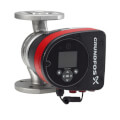
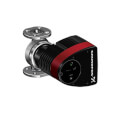
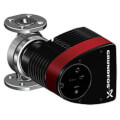
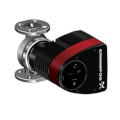
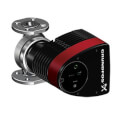
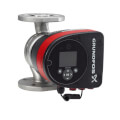
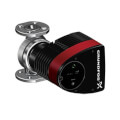


Grundfos Stainless Steel Pumps are vertical multistage centrifugal pumps built with wetted parts in AISI 304 or AISI 316 grade stainless steel, making them suited to non-corrosive liquids and applications where corrosion resistance matters more than a standard cast iron construction can provide. The line covers flows up to 320 cubic meters per hour and working pressures up to 40 bar across sixteen different flow sizes, so contractors can match a pump to jobs ranging from residential water transfer to demanding commercial pressure boosting.
Typical applications include liquid transfer, circulation, and pressure boosting of cold or hot water, along with irrigation and aqua-farming installations where stainless wetted parts resist buildup and corrosion better than iron construction. Selecting the correct stainless grade for the water chemistry on site is what keeps these pumps running at their rated service life.
Subcategories
- AISI 304 Stainless Steel Pumps: Pumps built entirely from AISI 304 grade stainless steel are suited to water and other non-corrosive liquids where a fully stainless wetted path is preferred over a cast iron and stainless combination. Contractors use these where the pumped liquid or environment calls for more corrosion resistance than a standard cast iron pump provides. This grade covers the majority of general water transfer and boosting applications. It is a common choice for potable water systems.
- AISI 316 Stainless Steel Pumps: Pumps built from AISI 316 grade stainless steel offer higher corrosion resistance than 304 grade, which suits more aggressive water chemistries or industrial liquids. Contractors specify 316 grade when the application involves higher chloride content or more corrosive process fluids. This grade is typically reserved for demanding industrial or specialty applications rather than standard residential use. Confirming water chemistry against the pump's stainless grade prevents premature wear.
- Variable-Speed Stainless Steel Pumps: Multistage pumps with a built-in variable-speed drive adjust output to match demand instead of running at a fixed speed, which can reduce energy use on systems with variable flow needs. These units combine a stainless wetted path with an integrated drive rather than requiring a separate control panel. Contractors use this configuration on jobs where flow demand changes throughout the day. It suits both liquid transfer and pressure boosting applications.
- High-Pressure Boosting Pumps: Stainless multistage pumps rated for higher working pressures, up to 40 bar within the line, are used on jobs requiring strong pressure boosting rather than simple transfer or circulation. Contractors select this configuration for tall buildings or systems with significant elevation change. The vertical multistage design allows these ratings without an oversized footprint. Matching the pressure rating to the system's actual head requirement avoids an undersized pump.
Buying Guide
Start by confirming the water chemistry the pump will handle. Grundfos Stainless Steel Pumps are available in AISI 304 and AISI 316 wetted-part grades, and 316 grade offers stronger corrosion resistance for more aggressive liquids while 304 grade covers most standard water transfer and boosting jobs.
Match the flow and pressure requirements of the job to the correct model within the line. The stainless pump range covers flows up to 320 cubic meters per hour and working pressures up to 40 bar across sixteen flow sizes, so pulling the actual demand numbers for the application, rather than estimating, keeps the selected pump correctly sized instead of oversized or undersized.
Consider whether a variable-speed model makes sense for the application. A built-in variable-speed drive lets the pump adjust output to match real-time demand instead of running at a fixed speed, which suits systems with fluctuating flow needs better than a standard fixed-speed model.
Confirm the intended use case, since Grundfos Stainless Steel Pumps cover liquid transfer, circulation, pressure boosting, and even aqua-farming and irrigation applications. A pump sized correctly for straight transfer may not perform the same in a pressure-boosting role, so match the model to the specific job rather than assuming interchangeability across use cases.
Finally, verify connection sizing and installation footprint against the mechanical room or pump station where the unit will be installed. The vertical multistage design keeps a compact footprint relative to output, but confirming physical clearance before ordering avoids delays on installation day.
Frequently Asked Questions
What is the difference between AISI 304 and AISI 316 stainless steel pumps?
AISI 316 grade offers stronger corrosion resistance than 304 grade, making it better suited to aggressive water chemistries or industrial process liquids. AISI 304 grade covers most standard water transfer and boosting applications.
What flow and pressure range do Grundfos Stainless Steel Pumps cover?
The line covers flows up to 320 cubic meters per hour and working pressures up to 40 bar across sixteen different flow sizes. Matching actual job demand to a specific model within that range keeps the pump correctly sized.
When does a variable-speed stainless pump make sense over a fixed-speed model?
A variable-speed model is a better fit when flow demand fluctuates throughout the day, since the built-in drive adjusts output to match real-time need. A fixed-speed pump is simpler and sufficient for steady, constant-demand applications.
What applications are Grundfos Stainless Steel Pumps used for?
Common applications include liquid transfer, circulation, pressure boosting of cold or hot water, irrigation, and aqua-farming. The correct model depends on matching flow, pressure, and stainless grade to the specific use case.
Why choose a stainless steel pump over a standard cast iron pump?
Stainless wetted parts resist corrosion and buildup better than cast iron, which matters for non-corrosive but sensitive applications like potable water systems or installations with more demanding water chemistry.
