




Filters
SORT
Product Availability –
Type –
Connection Size –
Max Head (Ft) –
Review Score –
 --%3E %3Csvg version='1.1' id='Fill' xmlns='http://www.w3.org/2000/svg' xmlns:xlink='http://www.w3.org/1999/xlink' x='0px' y='0px' viewBox='0 0 100 100' enable-background='new 0 0 100 100' xml:space='preserve'%3E %3Cpath fill='%23F15C02' d='M79.44,0.95H20.56C9.78,0.95,0.95,9.78,0.95,20.56v58.87c0,10.79,8.82,19.61,19.61,19.61h58.87 c10.79,0,19.61-8.83,19.61-19.61V20.56C99.05,9.78,90.22,0.95,79.44,0.95z M65.38,58.24l9.38,29.58L49.69,69.78L24.5,87.82 l9.34-29.6L8.8,39.6l30.73-0.17c0,0,6.98-19.61,10-28.93c0.54,1.36,9.88,29.1,9.88,29.1H91.2L65.38,58.24z'/%3E %3C/svg%3E)
 --%3E %3Csvg version='1.1' id='With-RB' xmlns='http://www.w3.org/2000/svg' xmlns:xlink='http://www.w3.org/1999/xlink' x='0px' y='0px' viewBox='0 0 100 100' enable-background='new 0 0 100 100' xml:space='preserve'%3E %3Cpath fill='%23FBC8B4' d='M79.44,0.95H20.56C9.78,0.95,0.95,9.78,0.95,20.56v58.87c0,10.79,8.82,19.61,19.61,19.61h58.87 c10.79,0,19.61-8.83,19.61-19.61V20.56C99.05,9.78,90.22,0.95,79.44,0.95z M65.38,58.24l9.38,29.58L49.69,69.78L24.5,87.82 l9.34-29.6L8.8,39.6l30.73-0.17c0,0,6.98-19.61,10-28.93c0.54,1.36,9.88,29.1,9.88,29.1H91.2L65.38,58.24z'/%3E %3C/svg%3E)
Price Range –
Grundfos ALPHA Series Stainless Steel Pumps


 --%3E %3Csvg version='1.1' id='Half' xmlns='http://www.w3.org/2000/svg' xmlns:xlink='http://www.w3.org/1999/xlink' x='0px' y='0px' viewBox='0 0 100 100' enable-background='new 0 0 100 100' xml:space='preserve'%3E %3Cg%3E %3Cpath fill='%23F15C02' d='M30.05,70.23l3.79-12.01L8.8,39.6l30.73-0.17c0,0,6.98-19.61,10-28.93c0.54,1.36,9.88,29.1,9.88,29.1h1.58 L93.71,7.18c-3.58-3.82-8.66-6.23-14.28-6.23H20.56C9.78,0.95,0.95,9.78,0.95,20.56v58.87c0,5.41,2.22,10.32,5.79,13.88 L30.05,70.23z'/%3E %3C/g%3E %3Cpath fill='%23FBC8B4' d='M93.71,7.18L60.98,39.6H91.2L65.38,58.24l9.38,29.58L49.69,69.78L24.5,87.82l5.55-17.59L6.75,93.32 c3.55,3.54,8.44,5.73,13.82,5.73h58.87c10.79,0,19.61-8.83,19.61-19.61V20.56C99.05,15.4,97.01,10.69,93.71,7.18z'/%3E %3C/svg%3E)
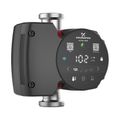
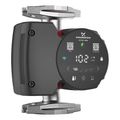

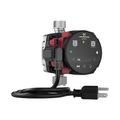
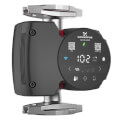
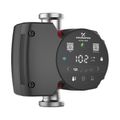
Grundfos ALPHA Series Stainless Steel Pumps are variable-speed circulator pumps built with a stainless steel wet end for domestic hot water recirculation and other open-loop systems where cast iron would corrode over time. The pump's electronically commutated motor automatically adjusts its speed to match the system's actual demand rather than running at a single fixed speed around the clock. That adaptive operation cuts electricity use compared with an older single-speed circulator that runs continuously regardless of how much flow the system actually needs at a given moment. Stainless steel construction specifically targets domestic hot water and recirculation applications where the circulated water isn't part of a closed, treated hydronic loop, since untreated potable water is far more corrosive to cast iron than the treated water in a sealed heating system. Plumbers and mechanical contractors specify these pumps on recirculation jobs where a standard cast-iron circulator would be the wrong material choice for the application.
Subcategories
- Domestic Hot Water Recirculation Pumps: Domestic hot water recirculation pumps keep hot water moving continuously through a building's supply piping so it reaches fixtures faster once a tap is opened. Stainless steel construction resists the corrosive effects of untreated potable water far better than cast iron would over years of continuous operation. Variable-speed operation lets the pump throttle down during low-demand periods rather than running at full speed around the clock. These pumps are common in multi-story buildings and homes with long pipe runs to distant fixtures.
- Variable Speed Circulator Pumps: Variable speed circulator pumps use an electronically commutated motor to continuously adjust flow output based on real-time system demand rather than a single fixed setting. This adaptive behavior reduces energy consumption compared with older single-speed circulators that run at one speed regardless of actual load. Installers typically set the pump to an automatic mode during commissioning and let it self-adjust from there. Reduced electrical draw is one of the main reasons contractors upgrade an aging single-speed pump to a variable-speed model.
- Pump Replacement Cartridges and Parts: Replacement cartridges let a technician rebuild the wet end of a pump without replacing the entire unit, extending its service life considerably. Wear on the impeller and bearing surfaces is the most common reason a circulator's output gradually declines over years of continuous use. Keeping the correct cartridge on hand for a given pump model shortens a service call from a full pump swap to a quicker internal rebuild. Matching the cartridge exactly to the pump's model and stainless construction keeps corrosion resistance consistent after the rebuild.
Buying Guide
Selecting the right circulator for a recirculation job starts with confirming the water is potable and open-loop rather than part of a closed, chemically treated heating loop, since that distinction determines whether stainless steel or cast iron construction is the correct choice. Using a cast-iron pump on an open domestic hot water loop invites corrosion and premature failure that a stainless model avoids entirely. Pump sizing depends on the length and diameter of the recirculation piping and the building's hot water demand pattern, with longer pipe runs and larger buildings generally calling for higher flow capacity. Variable-speed models like the Grundfos ALPHA Series Stainless Steel Pumps line reduce standby electrical draw compared with older single-speed circulators, since the motor throttles down automatically once the system reaches its target temperature and demand drops. Mounting orientation matters at installation, since these circulators are typically designed to be installed with the motor shaft horizontal rather than vertical to avoid uneven bearing wear. Isolation valves flanking the pump make future maintenance or replacement far simpler, letting a technician service the pump without draining the entire recirculation loop. Contractors upgrading an older system should also check that the existing wiring and control scheme, whether timer, aquastat, or continuous run, is compatible with the new pump's control inputs before finalizing the swap, since not every legacy control setup interfaces directly with a modern variable-speed unit.
Frequently Asked Questions
Why choose a stainless steel circulator over a cast iron model?
Stainless steel resists the corrosive effects of untreated potable water far better than cast iron, which is why recirculation loops carrying domestic hot water call for stainless construction rather than the cast-iron pumps used on closed heating loops. Cast iron works fine in a sealed, chemically treated hydronic system where the same water recirculates for years, but that protection doesn't exist in an open domestic water loop. Choosing the wrong material typically shows up as internal corrosion and reduced pump life well before the motor itself fails.
How does a variable-speed circulator save energy compared to a single-speed pump?
A variable-speed circulator continuously adjusts its motor speed to match real-time demand instead of running at one fixed speed at all times. During periods of low hot water use, the pump throttles down and draws less electricity than a single-speed unit running flat out regardless of actual need. Over a full year of continuous recirculation duty, that adaptive behavior adds up to a meaningful reduction in electrical consumption.
What orientation should this pump be installed in?
Most circulators in this category are designed for horizontal motor shaft installation rather than vertical mounting, since the bearing and seal design assumes that orientation. Installing the pump in an unsupported orientation can accelerate bearing wear and shorten its service life. Checking the installation manual for the specific model before mounting avoids this problem entirely.
Can the pump be serviced without draining the whole recirculation loop?
Installing isolation valves on both sides of the pump during the original installation makes future service possible without draining the entire loop. Without those valves, a pump replacement or internal rebuild means draining and refilling the whole system, which adds significant time to a straightforward service call. Contractors doing a first-time installation should always include isolation valves even if they add a modest amount to the initial material cost.
Does this pump work with an existing timer or aquastat control?
Compatibility depends on the specific control scheme already in place, since not every legacy timer or aquastat interfaces directly with a modern variable-speed pump's control inputs. Some installations simply wire the pump to run continuously and let its internal adaptive control handle speed adjustment on its own. Checking the pump's control wiring documentation against the existing control scheme before installation avoids a mismatch that shows up only after the job is finished.
