




Filters
SORT
Product Availability –
Product Type –
Size –
Review Score –
 --%3E %3Csvg version='1.1' id='Fill' xmlns='http://www.w3.org/2000/svg' xmlns:xlink='http://www.w3.org/1999/xlink' x='0px' y='0px' viewBox='0 0 100 100' enable-background='new 0 0 100 100' xml:space='preserve'%3E %3Cpath fill='%23F15C02' d='M79.44,0.95H20.56C9.78,0.95,0.95,9.78,0.95,20.56v58.87c0,10.79,8.82,19.61,19.61,19.61h58.87 c10.79,0,19.61-8.83,19.61-19.61V20.56C99.05,9.78,90.22,0.95,79.44,0.95z M65.38,58.24l9.38,29.58L49.69,69.78L24.5,87.82 l9.34-29.6L8.8,39.6l30.73-0.17c0,0,6.98-19.61,10-28.93c0.54,1.36,9.88,29.1,9.88,29.1H91.2L65.38,58.24z'/%3E %3C/svg%3E)
 --%3E %3Csvg version='1.1' id='With-RB' xmlns='http://www.w3.org/2000/svg' xmlns:xlink='http://www.w3.org/1999/xlink' x='0px' y='0px' viewBox='0 0 100 100' enable-background='new 0 0 100 100' xml:space='preserve'%3E %3Cpath fill='%23FBC8B4' d='M79.44,0.95H20.56C9.78,0.95,0.95,9.78,0.95,20.56v58.87c0,10.79,8.82,19.61,19.61,19.61h58.87 c10.79,0,19.61-8.83,19.61-19.61V20.56C99.05,9.78,90.22,0.95,79.44,0.95z M65.38,58.24l9.38,29.58L49.69,69.78L24.5,87.82 l9.34-29.6L8.8,39.6l30.73-0.17c0,0,6.98-19.61,10-28.93c0.54,1.36,9.88,29.1,9.88,29.1H91.2L65.38,58.24z'/%3E %3C/svg%3E)
Price Range –
Hart & Cooley TLC Chimney Vent & Fittings

 --%3E %3Csvg version='1.1' id='No-RB' xmlns='http://www.w3.org/2000/svg' xmlns:xlink='http://www.w3.org/1999/xlink' x='0px' y='0px' viewBox='0 0 100 100' enable-background='new 0 0 100 100' xml:space='preserve'%3E %3Cpath fill='%23CECECE' d='M79.44,0.95H20.56C9.78,0.95,0.95,9.78,0.95,20.56v58.87c0,10.79,8.82,19.61,19.61,19.61h58.87 c10.79,0,19.61-8.83,19.61-19.61V20.56C99.05,9.78,90.22,0.95,79.44,0.95z M65.38,58.24l9.38,29.58L49.69,69.78L24.5,87.82 l9.34-29.6L8.8,39.6l30.73-0.17c0,0,6.98-19.61,10-28.93c0.54,1.36,9.88,29.1,9.88,29.1H91.2L65.38,58.24z'/%3E %3C/svg%3E)
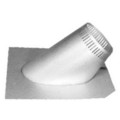
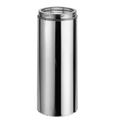


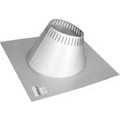
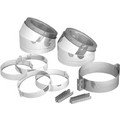
Hart & Cooley TLC chimney vent and fittings make up a double-wall, insulated venting system designed for gas appliances that require a vent category rated for the appliance's flue gas temperature. Installers use it to route flue gases from a furnace, boiler, or water heater safely through a wall or roof penetration to the outdoors, maintaining clearance to combustibles along the way. The double-wall construction keeps the outer pipe surface cooler than a single-wall pipe would run, which reduces the clearance needed to nearby framing and finish materials. SupplyHouse stocks the pipe sections, elbows, and termination fittings that make up a complete TLC venting run. Matching pipe diameter and fitting type to the appliance manufacturer's venting requirements is the starting point for any installation, since venting length, rise, and offset all affect how a system drafts.
Subcategories
- Straight Pipe Sections: Straight pipe sections make up the bulk of a typical TLC venting run, connecting the appliance draft hood or inducer outlet to the termination point through a wall or roof. Sections come in fixed lengths that install with a locking or telescoping joint depending on the run's layout. Installers cut vertical rise and horizontal offset to the appliance manufacturer's maximum allowable lengths rather than an arbitrary distance. Supporting the pipe at manufacturer-specified intervals keeps joints from separating under the weight of the run.
- Elbows: Elbows change direction in a TLC vent run where a straight shot to the termination point is not possible, most commonly in 90-degree and 45-degree configurations. Every elbow in a run reduces the system's effective venting capacity compared to an equivalent length of straight pipe, so appliance manufacturers typically cap how many elbows a given run can include. Installers should count elbows against that limit before finalizing a vent layout.
- Wall and Roof Terminations: Wall and roof termination fittings cap the end of a vent run and are built to keep wind and precipitation from entering the system while still allowing flue gases to exhaust freely. Wall terminations mount through vertical siding or masonry, while roof terminations pass through the roof deck with an appropriate flashing collar. Clearance to windows, doors, and adjacent structures at the termination point is typically governed by the appliance's installation manual and local code.
- Support and Firestop Components: Support and firestop components anchor the vent run at wall and ceiling penetrations while maintaining the clearance to combustibles the system was tested with. Firestop spacers seal the penetration against fire spread between floors, which matters most where the vent passes through a rated wall or floor assembly. Wall straps and support bands keep long vertical runs from swaying or placing weight stress on the joints below.
Buying Guide
Specifying Hart & Cooley TLC Chimney Vent & Fittings starts with the appliance manufacturer's venting requirements rather than the vent system's general capabilities, since the appliance's input rating, flue gas temperature, and maximum vent length and elbow count all constrain which pipe diameter and layout will work.
Pipe diameter needs to match the appliance's flue collar size, and stepping up or down in diameter partway through a run typically requires a listed increaser or reducer fitting rather than a field-fabricated transition. Installers should also confirm the vent category the appliance calls for, since not every gas appliance is rated for the same vent connector type.
Layout planning comes next: total vertical rise, horizontal offset, and elbow count all affect draft, and exceeding the appliance manufacturer's maximum allowable equivalent length can cause a system to draft poorly even if every individual component is installed correctly. Counting elbows and measuring offsets against the manufacturer's chart before ordering catches this early rather than after installation.
Finally, clearance to combustibles at every point along the run, including where it passes through framing, needs to match what the system was tested and listed for, since reducing that clearance is not a spec that can be adjusted in the field.
Frequently Asked Questions
What is the difference between Type B vent and other gas venting categories?
Type B vent is rated for the flue gas temperatures of standard atmospheric gas appliances, while some higher-efficiency or specialty appliances require a different vent category rated for different temperature or pressure conditions. The appliance's installation manual specifies which category applies.
How many elbows can a TLC vent run include?
The maximum elbow count is set by the appliance manufacturer based on the run's total equivalent length, so installers should check the specific appliance's installation manual rather than assuming a fixed number applies across all models.
Does double-wall vent pipe need less clearance to combustibles than single-wall pipe?
Double-wall construction generally allows reduced clearance to combustibles compared to single-wall pipe because the outer wall stays cooler, but the exact clearance is set by the system's listing and should not be reduced further without manufacturer documentation.
What is a firestop spacer used for?
A firestop spacer seals the gap where a vent pipe passes through a rated wall, floor, or ceiling assembly, maintaining the fire-resistance rating of that assembly while still allowing the vent pipe to pass through.
Can TLC vent components be mixed with a different manufacturer's venting system?
Mixing venting components across manufacturers is generally not permitted under the system's listing, so a complete run should use fittings from the same TLC product line rather than substituting parts from another vent brand.
