




Filters
SORT
Product Availability –
Brand –
Review Score –
 --%3E %3Csvg version='1.1' id='Fill' xmlns='http://www.w3.org/2000/svg' xmlns:xlink='http://www.w3.org/1999/xlink' x='0px' y='0px' viewBox='0 0 100 100' enable-background='new 0 0 100 100' xml:space='preserve'%3E %3Cpath fill='%23F15C02' d='M79.44,0.95H20.56C9.78,0.95,0.95,9.78,0.95,20.56v58.87c0,10.79,8.82,19.61,19.61,19.61h58.87 c10.79,0,19.61-8.83,19.61-19.61V20.56C99.05,9.78,90.22,0.95,79.44,0.95z M65.38,58.24l9.38,29.58L49.69,69.78L24.5,87.82 l9.34-29.6L8.8,39.6l30.73-0.17c0,0,6.98-19.61,10-28.93c0.54,1.36,9.88,29.1,9.88,29.1H91.2L65.38,58.24z'/%3E %3C/svg%3E)
 --%3E %3Csvg version='1.1' id='With-RB' xmlns='http://www.w3.org/2000/svg' xmlns:xlink='http://www.w3.org/1999/xlink' x='0px' y='0px' viewBox='0 0 100 100' enable-background='new 0 0 100 100' xml:space='preserve'%3E %3Cpath fill='%23FBC8B4' d='M79.44,0.95H20.56C9.78,0.95,0.95,9.78,0.95,20.56v58.87c0,10.79,8.82,19.61,19.61,19.61h58.87 c10.79,0,19.61-8.83,19.61-19.61V20.56C99.05,9.78,90.22,0.95,79.44,0.95z M65.38,58.24l9.38,29.58L49.69,69.78L24.5,87.82 l9.34-29.6L8.8,39.6l30.73-0.17c0,0,6.98-19.61,10-28.93c0.54,1.36,9.88,29.1,9.88,29.1H91.2L65.38,58.24z'/%3E %3C/svg%3E)
Price Range –
Heat Block and Heat Transfer


 --%3E %3Csvg version='1.1' id='No-RB' xmlns='http://www.w3.org/2000/svg' xmlns:xlink='http://www.w3.org/1999/xlink' x='0px' y='0px' viewBox='0 0 100 100' enable-background='new 0 0 100 100' xml:space='preserve'%3E %3Cpath fill='%23CECECE' d='M79.44,0.95H20.56C9.78,0.95,0.95,9.78,0.95,20.56v58.87c0,10.79,8.82,19.61,19.61,19.61h58.87 c10.79,0,19.61-8.83,19.61-19.61V20.56C99.05,9.78,90.22,0.95,79.44,0.95z M65.38,58.24l9.38,29.58L49.69,69.78L24.5,87.82 l9.34-29.6L8.8,39.6l30.73-0.17c0,0,6.98-19.61,10-28.93c0.54,1.36,9.88,29.1,9.88,29.1H91.2L65.38,58.24z'/%3E %3C/svg%3E)
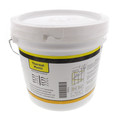

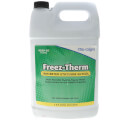


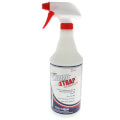
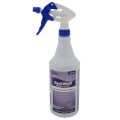
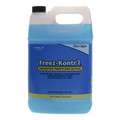
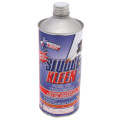
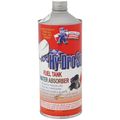
Heat Block and Heat Transfer products protect surrounding materials from damage during soldering, brazing, and welding on pipe, valves, and fittings. A pliable putty or paste is packed around a joint before heat is applied, absorbing and blocking conductive heat so that nearby wood framing, insulation, rubber gaskets, or finished surfaces do not scorch or melt. Plumbers and HVAC technicians reach for these compounds whenever a joint sits close to a combustible material or a component that cannot tolerate direct flame exposure, such as when repairing a fitting inside a finished wall. Because the putty is reusable, a single container serves many jobs before it needs replacing. Keeping a container on the truck lets a technician work confidently in tight, finished spaces without stopping to build a separate heat shield for every joint.
Subcategories
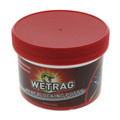
- Heat Blocking Putty: Heat blocking putty is a moldable compound packed directly around a fitting or joint to stop conductive heat from reaching nearby combustible material during brazing or soldering. Technicians press the putty into gaps and against wood framing, insulation, or finished drywall before applying flame. Most formulations are reusable, so the same container of putty serves dozens of jobs before it needs replacing.
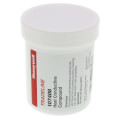
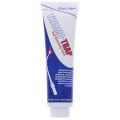
- Heat Transfer Paste: Heat transfer paste spreads in a thin layer to move heat away from a sensitive component rather than blocking it entirely, which suits applications like soldering near an electrical connection or a temperature-sensitive valve seat. The paste conducts heat outward and dissipates it faster than still air alone would allow. Refrigeration and electronics-adjacent plumbing work relies on this style of compound more often than pure blocking putty.
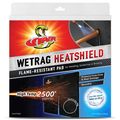
- Fire-Resistant Shields and Cloths: Fire-resistant shields and cloths supplement putty and paste when a joint sits near an especially vulnerable surface, such as a finished ceiling or an occupied space where sparks and stray flame need extra containment. These woven or coated barriers drape over the surrounding area and hold up to repeated exposure to torch heat. Contractors working in remodels and occupied buildings carry these alongside putty to cover a wider protection area.
Buying Guide
Choosing between a heat blocking putty and a heat transfer paste depends on whether the goal is to stop heat from reaching a surface or to move heat away from a sensitive part. Putty works best when a joint sits directly against something that cannot tolerate any heat at all, like wood framing or a finished wall, since it physically absorbs and blocks conduction at the point of contact. Paste suits situations where a small amount of heat is acceptable but needs to dissipate quickly, such as protecting a valve seat or electrical component located a short distance from the joint being worked.
Heat Block and Heat Transfer compounds vary in how much surface area a single container covers, so a technician working larger commercial jobs with frequent close-quarter soldering should stock more than someone doing occasional residential repairs. Reusability matters here: a putty that dries out or crumbles after one use needs replacing far sooner than a reusable formulation, even accounting for a higher price per container on the reusable option.
Pairing putty or paste with a fire-resistant cloth adds a second layer of protection on jobs where the margin for error is small, such as finished basements or occupied units. Stocking both a blocking compound and a shield cloth on the truck covers the range of tight-space soldering and brazing jobs a plumbing or HVAC crew is likely to encounter without needing a special order mid-job.
Frequently Asked Questions
What is the difference between heat blocking putty and heat transfer paste?
Heat blocking putty stops conductive heat from reaching a surface by absorbing it at the point of contact, while heat transfer paste moves heat away from a sensitive part so it dissipates rather than concentrates. Putty suits protecting wood or finished surfaces, and paste suits protecting nearby components that can tolerate some warmth but not direct heat buildup.
Can heat blocking putty be reused?
Most heat blocking putty formulations are reusable and can be pressed back into shape for the next job, which is why a single container often lasts through many service calls. A formulation that dries out, crumbles, or loses its moldability after one use should be replaced sooner.
When should a plumber use a fire-resistant cloth instead of putty?
A fire-resistant cloth makes sense when the area needing protection is larger than a single joint, such as an entire section of finished wall or ceiling near the work area. Putty is more precise for protecting a specific fitting or surface right at the joint.
Does heat blocking putty work for both soldering and brazing?
Yes, the same putty formulations that protect surfaces during soldering also hold up to the higher temperatures involved in brazing. Technicians should confirm a specific product's temperature rating before using it on brazing jobs that run hotter than typical soldering work.
How much putty does a typical repair job use?
The amount varies with the size of the joint and how close it sits to a vulnerable surface, but most residential repairs use only a small portion of a standard container. Because the putty is reusable, technicians typically remove and save the excess for the next job rather than leaving it in place.
