




Filters
SORT
Product Availability –
Product Type –
Application –
Cooling Capacity (BTU) –
Heating Capacity (BTU) –
Liquid Line –
Suction Line –
Voltage –
Review Score –
 --%3E %3Csvg version='1.1' id='Fill' xmlns='http://www.w3.org/2000/svg' xmlns:xlink='http://www.w3.org/1999/xlink' x='0px' y='0px' viewBox='0 0 100 100' enable-background='new 0 0 100 100' xml:space='preserve'%3E %3Cpath fill='%23F15C02' d='M79.44,0.95H20.56C9.78,0.95,0.95,9.78,0.95,20.56v58.87c0,10.79,8.82,19.61,19.61,19.61h58.87 c10.79,0,19.61-8.83,19.61-19.61V20.56C99.05,9.78,90.22,0.95,79.44,0.95z M65.38,58.24l9.38,29.58L49.69,69.78L24.5,87.82 l9.34-29.6L8.8,39.6l30.73-0.17c0,0,6.98-19.61,10-28.93c0.54,1.36,9.88,29.1,9.88,29.1H91.2L65.38,58.24z'/%3E %3C/svg%3E)
 --%3E %3Csvg version='1.1' id='With-RB' xmlns='http://www.w3.org/2000/svg' xmlns:xlink='http://www.w3.org/1999/xlink' x='0px' y='0px' viewBox='0 0 100 100' enable-background='new 0 0 100 100' xml:space='preserve'%3E %3Cpath fill='%23FBC8B4' d='M79.44,0.95H20.56C9.78,0.95,0.95,9.78,0.95,20.56v58.87c0,10.79,8.82,19.61,19.61,19.61h58.87 c10.79,0,19.61-8.83,19.61-19.61V20.56C99.05,9.78,90.22,0.95,79.44,0.95z M65.38,58.24l9.38,29.58L49.69,69.78L24.5,87.82 l9.34-29.6L8.8,39.6l30.73-0.17c0,0,6.98-19.61,10-28.93c0.54,1.36,9.88,29.1,9.88,29.1H91.2L65.38,58.24z'/%3E %3C/svg%3E)
Price Range –
Individual Indoor or Outdoor Units

 --%3E %3Csvg version='1.1' id='No-RB' xmlns='http://www.w3.org/2000/svg' xmlns:xlink='http://www.w3.org/1999/xlink' x='0px' y='0px' viewBox='0 0 100 100' enable-background='new 0 0 100 100' xml:space='preserve'%3E %3Cpath fill='%23CECECE' d='M79.44,0.95H20.56C9.78,0.95,0.95,9.78,0.95,20.56v58.87c0,10.79,8.82,19.61,19.61,19.61h58.87 c10.79,0,19.61-8.83,19.61-19.61V20.56C99.05,9.78,90.22,0.95,79.44,0.95z M65.38,58.24l9.38,29.58L49.69,69.78L24.5,87.82 l9.34-29.6L8.8,39.6l30.73-0.17c0,0,6.98-19.61,10-28.93c0.54,1.36,9.88,29.1,9.88,29.1H91.2L65.38,58.24z'/%3E %3C/svg%3E)
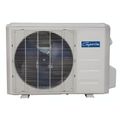
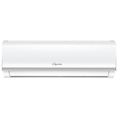


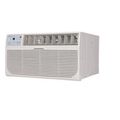

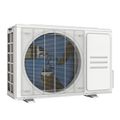
Individual Indoor or Outdoor Units are the standalone components of a single-zone ductless mini-split system, sold separately so a contractor can replace a failed indoor air handler or outdoor condensing unit without swapping the entire matched pair. The indoor unit houses the evaporator coil and blower, while the outdoor unit contains the compressor, condenser coil, and fan, and refrigerant lines plus electrical cabling between the two run through a wall penetration as small as 4 inches in diameter. Single-zone systems built from these units condition one defined space, such as a bonus room, garage, workshop, or sunroom, without extending ductwork into the addition. Contractors order units individually when a single component fails and needs replacement, or when assembling a custom single-zone installation from compatible parts rather than a pre-packaged system. Because indoor and outdoor units in a mini-split system are matched to communicate and operate together, confirming compatibility between a replacement unit and the surviving half of the pair matters before ordering.
Subcategories
- Indoor Air Handlers (Evaporator Units): Indoor units house the evaporator coil and blower fan that pull heat out of a room during cooling or release it during heating, and they mount to a wall, ceiling, or floor depending on the model style. Installers select a wall-mounted indoor unit for most single-room retrofits, since it needs the smallest footprint and simplest line set routing. The indoor unit connects to its matched outdoor unit through a line set that passes through a wall penetration as small as 4 inches in diameter. Replacing only the indoor unit works when the outdoor condensing unit is still functional and compatible with the new indoor model.
- Outdoor Condensing Units: Outdoor units contain the compressor, condenser coil, and fan that reject heat during cooling or extract it from outside air during heating, housed in a compact weatherproof cabinet mounted outside the conditioned space. Installers place the outdoor unit on a pad or wall bracket close enough to the indoor unit to keep line set length within the manufacturer's rated range. Replacing only the outdoor unit works when the indoor air handler is undamaged and remains compatible with the replacement compressor. Outdoor units in a single-zone system pair with exactly one indoor unit, unlike multi-zone outdoor units that split output across several rooms.
- Wall-Mounted Units: Wall-mounted indoor units are the most common style for single-zone installations, mounting high on an interior wall to distribute conditioned air across a room. Contractors specify wall-mounted units on straightforward retrofits like bonus rooms, additions, or garages where ceiling or floor mounting isn't practical. The line set connecting a wall-mounted indoor unit to its outdoor counterpart passes through the same small wall penetration used across mini-split styles. Wall-mounted units remain the simplest style to service, since the front cover and filter are accessible without additional tools.
- Floor and Ceiling Mounted Units: Floor-mounted and ceiling cassette units serve rooms where a wall-mounted unit doesn't fit the layout, such as a room with limited wall space or a design that calls for a flush ceiling appearance. Floor-mounted units sit low on a wall near the floor and work well in rooms with large windows or vaulted ceilings that limit high wall-mount placement. Ceiling cassette units mount flush into a drop ceiling and distribute air in multiple directions from a single point. Both styles connect to a single outdoor unit through the same refrigerant line set and control wiring used across the individual unit line.
Buying Guide
Confirm which half of the system needs replacement before ordering, since Individual Indoor or Outdoor Units are sold as standalone components rather than a matched pair, and only one half typically fails while the other remains functional. Check compatibility between the replacement unit and the surviving half of the system, since indoor and outdoor units communicate on a specific control protocol and capacity range that not every combination supports. Measure the distance between the indoor and outdoor unit locations before selecting a replacement, since line set length has a rated maximum that varies by model and affects system performance if exceeded. Decide on mounting style based on the room layout: wall-mounted units suit most straightforward retrofits, while floor-mounted or ceiling cassette units fit rooms where wall space is limited or a flush ceiling appearance is preferred. Confirm the wall penetration size needed for the line set, since most single-zone systems route refrigerant lines and electrical cabling through a hole as small as 4 inches in diameter, which matters on finished walls where a larger penetration means more repair work. For new installations rather than replacements, match indoor and outdoor unit capacity to the specific room's cooling and heating load rather than rounding up to the nearest available size, since an oversized system short-cycles and an undersized one struggles on the coldest or hottest days. Confirming these details before ordering keeps a single-zone installation running as the matched system it was designed to be.
Frequently Asked Questions
Can just the indoor unit be replaced without changing the outdoor unit?
Yes, replacing only the indoor unit works when the outdoor condensing unit is undamaged and compatible with the new indoor model. Confirming compatibility between the two halves before ordering avoids a mismatched pair that won't communicate correctly.
What size wall penetration does a single-zone mini-split line set need?
Most single-zone systems route refrigerant lines and electrical cabling between the indoor and outdoor unit through a wall penetration as small as 4 inches in diameter. Confirming this measurement before cutting into a finished wall keeps the opening as small as the system allows.
What's the difference between the indoor and outdoor unit in a mini-split system?
The indoor unit houses the evaporator coil and blower fan that condition the air inside the room, while the outdoor unit contains the compressor, condenser coil, and fan that handle heat exchange with outside air. Both halves connect through a refrigerant line set and communicate as a matched pair.
Which mounting style works best for a room with limited wall space?
Floor-mounted units or ceiling cassette units work better than wall-mounted units in rooms with large windows, vaulted ceilings, or limited wall space. Ceiling cassettes mount flush into a drop ceiling, while floor-mounted units sit low near the floor.
Do single-zone outdoor units support more than one indoor unit?
No, outdoor units in a single-zone system pair with exactly one indoor unit, unlike multi-zone outdoor units built to split output across several rooms. Confirming the system type before ordering avoids mixing single-zone and multi-zone components.
