




Filters
SORT
Product Availability –
Size –
Review Score –
 --%3E %3Csvg version='1.1' id='Fill' xmlns='http://www.w3.org/2000/svg' xmlns:xlink='http://www.w3.org/1999/xlink' x='0px' y='0px' viewBox='0 0 100 100' enable-background='new 0 0 100 100' xml:space='preserve'%3E %3Cpath fill='%23F15C02' d='M79.44,0.95H20.56C9.78,0.95,0.95,9.78,0.95,20.56v58.87c0,10.79,8.82,19.61,19.61,19.61h58.87 c10.79,0,19.61-8.83,19.61-19.61V20.56C99.05,9.78,90.22,0.95,79.44,0.95z M65.38,58.24l9.38,29.58L49.69,69.78L24.5,87.82 l9.34-29.6L8.8,39.6l30.73-0.17c0,0,6.98-19.61,10-28.93c0.54,1.36,9.88,29.1,9.88,29.1H91.2L65.38,58.24z'/%3E %3C/svg%3E)
 --%3E %3Csvg version='1.1' id='With-RB' xmlns='http://www.w3.org/2000/svg' xmlns:xlink='http://www.w3.org/1999/xlink' x='0px' y='0px' viewBox='0 0 100 100' enable-background='new 0 0 100 100' xml:space='preserve'%3E %3Cpath fill='%23FBC8B4' d='M79.44,0.95H20.56C9.78,0.95,0.95,9.78,0.95,20.56v58.87c0,10.79,8.82,19.61,19.61,19.61h58.87 c10.79,0,19.61-8.83,19.61-19.61V20.56C99.05,9.78,90.22,0.95,79.44,0.95z M65.38,58.24l9.38,29.58L49.69,69.78L24.5,87.82 l9.34-29.6L8.8,39.6l30.73-0.17c0,0,6.98-19.61,10-28.93c0.54,1.36,9.88,29.1,9.88,29.1H91.2L65.38,58.24z'/%3E %3C/svg%3E)
Price Range –
Johnson Controls Flow Switches

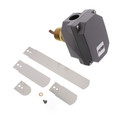

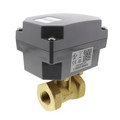
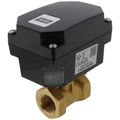
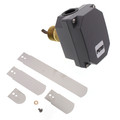
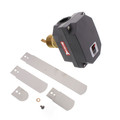
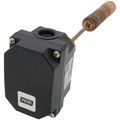



Johnson Controls Flow Switches are paddle and vane-type devices that mount directly into a pipe run to sense liquid or air movement and trigger an electrical signal when flow starts, stops, or drops below a set point. Building automation and HVAC contractors use them to protect pumps from running dry, confirm that a chiller or boiler loop is actually circulating before allowing equipment to fire, and feed status back to a building management system.
Because a flow switch sits inline with the paddle extending into the pipe, matching the switch to the pipe diameter and expected flow velocity keeps the contact from chattering or failing to trip at the intended threshold. Contractors specifying these switches for interlock or safety functions, such as proving flow before a boiler ignition sequence, need the switch's trip point and differential to match the system's actual operating range rather than a generic default setting.
Subcategories
- Paddle-Type Flow Switches: A flexible paddle extends into the pipe and flexes against a spring-loaded contact as flow passes it, tripping the switch when velocity crosses the set threshold. These are the most common style for water and light liquid service in hydronic and chilled water loops.
- Air Flow Switches: Built with a lighter paddle or sail element sized for lower-density airflow, these switches confirm air movement in ductwork before allowing a heating or cooling sequence to proceed. They're typically installed downstream of a fan to prove it's actually running before a burner or electric heat stage energizes.
- Replacement Paddles and Trim Kits: Paddles wear or need trimming to match a specific pipe size, and stocking the correct trim kit lets a technician adjust one switch body to fit multiple pipe diameters in the field rather than carrying a separate switch for every size.
- Explosion-Proof and Hazardous Location Switches: Switches rated for hazardous locations use sealed enclosures and certified wiring methods for installations near flammable vapors or in classified industrial areas. Specifying the correct rating for the space avoids a failed inspection on projects subject to hazardous location code.
Buying Guide
Start by confirming the application: liquid flow switches and air flow switches use different paddle or sail designs sized for the density of the medium they're sensing, and using the wrong type produces an unreliable trip point regardless of how it's wired. Match the switch family to whether it's protecting a hydronic pump, a chiller loop, or a duct-mounted fan interlock.
Trip point and differential need to match the system's actual flow range rather than a generic factory setting. A switch set too sensitive nuisance-trips during normal flow variation, while one set too high may never trip during an actual no-flow condition, defeating the safety interlock it was installed for. Pull the design flow rate from the system's engineering documents before setting the switch in the field.
Pipe size and paddle trim matter just as much as the switch model itself. Most Johnson Controls flow switches ship with a trimmable paddle rated for a range of pipe diameters, so verify the trim chart against the actual pipe size at the install location rather than assuming a universal fit.
For safety-critical applications like proving flow before boiler ignition or protecting a pump from dry running, confirm the switch's contact rating matches the control circuit it's wired into, and check whether the application calls for a fail-safe (normally closed) or fail-open contact configuration.
Installations near flammable vapors or in classified hazardous locations require a switch rated for that environment. Confirm the area classification with the project's electrical engineer before ordering a standard switch for a location that requires an explosion-proof rating.
Frequently Asked Questions
What's the difference between a liquid flow switch and an air flow switch?
A liquid flow switch uses a paddle sized for the density of water or another liquid, while an air flow switch uses a lighter paddle or sail element built for lower-density airflow in ductwork. Using the wrong type for the medium produces an unreliable trip point.
How is the trip point on a flow switch set?
The trip point and differential are adjusted in the field to match the system's actual design flow rate, which should come from the engineering documents rather than a factory default. Setting it too sensitive or too high undermines whatever interlock or protection the switch is installed for.
Can one flow switch body fit multiple pipe sizes?
Most switches ship with a trimmable paddle rated across a range of pipe diameters, so the same switch body can often be adjusted to fit different pipe sizes using the manufacturer's trim chart. Always verify the trim chart against the actual pipe size before cutting the paddle.
Why would a boiler system need a flow switch for interlock?
A flow switch confirms that water is actually circulating through the boiler loop before allowing the ignition sequence to proceed, protecting the heat exchanger from firing without adequate flow. This is a common safety interlock on hydronic boiler systems.
When is an explosion-proof flow switch required?
It's required in classified hazardous locations near flammable vapors or in certain industrial environments where standard electrical enclosures aren't rated for the risk. Confirm the area classification with the project's electrical engineer before selecting a switch.
