




Klauke Tools

 --%3E %3Csvg version='1.1' id='No-RB' xmlns='http://www.w3.org/2000/svg' xmlns:xlink='http://www.w3.org/1999/xlink' x='0px' y='0px' viewBox='0 0 100 100' enable-background='new 0 0 100 100' xml:space='preserve'%3E %3Cpath fill='%23CECECE' d='M79.44,0.95H20.56C9.78,0.95,0.95,9.78,0.95,20.56v58.87c0,10.79,8.82,19.61,19.61,19.61h58.87 c10.79,0,19.61-8.83,19.61-19.61V20.56C99.05,9.78,90.22,0.95,79.44,0.95z M65.38,58.24l9.38,29.58L49.69,69.78L24.5,87.82 l9.34-29.6L8.8,39.6l30.73-0.17c0,0,6.98-19.61,10-28.93c0.54,1.36,9.88,29.1,9.88,29.1H91.2L65.38,58.24z'/%3E %3C/svg%3E)


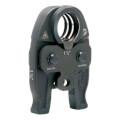

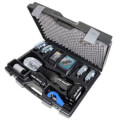

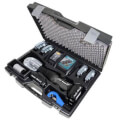
Klauke Tools covers battery-powered and hydraulic crimping, cutting, and punching tools built for terminating and preparing electrical cable in commercial and industrial installations. A crimping tool applies controlled, even pressure to compress a lug or connector onto a cable, producing a connection that meets the pull-out and conductivity requirements of the terminal being used, which is difficult to achieve consistently with a manual ratchet crimper on larger cable sizes. Cutting tools handle copper and aluminum cable up to sizes that manual cutters cannot manage cleanly, while punch tools cut clean openings in electrical enclosures for conduit and cable entry. Electricians and cable technicians select a tool based on the cable size range and lug type they work with most often, since crimping dies are matched to specific lug shapes and conductor sizes rather than working universally across all connector types. Battery-powered models cut down on physical fatigue during repetitive crimps compared with manually operated hydraulic tools.
Subcategories
- Battery-Powered Crimping Tools: Battery-powered crimping tools use an internal hydraulic pump driven by a rechargeable battery to apply consistent crimping force without manual pumping, speeding up repetitive terminations on larger commercial and industrial jobs. Interchangeable dies allow one tool body to crimp a range of lug shapes and conductor sizes by swapping the die set rather than switching tools. Battery run time and crimp cycle count vary by battery capacity, so technicians running high crimp volumes in a shift often carry a spare battery. A crimping tool that stalls partway through a cycle typically needs a fresh charge rather than service, since most models pause safely rather than complete a partial crimp.
- Hydraulic Hand Crimping Tools: Hydraulic hand crimping tools use a manually pumped hydraulic ram to generate crimping force, offering a lighter and less expensive alternative to battery-powered tools for lower-volume terminations. Hand tool dies are interchangeable, matched to the specific lug and conductor size being terminated. A hydraulic hand tool that will not build pressure usually has air trapped in the hydraulic fluid or a worn seal, both of which are field-serviceable issues rather than reasons to replace the tool. Manual pumping requires more physical effort per crimp than a battery-powered equivalent, a tradeoff worth weighing against job volume.
- Cable Cutters: Cable cutters built for copper and aluminum conductors handle sizes well beyond what manual side cutters can manage cleanly, using either a ratcheting manual mechanism or a hydraulic ram for larger cable diameters. A clean, flat cut matters for proper lug seating during a subsequent crimp, since a crushed or angled cut end can prevent full conductor contact inside the lug barrel. Blade sharpness degrades with repeated use on larger cable, so a cutter producing a rougher cut than usual may need blade replacement rather than a full tool swap. Matching the cutter's rated capacity to the largest cable size regularly encountered avoids forcing a tool beyond its design limit.
- Punch Tools: Punch tools cut round openings in electrical enclosures and panels for conduit fittings, cable glands, and connectors, producing a cleaner and more precise opening than a hole saw in sheet steel or aluminum. A punch and die set is sized to a specific conduit trade size, so technicians working across multiple conduit sizes typically carry several die sets for one punch driver. A punch that jams partway through a cut usually indicates a panel thicker than the tool's rated capacity rather than a defective punch. Keeping die sets matched to the panel material and thickness being worked avoids excessive wear on the punch mechanism.
Buying Guide
Selecting the right tool starts with the cable and lug sizes encountered most often on the job, since crimping and cutting capacity is defined by interchangeable dies rather than a single tool covering every size and lug shape. Klauke Tools organizes its crimping line around die compatibility, so confirming which die series a tool accepts before purchasing avoids ending up with a tool body that cannot use dies already on hand from a different product line. For crews doing high volumes of terminations in a shift, a battery-powered crimper reduces physical fatigue and speeds up repetitive work compared with a manually pumped hydraulic tool, though the hydraulic hand tool remains a lighter and lower-cost option for occasional use. Cable cutters should be sized to the largest conductor regularly encountered rather than the average size, since forcing an undersized cutter through oversized cable damages the blades and produces a rough cut that complicates the crimp that follows. Punch tools need die sets matched to both the conduit trade size in use and the thickness of the material being punched, since a die rated for thin panel stock will struggle or jam in heavier gauge enclosures. Checking battery platform compatibility across a crew's existing battery-powered tools can also cut down on the number of chargers and battery types carried on the truck.
Frequently Asked Questions
How do I know which crimping die I need for a lug?
Die selection depends on both the conductor size and the specific lug or connector shape being crimped, since dies are matched to a particular terminal profile rather than working universally across brands of lugs. Checking the lug manufacturer's specification sheet for recommended die and crimp settings is the most reliable way to confirm a match before crimping a critical connection. Using the wrong die can produce a crimp that looks complete but does not meet pull-out strength requirements.
What causes a hydraulic crimping tool to lose pressure mid-cycle?
Trapped air in the hydraulic fluid or a worn internal seal are the most common causes of a hand-pumped hydraulic tool that will not build full crimping pressure. Bleeding air from the system, following the manufacturer's procedure, often resolves the issue without needing a full tool teardown. A tool that continues losing pressure after bleeding likely needs a seal replacement.
Can one tool body work with multiple die series?
Compatibility depends on the tool's die interface, and tools built around one die series typically cannot accept dies from an incompatible series without an adapter, if one exists at all. Confirming die compatibility before buying additional dies avoids ending up with dies that do not fit the tool already on hand.
Why is a battery-powered crimper stalling partway through a crimp?
A stalled cycle most often points to a low battery charge, since most battery-powered crimpers are designed to pause safely rather than complete a partial crimp under insufficient power. Swapping in a charged battery and restarting the cycle typically resolves the stall without leaving a partially formed, unreliable crimp in place. Repeated stalling even with a full battery points to a tool needing service.
How is punch tool capacity rated, and why does it matter?
Punch tools are rated for a maximum material thickness and hole diameter, and exceeding that rating risks jamming the punch or damaging the tool's driving mechanism partway through a cut. Matching the die set to both the panel material and thickness being worked, not just the hole size needed, keeps the punch operating within its design limits. A punch that jams consistently on panels within its rated capacity may have a worn or damaged die needing replacement.
