




Filters
SORT
Product Availability –
Used With –
Review Score –
 --%3E %3Csvg version='1.1' id='Fill' xmlns='http://www.w3.org/2000/svg' xmlns:xlink='http://www.w3.org/1999/xlink' x='0px' y='0px' viewBox='0 0 100 100' enable-background='new 0 0 100 100' xml:space='preserve'%3E %3Cpath fill='%23F15C02' d='M79.44,0.95H20.56C9.78,0.95,0.95,9.78,0.95,20.56v58.87c0,10.79,8.82,19.61,19.61,19.61h58.87 c10.79,0,19.61-8.83,19.61-19.61V20.56C99.05,9.78,90.22,0.95,79.44,0.95z M65.38,58.24l9.38,29.58L49.69,69.78L24.5,87.82 l9.34-29.6L8.8,39.6l30.73-0.17c0,0,6.98-19.61,10-28.93c0.54,1.36,9.88,29.1,9.88,29.1H91.2L65.38,58.24z'/%3E %3C/svg%3E)
 --%3E %3Csvg version='1.1' id='With-RB' xmlns='http://www.w3.org/2000/svg' xmlns:xlink='http://www.w3.org/1999/xlink' x='0px' y='0px' viewBox='0 0 100 100' enable-background='new 0 0 100 100' xml:space='preserve'%3E %3Cpath fill='%23FBC8B4' d='M79.44,0.95H20.56C9.78,0.95,0.95,9.78,0.95,20.56v58.87c0,10.79,8.82,19.61,19.61,19.61h58.87 c10.79,0,19.61-8.83,19.61-19.61V20.56C99.05,9.78,90.22,0.95,79.44,0.95z M65.38,58.24l9.38,29.58L49.69,69.78L24.5,87.82 l9.34-29.6L8.8,39.6l30.73-0.17c0,0,6.98-19.61,10-28.93c0.54,1.36,9.88,29.1,9.88,29.1H91.2L65.38,58.24z'/%3E %3C/svg%3E)
Price Range –
Mcdonnell & Miller Low Water Cutoff Replacement Parts


 --%3E %3Csvg version='1.1' id='No-RB' xmlns='http://www.w3.org/2000/svg' xmlns:xlink='http://www.w3.org/1999/xlink' x='0px' y='0px' viewBox='0 0 100 100' enable-background='new 0 0 100 100' xml:space='preserve'%3E %3Cpath fill='%23CECECE' d='M79.44,0.95H20.56C9.78,0.95,0.95,9.78,0.95,20.56v58.87c0,10.79,8.82,19.61,19.61,19.61h58.87 c10.79,0,19.61-8.83,19.61-19.61V20.56C99.05,9.78,90.22,0.95,79.44,0.95z M65.38,58.24l9.38,29.58L49.69,69.78L24.5,87.82 l9.34-29.6L8.8,39.6l30.73-0.17c0,0,6.98-19.61,10-28.93c0.54,1.36,9.88,29.1,9.88,29.1H91.2L65.38,58.24z'/%3E %3C/svg%3E)
 --%3E %3Csvg version='1.1' id='Half' xmlns='http://www.w3.org/2000/svg' xmlns:xlink='http://www.w3.org/1999/xlink' x='0px' y='0px' viewBox='0 0 100 100' enable-background='new 0 0 100 100' xml:space='preserve'%3E %3Cg%3E %3Cpath fill='%23F15C02' d='M30.05,70.23l3.79-12.01L8.8,39.6l30.73-0.17c0,0,6.98-19.61,10-28.93c0.54,1.36,9.88,29.1,9.88,29.1h1.58 L93.71,7.18c-3.58-3.82-8.66-6.23-14.28-6.23H20.56C9.78,0.95,0.95,9.78,0.95,20.56v58.87c0,5.41,2.22,10.32,5.79,13.88 L30.05,70.23z'/%3E %3C/g%3E %3Cpath fill='%23FBC8B4' d='M93.71,7.18L60.98,39.6H91.2L65.38,58.24l9.38,29.58L49.69,69.78L24.5,87.82l5.55-17.59L6.75,93.32 c3.55,3.54,8.44,5.73,13.82,5.73h58.87c10.79,0,19.61-8.83,19.61-19.61V20.56C99.05,15.4,97.01,10.69,93.71,7.18z'/%3E %3C/svg%3E)
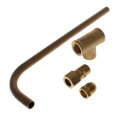
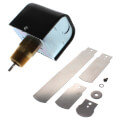
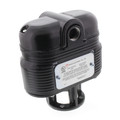
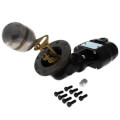
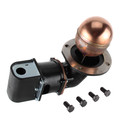

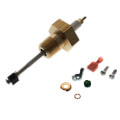
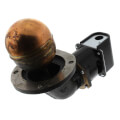
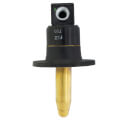
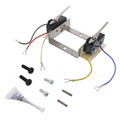
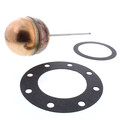
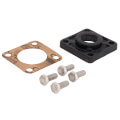
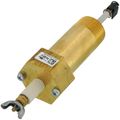
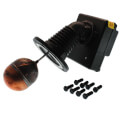
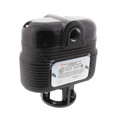
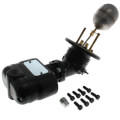
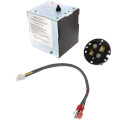
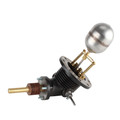
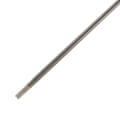
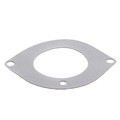
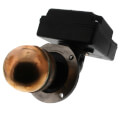
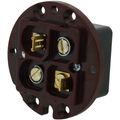
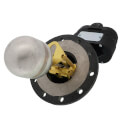
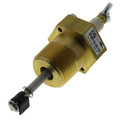
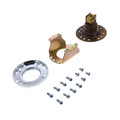
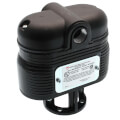
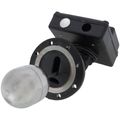
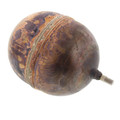
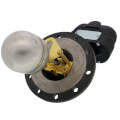

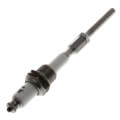
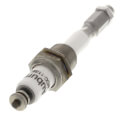
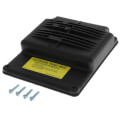
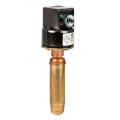
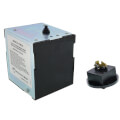
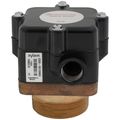

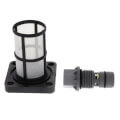
Mcdonnell & Miller low water cutoff replacement parts keep a boiler's most important safety control working correctly after the original float, probe, or gasket wears out. A low water cutoff shuts down the burner or ignition system when water level inside the boiler drops below a safe operating point, protecting the heat exchanger from the damage that dry-firing causes. Mcdonnell & Miller has supplied these controls to the hydronic heating trade for decades, and both its mechanical float and electronic probe designs remain standard equipment on residential and commercial boilers alike. This category covers the individual components a low water cutoff is built from, including float assemblies, probes, gaskets, and switch mechanisms sized to specific Mcdonnell & Miller models. Replacing a single worn part restores full function without the cost of swapping the entire control. Because a low water cutoff is a life-safety device, matching the exact model and mounting pattern matters more here than on most other boiler components.
Subcategories
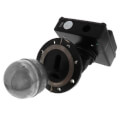
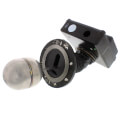
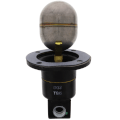
- Float Assemblies: Float assemblies are the moving mechanical component inside a traditional float-style low water cutoff, rising and falling with the water level to trip the switch. Boiler technicians replace them when a float becomes waterlogged, corroded, or sluggish, since a slow-moving float can delay shutdown. Matching the exact float diameter and arm length to the original model keeps the trip point accurate. A pitted or heavily scaled float is often the first sign that the whole chamber needs cleaning too.
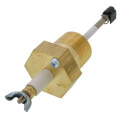
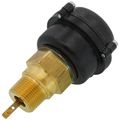
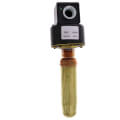
- Probes and Sensors: Probes and sensors serve the same safety function as a float but use an electronic conductivity or infrared signal to detect water level instead of a moving part. Technicians favor probe-style cutoffs on systems where sediment or debris could jam a mechanical float. Replacement probes must match the control module's voltage and sensing method exactly, since mixing components from different control generations can produce false trips or no trip at all.
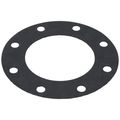
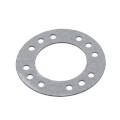
- Gaskets and Seals: Gaskets and seals stop water from leaking past the cutoff's mounting flange or inspection cover, and they harden or compress over years of heat cycling. A technician doing routine boiler maintenance often replaces the gasket as a matter of course whenever the cutoff housing is opened for cleaning or float inspection. Using the correct gasket thickness keeps the float chamber sealed without over-compressing and cracking the housing.
- Switches and Relays: Switches and relays are the electrical components that translate the float or probe's position into a signal that shuts down the burner circuit. These parts wear from repeated electrical cycling long before the mechanical float itself fails. A sticking or corroded switch contact can leave a boiler either nuisance-tripping or, worse, failing to cut off power when water runs low, which is why technicians test switch continuity as part of any low water cutoff service call.
Buying Guide
Start by identifying the exact Mcdonnell & Miller model number stamped on the cutoff housing before ordering any replacement part, since float sizes, probe types, and mounting patterns have changed across product generations. A part that looks similar but doesn't match the original model can fail to seat correctly or, worse, fail to trip the burner circuit when water level drops.
Next, decide whether the job calls for a single component repair or a full control replacement. A cutoff with a corroded float chamber, cracked housing, or repeated switch failures is often more cost-effective to replace outright than to keep repairing piece by piece. When browsing Mcdonnell & Miller low water cutoff replacement parts, contractors servicing older cast-iron boilers should pay close attention to thread size and pipe connection style, since older installations sometimes use fittings that newer replacement kits don't include.
Because this is a safety device tied to fire and scald protection, never substitute a generic float switch or aftermarket probe unless it's explicitly rated as a direct replacement for the specific Mcdonnell & Miller model in service. After installation, test the cutoff by draining water below the trip point and confirming the burner shuts down, rather than assuming a new part is functioning correctly based on appearance alone. Keeping a small stock of the most common float and gasket sizes for the boiler models serviced most often shortens a routine maintenance call considerably.
Frequently Asked Questions
How often should a low water cutoff be tested?
Most manufacturers and boiler manuals recommend testing a low water cutoff at the start of every heating season and again partway through, since sediment buildup during the off-season is a common cause of a sluggish or stuck float. Commercial boilers often follow a more frequent schedule set by local code or insurance requirements.
Can a probe-style cutoff replace a float-style unit on the same boiler?
Only if the mounting pattern, tapping size, and control voltage all match, since the two designs sense water level differently and use different wiring. In most cases swapping designs means replacing the entire control rather than just the sensing element.
What does it mean when a low water cutoff keeps tripping even with adequate water?
A nuisance trip usually points to a sticking float, a fouled probe, or sediment inside the chamber rather than an actual water shortage. Cleaning the chamber and testing float or probe movement by hand typically resolves it, but a switch that continues tripping after cleaning should be replaced.
Do these parts work on both steam and hot water boilers?
Mcdonnell & Miller makes low water cutoff models for both steam and hydronic hot water systems, but the internal float and probe designs differ between the two. Confirming the boiler type before ordering parts avoids mismatched components.
Is a low water cutoff required by code on residential boilers?
Requirements vary by state and municipality, but many jurisdictions mandate a working low water cutoff on any boiler, residential or commercial. Checking local plumbing and heating code before removing or bypassing one is standard practice, since it's a life-safety device.
