




PEX Ball Valves
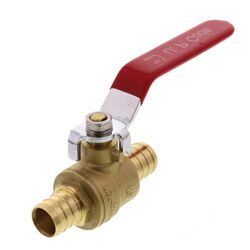
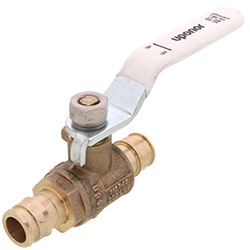
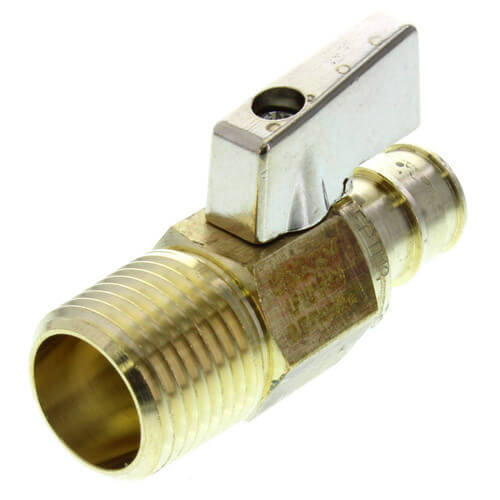
PEX ball valves are shutoff valves built to connect directly to PEX tubing, letting plumbers isolate a fixture, zone, or section of a water system without soldering copper or cutting into rigid pipe. They pair a standard quarter-turn ball valve mechanism with a PEX-specific end connection, so a single valve body can be crimped, expanded, or push-fit onto tubing depending on which fitting system the rest of the job uses.
Because so much new plumbing runs on PEX, these valves show up constantly in service work, remodels, and manifold-fed systems where a contractor needs a reliable, code-recognized way to isolate individual lines. Matching the valve's connection type to the fitting method already used on that job keeps the installation consistent and avoids mixing incompatible systems on the same run.




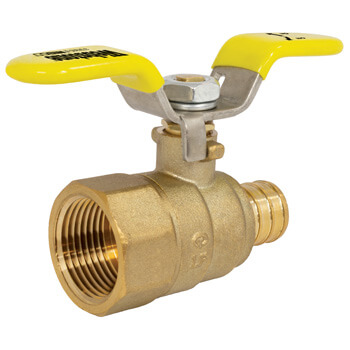

Subcategories
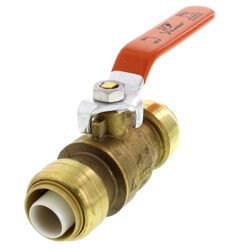
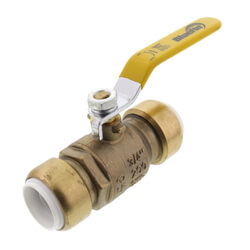
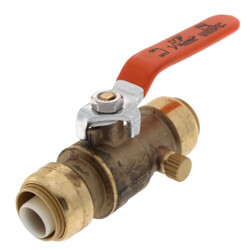
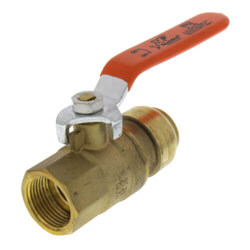
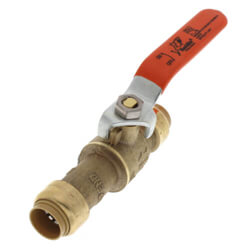
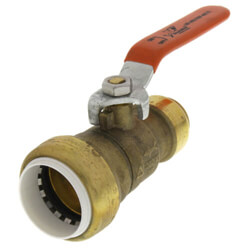
- Bluefin Push-Fit Ball Valves: Push-fit ball valves from Bluefin, installed by pushing the tubing directly into the valve body without crimping or expansion tools.
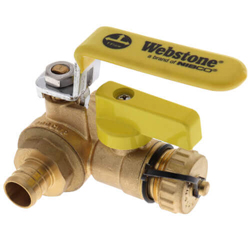
- Drop Ear Ball Valves: Ball valves with an ear-shaped mounting flange, secured to a stud or blocking so the valve stays fixed in place behind a fixture connection.
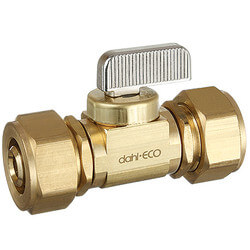
- PEX Crimp Ball Valves: Standard PEX crimp ball valves, connected using a crimp ring and crimping tool, one of the most widely used PEX connection methods.
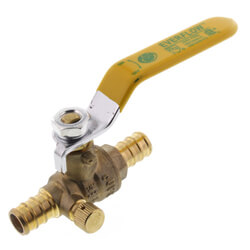
- PEX Crimp Ball Valves w/ Drain: Crimp ball valves that include a built-in drain cap, letting a contractor bleed a line dry after shutting off flow, useful for winterizing or repair work.
- PEX Crimp Drop Ear Ball Valves: Crimp ball valves with a drop-ear mounting flange, combining a fixed mounting point with the standard crimp connection method.
- PEX Crimp Pro-Pal Ball Valves: Crimp ball valves designed for tighter installation spaces, with a compact handle profile that turns without hitting nearby framing or piping.
Buying Guide
The connection type is the first thing to check before ordering. Crimp valves need a crimp ring and crimping tool, expansion-style valves (often labeled ProPEX) need an expansion tool, and push-fit valves need neither, so contractors should match the valve to the fitting system already installed or planned for that job.
Drop-ear ball valves solve a specific problem: they give a valve a fixed mounting point on framing, which matters at fixture connections like a shower valve or hose bib where the valve needs to stay put under the stress of everyday use rather than float on the tubing alone.
Valves with a built-in drain feature save a step on any job where a line needs to be emptied, such as seasonal winterization of an outdoor hose bib or irrigation line, since the contractor can bleed the line from the same valve used to shut it off.
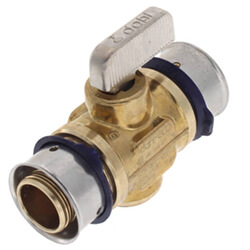
Transition valves that combine PEX crimp or push-fit ends with a sweat, threaded, or copper-press connection on the other side are worth stocking for jobs that tie new PEX runs into existing copper or threaded piping, since they remove the need for a separate coupling.
Handle clearance matters in tight mechanical rooms or wall cavities. A compact-handle valve turns fully without hitting a stud, joist, or neighboring pipe, which avoids the awkward workaround of installing a valve where the handle can only partially rotate.
Frequently Asked Questions
What tools do I need to install a PEX crimp ball valve?
A crimp ball valve requires a crimp ring, a length of PEX tubing, and a crimping tool sized for the ring, along with a go/no-go gauge to confirm the crimp was made correctly.
Can I use a push-fit ball valve without any special tools?
Yes, push-fit valves connect by inserting the tubing directly into the valve body, with no crimping or expansion tool required, which makes them a fast option for repairs or tight-access spots.
What is a drop-ear ball valve used for?
A drop-ear valve has a mounting flange that anchors it to a stud or blocking, giving it a fixed, stable connection point at a fixture like a shower valve or hose bib rather than relying on the tubing alone to hold it in place.
Why would I choose a ball valve with a drain feature?
A drain-equipped valve lets a contractor empty a line after shutting off the water supply, which is useful for winterizing an outdoor line or draining a section of piping before repair work.
Are PEX ball valves interchangeable between crimp, expansion, and push-fit systems?
No. Each connection type requires its own valve body and, in most cases, its own installation tool, so a valve should be selected to match the fitting system already used on that line rather than mixed across systems.
Resources
Subcategories
- Bluefin Push-Fit Ball Valves: Push-fit ball valves from Bluefin, installed by pushing the tubing directly into the valve body without crimping or expansion tools.
- Drop Ear Ball Valves: Ball valves with an ear-shaped mounting flange, secured to a stud or blocking so the valve stays fixed in place behind a fixture connection.
- PEX Crimp Ball Valves: Standard PEX crimp ball valves, connected using a crimp ring and crimping tool, one of the most widely used PEX connection methods.
- PEX Crimp Ball Valves w/ Drain: Crimp ball valves that include a built-in drain cap, letting a contractor bleed a line dry after shutting off flow, useful for winterizing or repair work.
- PEX Crimp Drop Ear Ball Valves: Crimp ball valves with a drop-ear mounting flange, combining a fixed mounting point with the standard crimp connection method.
- PEX Crimp Pro-Pal Ball Valves: Crimp ball valves designed for tighter installation spaces, with a compact handle profile that turns without hitting nearby framing or piping.
Buying Guide
The connection type is the first thing to check before ordering. Crimp valves need a crimp ring and crimping tool, expansion-style valves (often labeled ProPEX) need an expansion tool, and push-fit valves need neither, so contractors should match the valve to the fitting system already installed or planned for that job.
Drop-ear ball valves solve a specific problem: they give a valve a fixed mounting point on framing, which matters at fixture connections like a shower valve or hose bib where the valve needs to stay put under the stress of everyday use rather than float on the tubing alone.
Valves with a built-in drain feature save a step on any job where a line needs to be emptied, such as seasonal winterization of an outdoor hose bib or irrigation line, since the contractor can bleed the line from the same valve used to shut it off.
Transition valves that combine PEX crimp or push-fit ends with a sweat, threaded, or copper-press connection on the other side are worth stocking for jobs that tie new PEX runs into existing copper or threaded piping, since they remove the need for a separate coupling.
Handle clearance matters in tight mechanical rooms or wall cavities. A compact-handle valve turns fully without hitting a stud, joist, or neighboring pipe, which avoids the awkward workaround of installing a valve where the handle can only partially rotate.
Frequently Asked Questions
What tools do I need to install a PEX crimp ball valve?
A crimp ball valve requires a crimp ring, a length of PEX tubing, and a crimping tool sized for the ring, along with a go/no-go gauge to confirm the crimp was made correctly.
Can I use a push-fit ball valve without any special tools?
Yes, push-fit valves connect by inserting the tubing directly into the valve body, with no crimping or expansion tool required, which makes them a fast option for repairs or tight-access spots.
What is a drop-ear ball valve used for?
A drop-ear valve has a mounting flange that anchors it to a stud or blocking, giving it a fixed, stable connection point at a fixture like a shower valve or hose bib rather than relying on the tubing alone to hold it in place.
Why would I choose a ball valve with a drain feature?
A drain-equipped valve lets a contractor empty a line after shutting off the water supply, which is useful for winterizing an outdoor line or draining a section of piping before repair work.
Are PEX ball valves interchangeable between crimp, expansion, and push-fit systems?
No. Each connection type requires its own valve body and, in most cases, its own installation tool, so a valve should be selected to match the fitting system already used on that line rather than mixed across systems.