




Filters
SORT
Product Availability –
Brand –
Application –
Review Score –
 --%3E %3Csvg version='1.1' id='Fill' xmlns='http://www.w3.org/2000/svg' xmlns:xlink='http://www.w3.org/1999/xlink' x='0px' y='0px' viewBox='0 0 100 100' enable-background='new 0 0 100 100' xml:space='preserve'%3E %3Cpath fill='%23F15C02' d='M79.44,0.95H20.56C9.78,0.95,0.95,9.78,0.95,20.56v58.87c0,10.79,8.82,19.61,19.61,19.61h58.87 c10.79,0,19.61-8.83,19.61-19.61V20.56C99.05,9.78,90.22,0.95,79.44,0.95z M65.38,58.24l9.38,29.58L49.69,69.78L24.5,87.82 l9.34-29.6L8.8,39.6l30.73-0.17c0,0,6.98-19.61,10-28.93c0.54,1.36,9.88,29.1,9.88,29.1H91.2L65.38,58.24z'/%3E %3C/svg%3E)
 --%3E %3Csvg version='1.1' id='With-RB' xmlns='http://www.w3.org/2000/svg' xmlns:xlink='http://www.w3.org/1999/xlink' x='0px' y='0px' viewBox='0 0 100 100' enable-background='new 0 0 100 100' xml:space='preserve'%3E %3Cpath fill='%23FBC8B4' d='M79.44,0.95H20.56C9.78,0.95,0.95,9.78,0.95,20.56v58.87c0,10.79,8.82,19.61,19.61,19.61h58.87 c10.79,0,19.61-8.83,19.61-19.61V20.56C99.05,9.78,90.22,0.95,79.44,0.95z M65.38,58.24l9.38,29.58L49.69,69.78L24.5,87.82 l9.34-29.6L8.8,39.6l30.73-0.17c0,0,6.98-19.61,10-28.93c0.54,1.36,9.88,29.1,9.88,29.1H91.2L65.38,58.24z'/%3E %3C/svg%3E)
Price Range –
PEX Uncoilers

 --%3E %3Csvg version='1.1' id='Half' xmlns='http://www.w3.org/2000/svg' xmlns:xlink='http://www.w3.org/1999/xlink' x='0px' y='0px' viewBox='0 0 100 100' enable-background='new 0 0 100 100' xml:space='preserve'%3E %3Cg%3E %3Cpath fill='%23F15C02' d='M30.05,70.23l3.79-12.01L8.8,39.6l30.73-0.17c0,0,6.98-19.61,10-28.93c0.54,1.36,9.88,29.1,9.88,29.1h1.58 L93.71,7.18c-3.58-3.82-8.66-6.23-14.28-6.23H20.56C9.78,0.95,0.95,9.78,0.95,20.56v58.87c0,5.41,2.22,10.32,5.79,13.88 L30.05,70.23z'/%3E %3C/g%3E %3Cpath fill='%23FBC8B4' d='M93.71,7.18L60.98,39.6H91.2L65.38,58.24l9.38,29.58L49.69,69.78L24.5,87.82l5.55-17.59L6.75,93.32 c3.55,3.54,8.44,5.73,13.82,5.73h58.87c10.79,0,19.61-8.83,19.61-19.61V20.56C99.05,15.4,97.01,10.69,93.71,7.18z'/%3E %3C/svg%3E)


 --%3E %3Csvg version='1.1' id='No-RB' xmlns='http://www.w3.org/2000/svg' xmlns:xlink='http://www.w3.org/1999/xlink' x='0px' y='0px' viewBox='0 0 100 100' enable-background='new 0 0 100 100' xml:space='preserve'%3E %3Cpath fill='%23CECECE' d='M79.44,0.95H20.56C9.78,0.95,0.95,9.78,0.95,20.56v58.87c0,10.79,8.82,19.61,19.61,19.61h58.87 c10.79,0,19.61-8.83,19.61-19.61V20.56C99.05,9.78,90.22,0.95,79.44,0.95z M65.38,58.24l9.38,29.58L49.69,69.78L24.5,87.82 l9.34-29.6L8.8,39.6l30.73-0.17c0,0,6.98-19.61,10-28.93c0.54,1.36,9.88,29.1,9.88,29.1H91.2L65.38,58.24z'/%3E %3C/svg%3E)
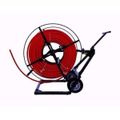

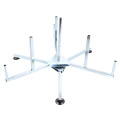
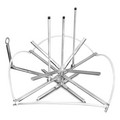
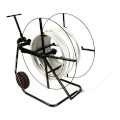
PEX Uncoilers are stands that hold a coil of PEX tubing and let it rotate freely as tubing is pulled off, keeping the coil from kinking or tangling during a run. Pulling PEX straight off a stationary coil on the floor tends to introduce twists and kinks that weaken the tubing at the bend point, while an uncoiler lets the coil spin with the pull so tubing feeds off smoothly in a straight line. Larger uncoilers built for bigger coil sizes see the most use on new construction jobs with long, continuous runs, while smaller portable versions are common for repair and remodel work where a plumber is moving between locations. Matching the uncoiler's capacity to the coil size actually being run keeps the tubing feeding smoothly instead of binding partway through a pull.
Subcategories
- Portable PEX Uncoilers: Portable uncoilers are compact and lightweight enough to move easily between rooms or job sites in a single day. They're built for smaller coils typical of repair and remodel work rather than full job-site rolls. Setup and breakdown are quick compared to a heavier stationary stand. Service plumbers moving between several locations tend to favor this style.
- Heavy-Duty PEX Uncoilers: Heavy-duty uncoilers are built to hold full-size job site coils and stay put for the length of a project. They're common on new construction jobs with long, continuous tubing runs. The larger frame adds stability under a full coil's weight. These stands trade portability for capacity and durability.
- Multi-Coil PEX Uncoilers: Multi-coil stands hold more than one coil at a time, which suits jobs running multiple tubing sizes or colors simultaneously, such as separate hot and cold lines. Feeding two coils off one stand keeps a work area less crowded than using separate single-coil stands. This style is most useful on larger residential or light commercial jobs with mixed tubing runs.
Buying Guide
Coil capacity is the main spec to match before buying a PEX uncoiler, since a stand built for a smaller coil won't securely hold a full-size job site coil, and an oversized stand is unnecessary bulk for smaller repair work. Checking the coil weight and diameter against the uncoiler's rated capacity avoids a mismatch that shows up mid-pull.
Portability matters differently depending on the job. A compact PEX Uncoilers option that breaks down or folds flat is worth the tradeoff on service and remodel work where a plumber moves between several locations in a day, while a heavier, stationary stand makes more sense on a single new-construction site where the tool stays put for the length of the job.
Multi-coil stands are worth considering on jobs running more than one tubing size or color at once, since feeding two coils off separate single-coil stands crowds a work area more than a single stand built to hold both.
Bearing quality in the rotating hub affects how smoothly the coil feeds off during a long pull. A stand with a stiff or worn bearing forces extra effort on every pull and increases the odds of the tubing kinking as it comes off, so a smoother-rotating hub pays off on any job with more than a short run or two.
Frequently Asked Questions
Why does PEX need an uncoiler instead of just pulling off the coil directly?
Pulling tubing straight off a stationary coil on the floor tends to introduce twists and kinks that weaken the tubing at the bend point. An uncoiler lets the coil rotate with the pull, feeding the tubing off in a straight line instead of fighting the coil's natural shape.
What coil sizes do these uncoilers typically handle?
Capacity varies by model, with portable stands built for smaller repair-size coils and heavy-duty stands rated for full job-site rolls. Checking the coil's weight and diameter against the stand's rated capacity is the reliable way to confirm fit before buying.
Can one uncoiler handle both 1/2 inch and 3/4 inch PEX coils?
Many stands accommodate a range of coil diameters, but it's worth confirming the specific model's rated range rather than assuming, since coil weight and outer diameter both increase with tubing size. A stand sized for the largest coil expected on a job handles smaller coils without issue.
Are portable uncoilers sturdy enough for daily use on a job site?
Portable stands are built for the loads typical of repair and remodel work, though they're generally rated for smaller coils than heavy-duty stands. For daily use on larger new-construction coils, a heavier stationary stand holds up better over time.
Does an uncoiler reduce kinking on tubing that's already been partially pulled and re-coiled?
It helps, since the rotating hub still lets the remaining tubing feed off smoothly rather than fighting a tightly re-coiled loop. Tubing that's already kinked from earlier handling won't be corrected by the uncoiler itself, so inspecting for existing kinks before installation is still worthwhile.
