




Filters
SORT
Product Availability –
Brand –
Volume –
Review Score –
 --%3E %3Csvg version='1.1' id='Fill' xmlns='http://www.w3.org/2000/svg' xmlns:xlink='http://www.w3.org/1999/xlink' x='0px' y='0px' viewBox='0 0 100 100' enable-background='new 0 0 100 100' xml:space='preserve'%3E %3Cpath fill='%23F15C02' d='M79.44,0.95H20.56C9.78,0.95,0.95,9.78,0.95,20.56v58.87c0,10.79,8.82,19.61,19.61,19.61h58.87 c10.79,0,19.61-8.83,19.61-19.61V20.56C99.05,9.78,90.22,0.95,79.44,0.95z M65.38,58.24l9.38,29.58L49.69,69.78L24.5,87.82 l9.34-29.6L8.8,39.6l30.73-0.17c0,0,6.98-19.61,10-28.93c0.54,1.36,9.88,29.1,9.88,29.1H91.2L65.38,58.24z'/%3E %3C/svg%3E)
 --%3E %3Csvg version='1.1' id='With-RB' xmlns='http://www.w3.org/2000/svg' xmlns:xlink='http://www.w3.org/1999/xlink' x='0px' y='0px' viewBox='0 0 100 100' enable-background='new 0 0 100 100' xml:space='preserve'%3E %3Cpath fill='%23FBC8B4' d='M79.44,0.95H20.56C9.78,0.95,0.95,9.78,0.95,20.56v58.87c0,10.79,8.82,19.61,19.61,19.61h58.87 c10.79,0,19.61-8.83,19.61-19.61V20.56C99.05,9.78,90.22,0.95,79.44,0.95z M65.38,58.24l9.38,29.58L49.69,69.78L24.5,87.82 l9.34-29.6L8.8,39.6l30.73-0.17c0,0,6.98-19.61,10-28.93c0.54,1.36,9.88,29.1,9.88,29.1H91.2L65.38,58.24z'/%3E %3C/svg%3E)
Price Range –
PVC Primer (Clear)


 --%3E %3Csvg version='1.1' id='Half' xmlns='http://www.w3.org/2000/svg' xmlns:xlink='http://www.w3.org/1999/xlink' x='0px' y='0px' viewBox='0 0 100 100' enable-background='new 0 0 100 100' xml:space='preserve'%3E %3Cg%3E %3Cpath fill='%23F15C02' d='M30.05,70.23l3.79-12.01L8.8,39.6l30.73-0.17c0,0,6.98-19.61,10-28.93c0.54,1.36,9.88,29.1,9.88,29.1h1.58 L93.71,7.18c-3.58-3.82-8.66-6.23-14.28-6.23H20.56C9.78,0.95,0.95,9.78,0.95,20.56v58.87c0,5.41,2.22,10.32,5.79,13.88 L30.05,70.23z'/%3E %3C/g%3E %3Cpath fill='%23FBC8B4' d='M93.71,7.18L60.98,39.6H91.2L65.38,58.24l9.38,29.58L49.69,69.78L24.5,87.82l5.55-17.59L6.75,93.32 c3.55,3.54,8.44,5.73,13.82,5.73h58.87c10.79,0,19.61-8.83,19.61-19.61V20.56C99.05,15.4,97.01,10.69,93.71,7.18z'/%3E %3C/svg%3E)



 --%3E %3Csvg version='1.1' id='No-RB' xmlns='http://www.w3.org/2000/svg' xmlns:xlink='http://www.w3.org/1999/xlink' x='0px' y='0px' viewBox='0 0 100 100' enable-background='new 0 0 100 100' xml:space='preserve'%3E %3Cpath fill='%23CECECE' d='M79.44,0.95H20.56C9.78,0.95,0.95,9.78,0.95,20.56v58.87c0,10.79,8.82,19.61,19.61,19.61h58.87 c10.79,0,19.61-8.83,19.61-19.61V20.56C99.05,9.78,90.22,0.95,79.44,0.95z M65.38,58.24l9.38,29.58L49.69,69.78L24.5,87.82 l9.34-29.6L8.8,39.6l30.73-0.17c0,0,6.98-19.61,10-28.93c0.54,1.36,9.88,29.1,9.88,29.1H91.2L65.38,58.24z'/%3E %3C/svg%3E)

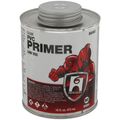
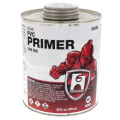
PVC Primer (Clear) is a low-VOC primer formulated to clean and soften the surface of PVC pipe and fittings before solvent cementing. Hercules manufactures the version SupplyHouse carries, and it meets ASTM F656 along with NSF/ANSI 61 health effects requirements for potable water applications. The clear formula won't stain fittings or finished surfaces the way purple primer does, which matters on exposed runs where appearance counts. Sizes range from 8 oz. up to 1 gallon, covering everything from small repair jobs to full-system installations. Application uses the in-lid dauber built into the can, and the primer works across all schedules and classes of PVC pipe, though it isn't rated for CPVC or ABS. Plumbers reach for this primer whenever local code requires primer before cement, or whenever softening the joint surface first improves the solvent weld's bond strength.
Subcategories
- 8 oz. Clear PVC Primer: The 8 oz. size, Hercules SKU 60458, suits small repair jobs and single-fitting replacements where only a few joints need primer. It fits easily in a service truck tool bag alongside cement for quick repair calls. Like every size in the line, it meets ASTM F656 and applies with the built-in in-lid dauber. Plumbers doing occasional PVC work favor this size since a full-size can often goes unused before it dries out.
- 16 oz. Clear PVC Primer: The 16 oz. size, Hercules SKU 60460, covers mid-size residential jobs such as a bathroom rough-in or a drain line replacement. It carries the same ASTM F656 and NSF/ANSI 61 compliance as the smaller size, so performance doesn't change with container size. Contractors running a few joints per week often keep this size stocked as a default. The dauber-in-lid design stays consistent across the size range for familiar application.
- 32 oz. Clear PVC Primer: The 32 oz. size, Hercules SKU 60465, fits larger residential or light commercial jobs with more joints to prime in a single visit. It reduces how often a crew needs to refill or swap cans mid-job compared to the smaller sizes. The formula and ASTM F656 compliance match every other size in the Hercules Clear Primer line. Crews running multiple PVC drain or vent lines in one day often standardize on this size.
- 1 Gallon Clear PVC Primer: The 1 gallon size, Hercules SKU 60470, serves full-system installations, new construction, or large commercial jobs where primer use adds up fast across many joints. It cuts down on how often a crew needs to open a new container compared to running multiple smaller cans. The same ASTM F656 and NSF/ANSI 61 compliance applies regardless of container size. Larger jobsites that go through several cans of smaller primer in a week typically switch to the gallon size instead.
Buying Guide
Start with code requirements. Many plumbing codes require a primer step before solvent cementing PVC pipe, and some inspectors specifically check for evidence that primer was applied, which is one reason purple-tinted primer exists. Clear primer meets the same ASTM F656 standard as purple versions but leaves no visible tint, so it's suited to exposed runs or finish-grade installations where a purple stain would be obvious, as long as the local code doesn't require visible proof of primer use.
PVC Primer (Clear) softens and cleans the pipe surface so solvent cement bonds properly, and skipping this step on a job that requires it risks a weaker joint and a failed inspection. Material compatibility matters too: the Hercules formula is rated for PVC pipe and fittings across all schedules and classes, but it isn't rated for CPVC or ABS, so a job mixing pipe materials needs a primer and cement system that matches each material being joined.
Container size should match job volume rather than defaulting to whatever is on the truck. An 8 oz. can suits a handful of repair joints, while a 32 oz. or 1 gallon container cuts down on refills for new construction or larger commercial runs with dozens of joints to prime in a single visit. Every size shares the same NSF/ANSI 61 certification for potable water applications and the same in-lid dauber application method, so switching sizes doesn't change how the product gets applied on site.
Frequently Asked Questions
What's the difference between clear and purple PVC primer?
Clear PVC Primer meets the same ASTM F656 standard as purple-tinted primer, but leaves no visible color on the pipe after it dries. Purple primer exists mainly to give inspectors visible proof that priming happened before cementing. Jurisdictions that don't require visible proof of primer use allow the clear version on exposed or finish-grade PVC runs.
Can PVC Primer (Clear) be used on CPVC or ABS pipe?
No, the Hercules Clear Primer formula is rated for PVC pipe and fittings only and isn't rated for CPVC or ABS. Jobs that mix pipe materials need a primer and cement system matched to each material being joined. Using the wrong primer and cement combination risks a joint that doesn't bond properly.
What size PVC primer should get used on a small repair job?
An 8 oz. can of PVC Primer (Clear) covers a handful of repair joints without opening a larger container that might dry out before the next job. Larger 16 oz., 32 oz., or 1 gallon sizes suit bigger jobs with more joints to prime in one visit. Matching container size to job volume cuts down on waste from unused primer.
Is PVC Primer (Clear) safe for potable water systems?
Yes, Hercules Clear PVC Primer meets NSF/ANSI 61 health effects requirements for use in potable water applications. It also meets ASTM F656, the standard specification governing PVC primers used before solvent cementing. Both certifications apply across every container size in the line.
How is PVC Primer (Clear) applied to a pipe joint?
Each container includes a built-in in-lid dauber for applying the primer directly to the pipe and fitting surfaces before cementing. The primer cleans and softens the PVC surface so the solvent cement that follows can form a proper bond. Applying primer to both the pipe end and the inside of the fitting covers the full joint area that needs priming.
