




Filters
SORT
Product Availability –
Brand –
Size –
Review Score –
 --%3E %3Csvg version='1.1' id='Fill' xmlns='http://www.w3.org/2000/svg' xmlns:xlink='http://www.w3.org/1999/xlink' x='0px' y='0px' viewBox='0 0 100 100' enable-background='new 0 0 100 100' xml:space='preserve'%3E %3Cpath fill='%23F15C02' d='M79.44,0.95H20.56C9.78,0.95,0.95,9.78,0.95,20.56v58.87c0,10.79,8.82,19.61,19.61,19.61h58.87 c10.79,0,19.61-8.83,19.61-19.61V20.56C99.05,9.78,90.22,0.95,79.44,0.95z M65.38,58.24l9.38,29.58L49.69,69.78L24.5,87.82 l9.34-29.6L8.8,39.6l30.73-0.17c0,0,6.98-19.61,10-28.93c0.54,1.36,9.88,29.1,9.88,29.1H91.2L65.38,58.24z'/%3E %3C/svg%3E)
 --%3E %3Csvg version='1.1' id='With-RB' xmlns='http://www.w3.org/2000/svg' xmlns:xlink='http://www.w3.org/1999/xlink' x='0px' y='0px' viewBox='0 0 100 100' enable-background='new 0 0 100 100' xml:space='preserve'%3E %3Cpath fill='%23FBC8B4' d='M79.44,0.95H20.56C9.78,0.95,0.95,9.78,0.95,20.56v58.87c0,10.79,8.82,19.61,19.61,19.61h58.87 c10.79,0,19.61-8.83,19.61-19.61V20.56C99.05,9.78,90.22,0.95,79.44,0.95z M65.38,58.24l9.38,29.58L49.69,69.78L24.5,87.82 l9.34-29.6L8.8,39.6l30.73-0.17c0,0,6.98-19.61,10-28.93c0.54,1.36,9.88,29.1,9.88,29.1H91.2L65.38,58.24z'/%3E %3C/svg%3E)
Price Range –
PVC Socket Savers


 --%3E %3Csvg version='1.1' id='Half' xmlns='http://www.w3.org/2000/svg' xmlns:xlink='http://www.w3.org/1999/xlink' x='0px' y='0px' viewBox='0 0 100 100' enable-background='new 0 0 100 100' xml:space='preserve'%3E %3Cg%3E %3Cpath fill='%23F15C02' d='M30.05,70.23l3.79-12.01L8.8,39.6l30.73-0.17c0,0,6.98-19.61,10-28.93c0.54,1.36,9.88,29.1,9.88,29.1h1.58 L93.71,7.18c-3.58-3.82-8.66-6.23-14.28-6.23H20.56C9.78,0.95,0.95,9.78,0.95,20.56v58.87c0,5.41,2.22,10.32,5.79,13.88 L30.05,70.23z'/%3E %3C/g%3E %3Cpath fill='%23FBC8B4' d='M93.71,7.18L60.98,39.6H91.2L65.38,58.24l9.38,29.58L49.69,69.78L24.5,87.82l5.55-17.59L6.75,93.32 c3.55,3.54,8.44,5.73,13.82,5.73h58.87c10.79,0,19.61-8.83,19.61-19.61V20.56C99.05,15.4,97.01,10.69,93.71,7.18z'/%3E %3C/svg%3E)



 --%3E %3Csvg version='1.1' id='No-RB' xmlns='http://www.w3.org/2000/svg' xmlns:xlink='http://www.w3.org/1999/xlink' x='0px' y='0px' viewBox='0 0 100 100' enable-background='new 0 0 100 100' xml:space='preserve'%3E %3Cpath fill='%23CECECE' d='M79.44,0.95H20.56C9.78,0.95,0.95,9.78,0.95,20.56v58.87c0,10.79,8.82,19.61,19.61,19.61h58.87 c10.79,0,19.61-8.83,19.61-19.61V20.56C99.05,9.78,90.22,0.95,79.44,0.95z M65.38,58.24l9.38,29.58L49.69,69.78L24.5,87.82 l9.34-29.6L8.8,39.6l30.73-0.17c0,0,6.98-19.61,10-28.93c0.54,1.36,9.88,29.1,9.88,29.1H91.2L65.38,58.24z'/%3E %3C/svg%3E)
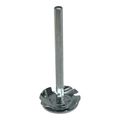
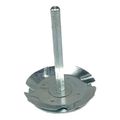
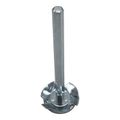

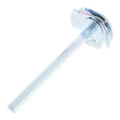
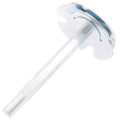
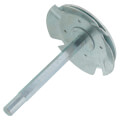
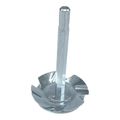
PVC socket savers are short repair couplings used to extend a PVC pipe that's been cut back too far to reach a fitting socket, without cutting out and replacing the whole fitting. Plumbers rely on them any time a fitting joint fails or needs to be reopened and the remaining pipe stub is too short for a standard coupling to seat properly.
Instead of removing the existing fitting and losing several more inches of pipe run, a socket saver slips over the short stub and gives a fresh socket to glue the next piece into. That saves the labor of chasing a pipe run back to the next available fitting, which matters most on a repair job where the surrounding pipe is already set in a wall, slab, or tight crawlspace.
Subcategories
- Standard PVC Socket Savers: Straight repair couplings sized to common PVC pipe diameters, used for the majority of drain, waste, and vent repairs where a socket needs to be extended. They install with standard PVC cement the same way any coupling does. These are the default choice for most cut-back repair situations.
- Schedule 40 vs Schedule 80 Socket Savers: Socket savers matched to pipe wall thickness and pressure rating, since a Schedule 80 pressure line needs a fitting rated for that same pressure class rather than a thinner-wall Schedule 40 part. Mixing schedules on a pressurized line risks a joint that can't hold the system's working pressure. DWV repairs, by contrast, are almost always Schedule 40.
- Slip x Slip and Slip x Spigot Configurations: Socket savers built with different combinations of slip and spigot ends depending on whether the repair is extending a straight run or tying back into an existing fitting's spigot end. Picking the wrong configuration means an extra fitting or an awkward cut to make the joint work. Checking both ends of the repair location before ordering avoids a second trip to the supply house.
Buying Guide
Measure the pipe diameter and confirm the schedule before ordering. PVC socket savers are sized to the same nominal diameters as standard PVC pipe, and using the wrong schedule fitting on a pressurized line is a common mistake that shows up later as a leak at the joint.
Check how much usable pipe stub is left after the old fitting was cut away. A socket saver is designed for a short stub, typically an inch or two, but if too much pipe was removed, a standard coupling plus a short piece of new pipe may be the more reliable fix instead of forcing a socket saver to bridge too large a gap.
Confirm the application: drain, waste, and vent repairs almost always use Schedule 40 fittings, while any repair on a pressurized water or irrigation line needs a fitting rated for that system's working pressure. PVC socket savers exist for both applications, so matching the fitting to the pipe schedule already in the ground or wall is the deciding factor.
Always dry-fit before cementing. Because the whole point of a socket saver is working in a tight, already-cut space, confirming alignment before applying cement avoids having to cut the repair out a second time if the fit is off.
Frequently Asked Questions
When do I need a socket saver instead of a regular coupling?
Use a socket saver when the remaining pipe stub after a repair is too short for a standard coupling to seat fully into both sockets. A regular coupling works fine when there's enough straight pipe on both sides of the repair.
Can I use a Schedule 40 socket saver on a pressurized water line?
No. Pressurized lines need a fitting rated for that system's working pressure, and Schedule 40 fittings are typically specified for drain, waste, and vent applications rather than pressure service. Match the fitting schedule to the pipe it's being installed on.
How much pipe stub do I need for a socket saver to work?
Generally at least an inch of clean, undamaged pipe is needed for the fitting to seat and bond properly. If less than that remains, cutting back further and using a standard coupling with a short new piece of pipe is usually more reliable.
Do socket savers need a primer before cementing like regular PVC fittings?
Yes, standard PVC solvent welding practice applies. Primer and cement should be used the same way as on any other PVC joint, and local code may require primer regardless of fitting type.
Are PVC socket savers only for repair work?
They're most commonly used for repairs, but they can also solve a rough-in mistake where a section was cut slightly too short before the run was finished. Either way, they exist to recover a joint without demolishing more of the surrounding pipe.
