




Filters
SORT
Product Availability –
Fuel Type –
BTU Input –
BTU Output –
Efficiency –
Vent Type –
Review Score –
 --%3E %3Csvg version='1.1' id='Fill' xmlns='http://www.w3.org/2000/svg' xmlns:xlink='http://www.w3.org/1999/xlink' x='0px' y='0px' viewBox='0 0 100 100' enable-background='new 0 0 100 100' xml:space='preserve'%3E %3Cpath fill='%23F15C02' d='M79.44,0.95H20.56C9.78,0.95,0.95,9.78,0.95,20.56v58.87c0,10.79,8.82,19.61,19.61,19.61h58.87 c10.79,0,19.61-8.83,19.61-19.61V20.56C99.05,9.78,90.22,0.95,79.44,0.95z M65.38,58.24l9.38,29.58L49.69,69.78L24.5,87.82 l9.34-29.6L8.8,39.6l30.73-0.17c0,0,6.98-19.61,10-28.93c0.54,1.36,9.88,29.1,9.88,29.1H91.2L65.38,58.24z'/%3E %3C/svg%3E)
 --%3E %3Csvg version='1.1' id='With-RB' xmlns='http://www.w3.org/2000/svg' xmlns:xlink='http://www.w3.org/1999/xlink' x='0px' y='0px' viewBox='0 0 100 100' enable-background='new 0 0 100 100' xml:space='preserve'%3E %3Cpath fill='%23FBC8B4' d='M79.44,0.95H20.56C9.78,0.95,0.95,9.78,0.95,20.56v58.87c0,10.79,8.82,19.61,19.61,19.61h58.87 c10.79,0,19.61-8.83,19.61-19.61V20.56C99.05,9.78,90.22,0.95,79.44,0.95z M65.38,58.24l9.38,29.58L49.69,69.78L24.5,87.82 l9.34-29.6L8.8,39.6l30.73-0.17c0,0,6.98-19.61,10-28.93c0.54,1.36,9.88,29.1,9.88,29.1H91.2L65.38,58.24z'/%3E %3C/svg%3E)
Price Range –
Peerless Boilers


 --%3E %3Csvg version='1.1' id='Half' xmlns='http://www.w3.org/2000/svg' xmlns:xlink='http://www.w3.org/1999/xlink' x='0px' y='0px' viewBox='0 0 100 100' enable-background='new 0 0 100 100' xml:space='preserve'%3E %3Cg%3E %3Cpath fill='%23F15C02' d='M30.05,70.23l3.79-12.01L8.8,39.6l30.73-0.17c0,0,6.98-19.61,10-28.93c0.54,1.36,9.88,29.1,9.88,29.1h1.58 L93.71,7.18c-3.58-3.82-8.66-6.23-14.28-6.23H20.56C9.78,0.95,0.95,9.78,0.95,20.56v58.87c0,5.41,2.22,10.32,5.79,13.88 L30.05,70.23z'/%3E %3C/g%3E %3Cpath fill='%23FBC8B4' d='M93.71,7.18L60.98,39.6H91.2L65.38,58.24l9.38,29.58L49.69,69.78L24.5,87.82l5.55-17.59L6.75,93.32 c3.55,3.54,8.44,5.73,13.82,5.73h58.87c10.79,0,19.61-8.83,19.61-19.61V20.56C99.05,15.4,97.01,10.69,93.71,7.18z'/%3E %3C/svg%3E)
 --%3E %3Csvg version='1.1' id='No-RB' xmlns='http://www.w3.org/2000/svg' xmlns:xlink='http://www.w3.org/1999/xlink' x='0px' y='0px' viewBox='0 0 100 100' enable-background='new 0 0 100 100' xml:space='preserve'%3E %3Cpath fill='%23CECECE' d='M79.44,0.95H20.56C9.78,0.95,0.95,9.78,0.95,20.56v58.87c0,10.79,8.82,19.61,19.61,19.61h58.87 c10.79,0,19.61-8.83,19.61-19.61V20.56C99.05,9.78,90.22,0.95,79.44,0.95z M65.38,58.24l9.38,29.58L49.69,69.78L24.5,87.82 l9.34-29.6L8.8,39.6l30.73-0.17c0,0,6.98-19.61,10-28.93c0.54,1.36,9.88,29.1,9.88,29.1H91.2L65.38,58.24z'/%3E %3C/svg%3E)
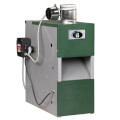
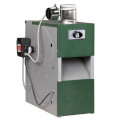

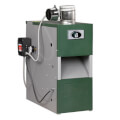
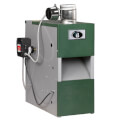

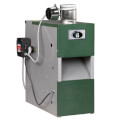
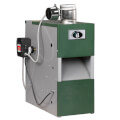
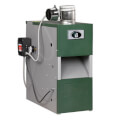
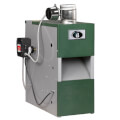
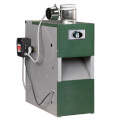


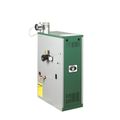
Peerless boilers are cast iron gas-fired and oil-fired boilers built for residential, semi-commercial, and commercial hydronic heating applications. The cast iron heat exchanger design has a long track record for durability in steam and hot water systems, and the lineup spans everything from smaller residential replacements to larger commercial installations firing gas, oil, or a combination of both. Manufacturer-published thermal efficiencies across the residential and commercial series generally run from the low 80 percent range up into the low 90s for the condensing gas-fired models, giving contractors a range of options depending on the building's size and efficiency goals. Some residential oil-fired models carry an AFUE rating up to 87.6 percent and ENERGY STAR certification, while larger commercial units are sized well beyond typical residential output to cover larger heating loads. For contractors replacing an aging cast iron boiler or specifying new equipment for a commercial mechanical room, the Peerless lineup covers a wide enough range of sizes and fuel types to match most cast iron boiler replacement jobs.
Subcategories
- Residential Oil-Fired Boilers: Residential oil-fired models are cast iron boilers designed for steam or hot water systems in single-family homes, with some series rated up to 87.6 percent AFUE and ENERGY STAR certified. Contractors handling oil-to-oil boiler replacements commonly work with this category.
- Residential Gas-Fired Boilers: Residential gas-fired boilers include condensing cast iron options with thermal efficiency in the low 90 percent range, aimed at larger residential or light commercial installations where higher efficiency matters. These units suit both new construction and efficiency-focused replacements.
- Semi-Commercial Boilers: Semi-commercial cast iron boilers bridge the gap between residential and full commercial output, available in gas, oil, or combination gas/oil configurations across several sizes. Buildings with heating loads too large for a residential unit but not large enough to need a full commercial boiler typically fall into this category.
- Commercial Boilers: Commercial cast iron boilers cover a wide range of inputs across many available sizes, supporting gas, oil, or combination firing for steam or hot water systems. Mechanical contractors sizing equipment for larger buildings rely on this category to match heating capacity to the load calculation for the space.
Buying Guide
Matching fuel type to what is already available at the building, or what the customer wants to switch to, narrows the field quickly since gas, oil, and combination gas/oil models are all available across the lineup.
Sizing the boiler to the building's actual heating load, rather than simply matching the output of the unit being replaced, avoids installing equipment that is too large or too small for current conditions. Peerless Boilers span a wide range of inputs across residential, semi-commercial, and commercial series, so there is generally a size that fits a properly calculated load.
Efficiency requirements vary by application and by local code or utility incentive programs. Condensing gas-fired models offer thermal efficiency in the low 90 percent range, while standard cast iron models run lower but often cost less upfront and may better suit a straightforward replacement.
Venting requirements differ between models, with some designed for natural draft chimney venting and others built around forced-draft or power burner configurations. Confirming the venting approach fits the building before finalizing a model choice avoids a costly change mid-installation.
Steam versus hot water compatibility should be confirmed for any replacement job, since not every model in the lineup supports both system types, and installing the wrong configuration means the boiler will not integrate with the existing distribution piping.
Frequently Asked Questions
What fuel types are available across the Peerless boiler lineup?
The lineup includes gas-fired, oil-fired, and combination gas/oil models across residential, semi-commercial, and commercial series, giving contractors flexibility to match whatever fuel source is available or preferred at a given building.
Are Peerless boilers available for both steam and hot water systems?
Many models in the lineup support both steam and hot water applications, though specific configurations vary by series, so confirming compatibility with the existing distribution system is an important step before ordering.
How efficient are Peerless cast iron boilers compared to condensing models?
Standard cast iron models across the lineup generally run in the low 80 percent thermal efficiency range, while condensing gas-fired models reach into the low 90s, giving a meaningful efficiency jump for buildings where that matters most.
What size building is a semi-commercial boiler meant for?
Semi-commercial models are sized for buildings with heating loads larger than a typical residential unit can handle but smaller than what would call for a full commercial boiler, making them a common fit for larger homes or small commercial spaces.
Do these boilers require a chimney for venting?
Venting requirements depend on the specific model, with some designed for natural draft chimney venting and others built around forced-draft or power burner systems that vent differently. Checking the venting method for a chosen model against the building's existing setup avoids a mismatch during installation.
