




ProPEX Expander Tools & Heads


 --%3E %3Csvg version='1.1' id='No-RB' xmlns='http://www.w3.org/2000/svg' xmlns:xlink='http://www.w3.org/1999/xlink' x='0px' y='0px' viewBox='0 0 100 100' enable-background='new 0 0 100 100' xml:space='preserve'%3E %3Cpath fill='%23CECECE' d='M79.44,0.95H20.56C9.78,0.95,0.95,9.78,0.95,20.56v58.87c0,10.79,8.82,19.61,19.61,19.61h58.87 c10.79,0,19.61-8.83,19.61-19.61V20.56C99.05,9.78,90.22,0.95,79.44,0.95z M65.38,58.24l9.38,29.58L49.69,69.78L24.5,87.82 l9.34-29.6L8.8,39.6l30.73-0.17c0,0,6.98-19.61,10-28.93c0.54,1.36,9.88,29.1,9.88,29.1H91.2L65.38,58.24z'/%3E %3C/svg%3E)

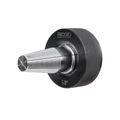
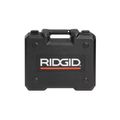


ProPEX Expander Tools & Heads are the battery-powered expansion tools and interchangeable heads used to install Uponor ProPEX fittings on PEX pipe. Milwaukee's M12 platform covers 3/8 inch through 1 inch ProPEX connections, while the M18 platform extends that range up to 1-1/2 inch and the M18 FORCE LOGIC tool reaches 2 inch through 3 inch connections. Each tool drives an expansion head into the pipe end, stretching it over a ProPEX fitting so the pipe shrinks back around the fitting barbs to form the seal, rather than relying on glue, solder, or crimp rings. Radiant heating installers, plumbers, and remodelers who work with PEX-a pipe use these tools daily, since ProPEX fittings require the matched expansion system rather than a standard crimp or clamp tool. Picking the right tool platform and head sizes up front keeps a crew from being stuck mid-rough-in without the one size they need.
Subcategories
- M12 ProPEX Expansion Tools: The Milwaukee M12 ProPEX Expansion Tool handles 3/8 inch through 1 inch ProPEX connections and ships as a kit with 1/2 inch, 3/4 inch, and 1 inch expansion heads included. The 3/8 inch and 5/8 inch heads are sold separately for crews that need those sizes. Residential plumbers and radiant heating installers use the M12 platform for most standard supply and distribution line sizes. Its compact size makes it practical for tight mechanical rooms and crawlspace work.
- M18 ProPEX Expansion Tools: The Milwaukee M18 ProPEX Expansion Tool extends the expansion range to 3/8 inch through 1-1/2 inch connections and includes 1 inch, 1-1/4 inch, and 1-1/2 inch heads in its kit. Installers working on larger distribution mains or commercial plumbing runs use the M18 platform when pipe sizes exceed what the M12 tool covers. The tool shares the same quick-cam expansion mechanism as the M12 line, just scaled for larger heads. Contractors already running M18 batteries for other tools can share packs across this tool as well.
- M18 FORCE LOGIC Expansion Tools: The Milwaukee M18 FORCE LOGIC ProPEX Expansion Tool covers 2 inch through 3 inch connections using a hydraulic expansion system and an auto-rotating head. Mechanical and commercial plumbing crews use this tool on large-diameter PEX runs, such as main risers or large branch lines, where manual or quick-cam tools are not rated. The auto-rotating head reduces the physical effort needed to rotate the pipe between expansion strokes on these larger sizes. Its kit includes 2 inch, 2-1/2 inch, and 3 inch heads.
- ProPEX Expansion Heads: Expansion heads are the interchangeable tooling that mounts to the expander and does the actual stretching of the pipe end. Heads are sized to match a specific pipe diameter, from 3/8 inch up through 3 inch depending on the tool platform. Milwaukee-branded heads enable the auto-rotating feature on compatible tools, while standard Uponor heads also fit the same tools but without auto-rotation. Buying extra heads in less common sizes lets a crew cover additional pipe diameters without purchasing a second full tool kit.
Buying Guide
Start by matching the tool platform to the pipe sizes the job actually requires, since the M12, M18, and M18 FORCE LOGIC tools cover different and only partially overlapping size ranges. The M12 tool handles 3/8 inch through 1 inch connections, the M18 tool extends that up to 1-1/2 inch, and the M18 FORCE LOGIC tool is the only option for 2 inch through 3 inch work. ProPEX Expander Tools & Heads are sold both as complete kits with a core set of heads included and as individual heads for sizes outside that core set. Crews doing mostly residential supply and radiant work rarely need anything beyond the M12 kit's standard heads, while commercial plumbers running larger risers need the M18 or FORCE LOGIC platform instead. Battery platform also matters for crews that already carry M12 or M18 tools for other trades, since sharing batteries and chargers across tools cuts down on the gear that has to ride in the truck. Confirm which heads ship in a given kit versus which are sold separately, since the 3/8 inch and 5/8 inch M12 heads, for example, are not included in the standard M12 kit and have to be ordered on their own. Checking head compatibility against the specific tool model before ordering avoids ending up with a head that fits a different platform. Keeping a spare head or two in common sizes on hand covers a dropped or damaged head without stalling a rough-in.
Frequently Asked Questions
What pipe sizes does the M12 ProPEX tool handle?
The Milwaukee M12 ProPEX Expansion Tool handles 3/8 inch through 1 inch ProPEX connections. Its kit includes 1/2 inch, 3/4 inch, and 1 inch expansion heads, with 3/8 inch and 5/8 inch heads available separately. Residential plumbing and radiant heating installs are the most common uses for this size range.
What is the difference between the M12 and M18 ProPEX tools?
The M12 tool covers 3/8 inch through 1 inch connections, while the M18 tool extends the range up to 1-1/2 inch and includes larger 1 inch, 1-1/4 inch, and 1-1/2 inch heads in its kit. Both tools use the same quick-cam expansion mechanism, just scaled for different head sizes. Choosing between them depends on the largest pipe diameter a job requires.
What tool is needed for 2 inch or 3 inch ProPEX connections?
The Milwaukee M18 FORCE LOGIC ProPEX Expansion Tool is built for 2 inch through 3 inch connections using a hydraulic expansion system. Its auto-rotating head reduces the effort needed to rotate the pipe between strokes on these larger diameters. Standard M12 and M18 tools do not cover this size range.
Do Uponor expansion heads work on Milwaukee tools?
Standard Uponor expander heads fit the Milwaukee M12 and M18 tools, but they do not enable the tool's auto-rotating feature. Only Milwaukee-branded heads, which are color-coded and marked with the Milwaukee logo, support auto-rotation. Confirming head compatibility against the specific tool model avoids confusion between the two head types.
Are all expansion head sizes included in the standard tool kits?
Not every head size ships with the standard kit. The M12 kit includes 1/2 inch, 3/4 inch, and 1 inch heads, while 3/8 inch and 5/8 inch heads are sold separately. Checking the kit contents against the pipe sizes a job requires before ordering prevents a missing head on site.
