


'/%3E%3C/svg%3E)
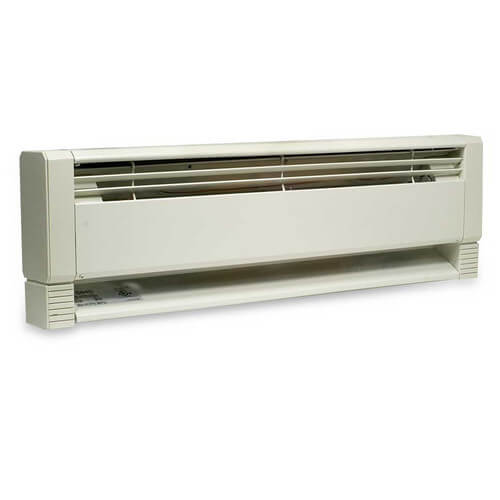
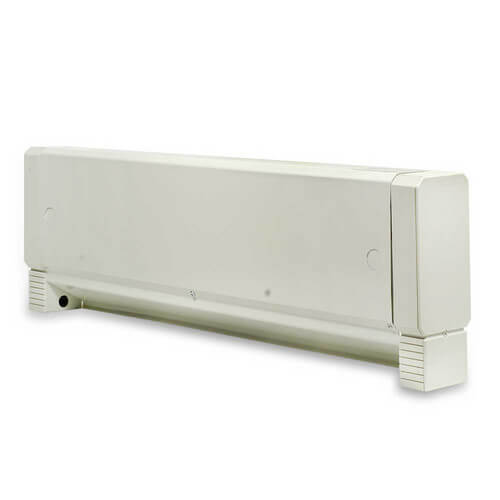
94" Hydronic Electric Baseboard Heater (240 Volt - 2,000 Watts)
 --%3E %3Csvg version='1.1' id='Fill' xmlns='http://www.w3.org/2000/svg' xmlns:xlink='http://www.w3.org/1999/xlink' x='0px' y='0px' viewBox='0 0 100 100' enable-background='new 0 0 100 100' xml:space='preserve'%3E %3Cpath fill='%23F15C02' d='M79.44,0.95H20.56C9.78,0.95,0.95,9.78,0.95,20.56v58.87c0,10.79,8.82,19.61,19.61,19.61h58.87 c10.79,0,19.61-8.83,19.61-19.61V20.56C99.05,9.78,90.22,0.95,79.44,0.95z M65.38,58.24l9.38,29.58L49.69,69.78L24.5,87.82 l9.34-29.6L8.8,39.6l30.73-0.17c0,0,6.98-19.61,10-28.93c0.54,1.36,9.88,29.1,9.88,29.1H91.2L65.38,58.24z'/%3E %3C/svg%3E)
' fill='%23F15C02' d='M49 0C21.938 0 0 21.938 0 49s21.938 49 49 49 49-21.938 49-49S76.062 0 49 0m0 82.709a7.54 7.54 0 1 1 0-15.08 7.54 7.54 0 0 1 0 15.08m7.54-28.412a7.541 7.541 0 0 1-15.08 0V22.831a7.54 7.54 0 0 1 15.08 0v31.466z'/%3E%3C/svg%3E)
MANUALS (4)
Product Highlights


Description
GO-ANYWHERE DESIGN. The entire unit mounts flush to any wall and flat on any floor - wood, carpet or tile. The trim, three-inch thick functional design and low operating temperatures allow carpeting to be installed up to and around the baseboard.
QUALITY INSIDE AND OUT. Heavy-duty welded steel louvered grilles discourage insertion of foreign objects and direct heat outward into the room. Designer-style junction boxes are made of high-strength Lexan+ to resist scratches and wear marks. Built-in cut-off automatically shuts down the heater should any overheating occur.
Specs
| Length (Inches): | 94" |
|---|---|
| Type: | Baseboard Heater |
| Color: | Navajo White |
| Height (Inches): | 8.375" |
| Voltage: | 240v |
| Wattage: | 2000 |
| BTU Output: | 6826 5120 |
| Model: | Qmark HBB |
| Application: | Electric Heating |
| Features: | Environmentally Safe Silicon Oil |


Questions?
You May Also Need
Product Reviews
Most Liked Positive Review
toasty bathroom
Most Liked Negative Review
 --%3E %3Csvg version='1.1' id='With-RB' xmlns='http://www.w3.org/2000/svg' xmlns:xlink='http://www.w3.org/1999/xlink' x='0px' y='0px' viewBox='0 0 100 100' enable-background='new 0 0 100 100' xml:space='preserve'%3E %3Cpath fill='%23FBC8B4' d='M79.44,0.95H20.56C9.78,0.95,0.95,9.78,0.95,20.56v58.87c0,10.79,8.82,19.61,19.61,19.61h58.87 c10.79,0,19.61-8.83,19.61-19.61V20.56C99.05,9.78,90.22,0.95,79.44,0.95z M65.38,58.24l9.38,29.58L49.69,69.78L24.5,87.82 l9.34-29.6L8.8,39.6l30.73-0.17c0,0,6.98-19.61,10-28.93c0.54,1.36,9.88,29.1,9.88,29.1H91.2L65.38,58.24z'/%3E %3C/svg%3E)
Good quality but has odor
Exact replacement for a unit that quit.

Yes
Yes
Excellent Baseboard Heater and superb Service
Supply House Stands Behind Its Products
It works, but....
Good product
Great Service team with great products
Hydronic Baseboard heater
Hydronic baseboard heater
Product Q&A
41 QuestionsQ: We are building a workshop outside our Utah home and are looking at the QMark 34" Hydronic baseboard 24 volts. We plan on connecting three units(one on each wall). Space is 12 x 16 with insulation on walls and ceiling (cement floor). Can the units be connected to one thermostat? How many amps will we need?
Asked by Bill 14 years ago
Add your answer
These are not 24 volt units. I don't think I would choose this type of unit for primary source of heat. Watts divided by voltage equals amps. Do no exceed thermostat rating. Sent from my iPhone
Amps are calculated by dividing watts by volts. In your case you have a grand total of 2250 watts so divide that by 240 and you get a little under 10 amps. You should be able to get by nicely with a 20 amp 240 volt breaker. A single thermostat will work just fine, just wire the three units in series with the power to the first of the series going through the thermostat. I am not an electrician so you probably should verify this with a qualified professional.
Q: When mounted on the wall, which end of the unit has access to the wiring, the left or the right?
Asked by Andy 14 years ago
Add your answer
Either end. Instructions show how.
These units can be wired from either end. Roundjohn
Either end.
Q: Do I have to wire this unit directly into electrical service or can I install standard plug on wires and plug into 110?
Asked by Jim 14 years ago
Add your answer
You will need to connect the unit directly into the electrical service. If you install a standard plug and plug into 110 you’ll fry the unit.
This is a 240 volt unit if you order the 110 volt then the answer is yes pick up a heavy duty appliance cord rated at 15 amp i would also recomend getting the thermostat.
The item description says it is a 240 volt unit, so I don't think you could plug into 110 outlet and make it work properly. But you should be able to attach a cord properly rated for 220 and plug into a properly installed 220 outlet.
Must be direct wired to 240 service
Q: what is the correct thermostat to buy with HBB1000. Please give specific choices. Thanks.
Asked by Newbie 14 years ago
Add your answer
I use the first thermostat. Great product had the cheap turn knob Honeywell thermostat not as precise as this one. The internals would heat up from the current draw and throw off the room readings. The first choice is easy to install and very reliable can handle up to 3000 watts and then some. The #2 choice link is for a selection of honeywell line volt thermostats for electric heat. 1) 7 Day Programmable Line Volt Thermostat for Electric Heating SKU:TH115-A-240D-BBrand: Honeywell 2) http://www.pexsupply.com/Honeywell-Thermostats-283000
Q: I built an addition of 900 sq.ft. I would like to put these in the family room (13x18) and bedroom (14x15). What sizes do i need to properly heat the rooms in western NY
Asked by Dan 14 years ago
Add your answer
Verified Reply- PexSupply StaffOne of these units would be sufficient for each room if they require approximately 30 BTUs per square foot. This is very possible in a new construction, even in a cold climate, but a heat loss calculation would be necessary to find out for sure.
Q: HOW DOES THE COST PER DAY COMPARE AN WITH HYDRONIC ELECTRIC BASEBOARD HEATER VS A REGULAR STRAIGHT ELECTRIC BASEBOARD HEATER?
Asked by PAM 14 years ago
Add your answer
I don't have any idew this heater might compare to a regular one, since this is the only electric heater I have in the house. We have it in our second-floor bathroom on a programable thermostat and I can say that the room is comfortable when we need it to be comfortable.
I can't compare it to other baseboard heaters, but I can tell you that I've found the Pex, which is the only kind of heat I have in my home, to be economical & extremely comfortable. I got these heaters because of my pleasant experiences with de Longhi oil-filled portable radiators.
This product is no more efficient than any other resistive electric heat source: It's on of the most simple, reliable forms of heat. Here's how it works: An electric is current is passed through a resistor (heating element). The electrical resistance in the heating element turns electricity into heat. Electric heat is 100% efficient; you get out exactly what you put in. The difference between a hydronic/electric heating unit and a straight electric heating unit is simple: Instead of leaving the electric element to directly heat the air, a hydronic/electric encases the heating element in a fluid to provide what's called thermal mass, basically a fancy way to describe "stuff to heat up". The element heats the oil, and the oil releases the heat to the air to heat your home. They are silent, and cycle less often than straight electric. They have all the upsides to straight electric heaters and none of the downsides.
Q: how large is the area that a 5120 btu hydronic unit heat?
Asked by frustrated 14 years ago
Add your answer
Verified Reply- PexSupply StaffIt depends on the BTU requirement of the space. Factors such as climate and insulation quality play a major role in determining this number. You may want to try our BTU Calculator (see link below) to get an estimate. http://www.pexsupply.com/pex/control/BTUCalculator
Q: I am plannning on replacing several 24 year old resistive electric baseboard heaters with this type of product.They will be used in 2 second story bedrooms and one small bathroom as supplemental heat on cold nights in my log home. How do I determine what length heaters to get?
Asked by 14 years ago
Add your answer
Verified Reply- PexSupply StaffThat will be based on the BTU-load required to heat the space.
Q: How many amps are required to run the 2000 watt unit?
Asked by Jake 14 years ago
Add your answer
The 2000 Watt unit (HBB2004) requires 8.3 Amps.
Q: Can two units be connected end to end?
Asked by 15 years ago
Add your answer
Verified Reply- PexSupply StaffYou can wire two units together.