




Radiant Heat Controls
Radiant heat controls manage water flow and temperature across the zones of a hydronic radiant heating system, covering actuators that open and close individual manifold valves, mixing valves that blend boiler supply water down to radiant-safe temperatures, and the relays and transformers that tie the control system together.
Mixing valves are especially important on radiant systems since floor-mounted tubing typically runs at much lower water temperatures than a boiler produces, and sending full boiler temperature water through the floor can damage flooring materials. Zone valves let a system heat individual rooms independently based on their own thermostat.
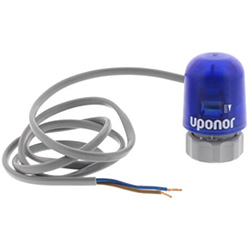
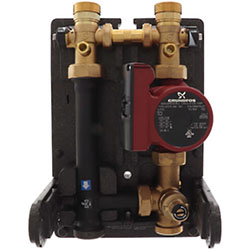
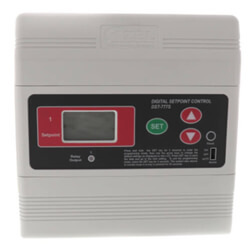
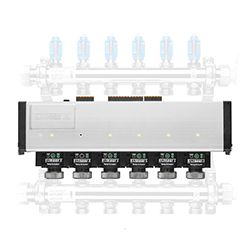
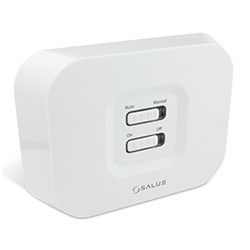

Actuators are electrothermal or motorized devices that mount directly on a manifold valve body and open or close the valve in response to a signal from the thermostat or zone controller. Thermal actuators use resistance heating to expand a wax element that pushes the valve stem open. Actuators allow individual zone control from a single manifold serving multiple radiant loops.
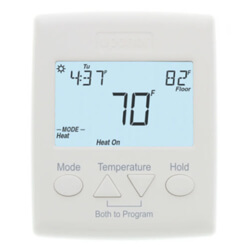
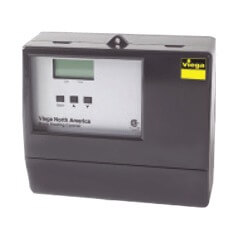
Uponor Thermostats & Controls are zone-level interface devices designed for Uponor radiant heat systems that communicate the zone setpoint and occupancy schedule to the radiant heat control system. Selected models integrate with the Uponor Climate Control Network for centralized management of multiple zones. The thermostat reads space temperature and sends a call for heat signal to the appropriate actuator or zone valve.
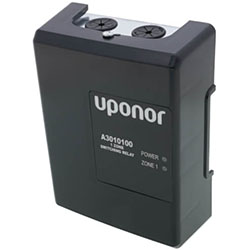
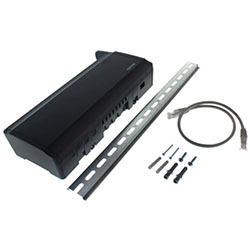
Relays & Zone Valves control water flow on a per-zone basis in systems that use motorized ball valves rather than manifold actuators. Switching relays sequence the boiler and system circulator in response to zone valve end switches, preventing the circulator from running when no zone valve is open. Multi-zone relay panels consolidate zone valve wiring and boiler control in a single component.
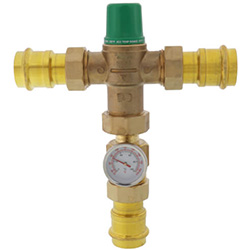
Mixing Valves are three-way or four-way valves that blend high-temperature boiler supply water with cooler return water to produce the lower water temperature required for radiant floor circuits. Most radiant floor systems operate with supply water in the 90 to 120 degree Fahrenheit range, well below typical boiler supply temperatures. Mixing valves protect the floor assembly and tubing from overheating and improve boiler efficiency.
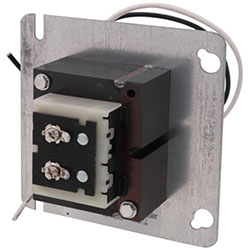
Transformers step down line voltage to the 24-volt AC control voltage used by most hydronic control components including thermostats, zone valves, actuators, and relay panels. Each control circuit requires a transformer sized in volt-amps to supply the total load of all connected devices. Undersized transformers overheat and fail prematurely; a properly sized transformer provides reliable control voltage to the entire system.
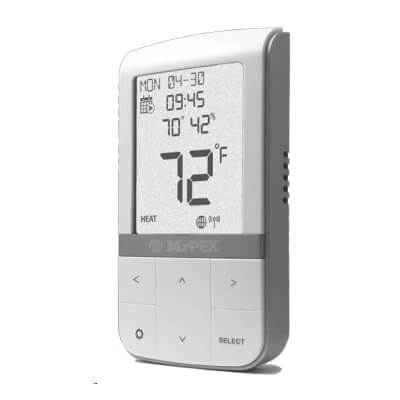
Mr. Pex Thermostats & Controls are digital thermostats and zone control components that provide setpoint control, programmable scheduling, and floor sensor input for slab temperature limiting. Floor temperature limiting protects wood flooring from damage by capping the radiant slab temperature below the material's maximum allowable temperature. Mr. Pex thermostats are compatible with standard 24-volt control wiring and interface with zone valves, actuators, and relay panels.
The number of zones in the system determines the minimum number of control points required. Each zone requires a thermostat, an actuator or zone valve, and a relay or panel input. Mixing valves are required when the boiler operates at temperatures above what is safe for the radiant floor system. Non-condensing boilers must be protected from low return water temperatures that cause condensation in the heat exchanger.
Thermostat selection should account for the type of floor covering over the radiant tubing. Thermostats with a floor sensor input allow the control system to monitor slab temperature and limit floor surface temperature below the maximum allowable for the installed flooring. Hardwood and engineered wood floors typically require a maximum floor surface temperature of 80 to 85 degrees Fahrenheit.
Transformer sizing must account for all control loads on the circuit. Each zone valve or actuator draws a specific VA load, and the transformer must supply the sum of all simultaneous loads plus a safety margin of at least 25 percent. The relay panel or zone controller manufacturer's documentation specifies the minimum transformer VA rating for the number of zones installed.
What controls are required for a basic two-zone radiant heat system?
A two-zone system requires two thermostats, two zone valves or two manifold actuators, and a switching relay or relay panel. If using a manifold, each zone loop gets an actuator mounted on the manifold valve body, wired back to a two-zone controller. If using zone valves on branch piping, the zone valves wire to a relay panel that activates the circulator when any valve is open and enables the boiler only when there is active zone demand.
Do I need a mixing valve for my radiant heat system?
Whether a mixing valve is required depends on the boiler type and setpoint and the floor covering. If the boiler operates at 130 degrees Fahrenheit or lower and the floor covering tolerates that temperature, a mixing valve may not be necessary. If the boiler operates above 130 degrees or serves multiple heating emitters at different temperature requirements, a mixing valve is needed to reduce water temperature to the radiant circuits.
What is the difference between a zone valve and a manifold actuator?
A zone valve is a motorized valve that mounts on branch piping and controls flow to an entire zone. A manifold actuator mounts on an individual valve port of a radiant manifold and controls flow to a single loop, allowing independent flow control and balancing for each loop. Zone valves are typically used in systems without a manifold where piping branches at a main distribution header. Both types interface with 24-volt thermostats and relay panels.
How do I size the transformer for my radiant heat control panel?
Add the VA draw of each zone valve or actuator connected to the panel, typically 1 to 3 VA each, plus any relay coils or panel electronics. Select a transformer with at least 25 percent additional capacity above the calculated load to account for inrush current and extend transformer service life. The relay panel documentation lists the required transformer VA rating for each zone configuration.
Can I add zones to an existing radiant heat system?
Adding zones is possible if the boiler has sufficient capacity, the manifold has unused valve ports or new branch piping can be added, and the control system is expandable. Single-zone relay panels may need replacement with a multi-zone panel. The existing transformer must be checked for sufficient VA capacity, and the mixing valve's flow capacity must be verified against the total flow requirement of all zones operating simultaneously.
Resources

 --%3E %3C!DOCTYPE svg PUBLIC '-//W3C//DTD SVG 1.1//EN' 'http://www.w3.org/Graphics/SVG/1.1/DTD/svg11.dtd'%3E %3Csvg version='1.1' id='Layer_1' xmlns='http://www.w3.org/2000/svg' xmlns:xlink='http://www.w3.org/1999/xlink' x='0px' y='0px' width='90px' height='90px' viewBox='0 0 90 90' enable-background='new 0 0 90 90' xml:space='preserve'%3E %3Crect x='27' y='23' fill='%23FFFFFF' width='43' height='44'/%3E %3Cg%3E %3Cdefs%3E %3Crect id='SVGID_1_' width='90' height='90'/%3E %3C/defs%3E %3CclipPath id='SVGID_2_'%3E %3Cuse xlink:href='%23SVGID_1_' overflow='visible'/%3E %3C/clipPath%3E %3Cpath clip-path='url(%23SVGID_2_)' fill='%234186AD' d='M45,0C20.1,0,0,20.1,0,45c0,24.9,20.1,45,45,45c24.9,0,45-20.1,45-45 C90,20.1,69.9,0,45,0'/%3E %3C/g%3E %3Cpath fill='%23FFFFFF' d='M60.6,47.4l-22.5,14c-0.5,0.3-1,0.399-1.5,0.399s-0.9-0.1-1.4-0.399c-0.9-0.5-1.4-1.4-1.4-2.5v-28 c0-1,0.6-2,1.4-2.5c0.9-0.5,2-0.5,2.9,0.1l22.5,14.1C61.4,43.1,61.9,44,61.9,45S61.4,46.9,60.6,47.4'/%3E %3C/svg%3E)
Actuators are electrothermal or motorized devices that mount directly on a manifold valve body and open or close the valve in response to a signal from the thermostat or zone controller. Thermal actuators use resistance heating to expand a wax element that pushes the valve stem open. Actuators allow individual zone control from a single manifold serving multiple radiant loops.
Uponor Thermostats & Controls are zone-level interface devices designed for Uponor radiant heat systems that communicate the zone setpoint and occupancy schedule to the radiant heat control system. Selected models integrate with the Uponor Climate Control Network for centralized management of multiple zones. The thermostat reads space temperature and sends a call for heat signal to the appropriate actuator or zone valve.
Relays & Zone Valves control water flow on a per-zone basis in systems that use motorized ball valves rather than manifold actuators. Switching relays sequence the boiler and system circulator in response to zone valve end switches, preventing the circulator from running when no zone valve is open. Multi-zone relay panels consolidate zone valve wiring and boiler control in a single component.
Mixing Valves are three-way or four-way valves that blend high-temperature boiler supply water with cooler return water to produce the lower water temperature required for radiant floor circuits. Most radiant floor systems operate with supply water in the 90 to 120 degree Fahrenheit range, well below typical boiler supply temperatures. Mixing valves protect the floor assembly and tubing from overheating and improve boiler efficiency.
Transformers step down line voltage to the 24-volt AC control voltage used by most hydronic control components including thermostats, zone valves, actuators, and relay panels. Each control circuit requires a transformer sized in volt-amps to supply the total load of all connected devices. Undersized transformers overheat and fail prematurely; a properly sized transformer provides reliable control voltage to the entire system.
Mr. Pex Thermostats & Controls are digital thermostats and zone control components that provide setpoint control, programmable scheduling, and floor sensor input for slab temperature limiting. Floor temperature limiting protects wood flooring from damage by capping the radiant slab temperature below the material's maximum allowable temperature. Mr. Pex thermostats are compatible with standard 24-volt control wiring and interface with zone valves, actuators, and relay panels.
The number of zones in the system determines the minimum number of control points required. Each zone requires a thermostat, an actuator or zone valve, and a relay or panel input. Mixing valves are required when the boiler operates at temperatures above what is safe for the radiant floor system. Non-condensing boilers must be protected from low return water temperatures that cause condensation in the heat exchanger.
Thermostat selection should account for the type of floor covering over the radiant tubing. Thermostats with a floor sensor input allow the control system to monitor slab temperature and limit floor surface temperature below the maximum allowable for the installed flooring. Hardwood and engineered wood floors typically require a maximum floor surface temperature of 80 to 85 degrees Fahrenheit.
Transformer sizing must account for all control loads on the circuit. Each zone valve or actuator draws a specific VA load, and the transformer must supply the sum of all simultaneous loads plus a safety margin of at least 25 percent. The relay panel or zone controller manufacturer's documentation specifies the minimum transformer VA rating for the number of zones installed.
What controls are required for a basic two-zone radiant heat system?
A two-zone system requires two thermostats, two zone valves or two manifold actuators, and a switching relay or relay panel. If using a manifold, each zone loop gets an actuator mounted on the manifold valve body, wired back to a two-zone controller. If using zone valves on branch piping, the zone valves wire to a relay panel that activates the circulator when any valve is open and enables the boiler only when there is active zone demand.
Do I need a mixing valve for my radiant heat system?
Whether a mixing valve is required depends on the boiler type and setpoint and the floor covering. If the boiler operates at 130 degrees Fahrenheit or lower and the floor covering tolerates that temperature, a mixing valve may not be necessary. If the boiler operates above 130 degrees or serves multiple heating emitters at different temperature requirements, a mixing valve is needed to reduce water temperature to the radiant circuits.
What is the difference between a zone valve and a manifold actuator?
A zone valve is a motorized valve that mounts on branch piping and controls flow to an entire zone. A manifold actuator mounts on an individual valve port of a radiant manifold and controls flow to a single loop, allowing independent flow control and balancing for each loop. Zone valves are typically used in systems without a manifold where piping branches at a main distribution header. Both types interface with 24-volt thermostats and relay panels.
How do I size the transformer for my radiant heat control panel?
Add the VA draw of each zone valve or actuator connected to the panel, typically 1 to 3 VA each, plus any relay coils or panel electronics. Select a transformer with at least 25 percent additional capacity above the calculated load to account for inrush current and extend transformer service life. The relay panel documentation lists the required transformer VA rating for each zone configuration.
Can I add zones to an existing radiant heat system?
Adding zones is possible if the boiler has sufficient capacity, the manifold has unused valve ports or new branch piping can be added, and the control system is expandable. Single-zone relay panels may need replacement with a multi-zone panel. The existing transformer must be checked for sufficient VA capacity, and the mixing valve's flow capacity must be verified against the total flow requirement of all zones operating simultaneously.