




Filters
SORT
Product Availability –
Category –
Brand –
Review Score –
 --%3E %3Csvg version='1.1' id='Fill' xmlns='http://www.w3.org/2000/svg' xmlns:xlink='http://www.w3.org/1999/xlink' x='0px' y='0px' viewBox='0 0 100 100' enable-background='new 0 0 100 100' xml:space='preserve'%3E %3Cpath fill='%23F15C02' d='M79.44,0.95H20.56C9.78,0.95,0.95,9.78,0.95,20.56v58.87c0,10.79,8.82,19.61,19.61,19.61h58.87 c10.79,0,19.61-8.83,19.61-19.61V20.56C99.05,9.78,90.22,0.95,79.44,0.95z M65.38,58.24l9.38,29.58L49.69,69.78L24.5,87.82 l9.34-29.6L8.8,39.6l30.73-0.17c0,0,6.98-19.61,10-28.93c0.54,1.36,9.88,29.1,9.88,29.1H91.2L65.38,58.24z'/%3E %3C/svg%3E)
 --%3E %3Csvg version='1.1' id='With-RB' xmlns='http://www.w3.org/2000/svg' xmlns:xlink='http://www.w3.org/1999/xlink' x='0px' y='0px' viewBox='0 0 100 100' enable-background='new 0 0 100 100' xml:space='preserve'%3E %3Cpath fill='%23FBC8B4' d='M79.44,0.95H20.56C9.78,0.95,0.95,9.78,0.95,20.56v58.87c0,10.79,8.82,19.61,19.61,19.61h58.87 c10.79,0,19.61-8.83,19.61-19.61V20.56C99.05,9.78,90.22,0.95,79.44,0.95z M65.38,58.24l9.38,29.58L49.69,69.78L24.5,87.82 l9.34-29.6L8.8,39.6l30.73-0.17c0,0,6.98-19.61,10-28.93c0.54,1.36,9.88,29.1,9.88,29.1H91.2L65.38,58.24z'/%3E %3C/svg%3E)
Price Range –
Actuators


 --%3E %3Csvg version='1.1' id='Half' xmlns='http://www.w3.org/2000/svg' xmlns:xlink='http://www.w3.org/1999/xlink' x='0px' y='0px' viewBox='0 0 100 100' enable-background='new 0 0 100 100' xml:space='preserve'%3E %3Cg%3E %3Cpath fill='%23F15C02' d='M30.05,70.23l3.79-12.01L8.8,39.6l30.73-0.17c0,0,6.98-19.61,10-28.93c0.54,1.36,9.88,29.1,9.88,29.1h1.58 L93.71,7.18c-3.58-3.82-8.66-6.23-14.28-6.23H20.56C9.78,0.95,0.95,9.78,0.95,20.56v58.87c0,5.41,2.22,10.32,5.79,13.88 L30.05,70.23z'/%3E %3C/g%3E %3Cpath fill='%23FBC8B4' d='M93.71,7.18L60.98,39.6H91.2L65.38,58.24l9.38,29.58L49.69,69.78L24.5,87.82l5.55-17.59L6.75,93.32 c3.55,3.54,8.44,5.73,13.82,5.73h58.87c10.79,0,19.61-8.83,19.61-19.61V20.56C99.05,15.4,97.01,10.69,93.71,7.18z'/%3E %3C/svg%3E)





 --%3E %3Csvg version='1.1' id='No-RB' xmlns='http://www.w3.org/2000/svg' xmlns:xlink='http://www.w3.org/1999/xlink' x='0px' y='0px' viewBox='0 0 100 100' enable-background='new 0 0 100 100' xml:space='preserve'%3E %3Cpath fill='%23CECECE' d='M79.44,0.95H20.56C9.78,0.95,0.95,9.78,0.95,20.56v58.87c0,10.79,8.82,19.61,19.61,19.61h58.87 c10.79,0,19.61-8.83,19.61-19.61V20.56C99.05,9.78,90.22,0.95,79.44,0.95z M65.38,58.24l9.38,29.58L49.69,69.78L24.5,87.82 l9.34-29.6L8.8,39.6l30.73-0.17c0,0,6.98-19.61,10-28.93c0.54,1.36,9.88,29.1,9.88,29.1H91.2L65.38,58.24z'/%3E %3C/svg%3E)


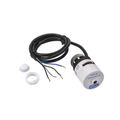





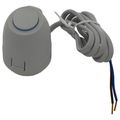
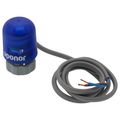
Actuators are the motorized components that convert an electrical control signal into physical movement, opening and closing dampers, valves, and other mechanical elements throughout an HVAC or hydronic system. A thermostat or building automation system sends a signal to the actuator, which then drives a shaft or linkage to a specific position, whether that's a two-position open/closed command or a modulating signal that positions the device anywhere across its full range of travel. Spring-return models add a fail-safe function, automatically driving the damper or valve to a predetermined position if power is lost, which matters on life-safety applications like smoke dampers. Voltage requirements vary by application, with common options including 24V for most residential and light commercial zoning work and line voltage for some larger commercial installations. Technicians replace actuators most often when a zone stops responding to the thermostat, a damper gets stuck in one position, or a gear train wears out after years of daily cycling.
Subcategories
- Two-Position Actuators: Two-position actuators drive a damper or valve fully open or fully closed based on a simple on/off control signal, which covers the majority of residential zoning and basic commercial applications. These are typically the least expensive actuator option and the simplest to troubleshoot, since there's no modulating signal or position feedback to verify. A stuck damper that won't respond to the thermostat call is usually traced back to a failed two-position actuator or a wiring issue at the connection point. Replacement is generally straightforward since the mounting and shaft coupling patterns are fairly consistent across residential zoning equipment.
- Modulating Actuators: Modulating actuators position a damper or valve anywhere across its full range of travel in response to a variable control signal, which allows finer control over airflow or water flow than a simple open/closed command. These see the most use in commercial building automation systems and variable air volume applications where precise positioning improves comfort and system efficiency. Wiring modulating actuators correctly matters more than with two-position models, since the control signal type has to match what the actuator expects, whether that's a voltage range or a different signal standard. Troubleshooting typically starts by confirming the control signal is actually reaching the actuator before assuming the actuator itself has failed.
- Spring-Return Actuators: Spring-return actuators store mechanical energy while powered and use it to drive the damper or valve to a fail-safe position automatically if power is lost, which is a code requirement on smoke and fire dampers in many commercial buildings. These actuators typically run quieter during the fail-safe stroke than during normal powered operation, since the spring does the work rather than the motor. Confirming the fail-safe direction, whether that's fail-open or fail-closed, matters during installation since installing one backwards can create an unsafe condition rather than the intended safety response. Spring-return models cost more than standard non-spring actuators due to the added mechanical components.
Buying Guide
Matching an actuator to the application starts with confirming whether the job calls for simple two-position control or a modulating signal, since the two types aren't interchangeable and wiring a modulating actuator into a system built for on/off control won't function correctly. Voltage is the next check: most residential zoning and light commercial work runs on 24V control circuits, while some larger commercial systems use line voltage actuators, so confirming the existing control wiring before ordering avoids a mismatch. Torque rating matters more than it might seem, since an actuator without enough torque to move a larger or stiffer damper will stall or wear out prematurely, so checking the damper manufacturer's torque specification against the actuator's rated output is worth the extra step. Actuators used on life-safety applications like smoke or fire dampers need to be spring-return models with the correct fail-safe direction confirmed at installation, since this is typically a code requirement rather than an optional feature. Mounting style and shaft coupling also need to match the existing damper or valve hardware, since actuators aren't universal across every manufacturer's linkage design even when the electrical specifications line up. Keeping a small stock of common 24V two-position actuators on hand covers the majority of residential service calls, while modulating and spring-return models are usually ordered to match a specific commercial job's requirements.
Frequently Asked Questions
How do I know if a damper actuator has failed?
A damper that won't respond to the thermostat or automation system call, or one that's visibly stuck in one position, points to a possible actuator failure. Checking for control voltage at the actuator terminals first confirms whether the problem is the actuator itself or a wiring or control issue upstream. A humming or clicking actuator that isn't moving the damper usually indicates a worn gear train.
What's the difference between two-position and modulating actuators?
Two-position actuators only drive a damper or valve fully open or fully closed based on a simple on/off signal. Modulating actuators position the device anywhere across its range in response to a variable signal, allowing finer control. Modulating actuators are more common in commercial building automation applications than in basic residential zoning.
Why do spring-return actuators cost more than standard models?
Spring-return actuators include additional mechanical components that store energy while powered and release it to drive the actuator to a fail-safe position if power is lost. That added mechanism increases both material cost and complexity compared to a standard actuator without a fail-safe function. The added cost is generally required rather than optional on life-safety applications like smoke dampers.
What voltage do most residential zone damper actuators use?
24V is the standard control voltage for most residential and light commercial zoning actuators, matching the low-voltage transformer output already used for thermostats and zone panels. Some larger commercial applications use line voltage actuators instead. Confirming the existing control wiring before ordering a replacement avoids a voltage mismatch.
Can any actuator be mounted on any damper?
No, mounting patterns and shaft coupling styles vary by manufacturer, so an actuator needs to match the specific damper or valve hardware it's being installed on even when the electrical specifications are compatible. Torque rating also needs to meet or exceed what the damper requires to move reliably. Checking both mechanical fit and torque rating before ordering prevents a mismatch discovered mid-installation.
