




Filters
SORT
Product Availability –
Category –
Brand –
Size –
Review Score –
 --%3E %3Csvg version='1.1' id='Fill' xmlns='http://www.w3.org/2000/svg' xmlns:xlink='http://www.w3.org/1999/xlink' x='0px' y='0px' viewBox='0 0 100 100' enable-background='new 0 0 100 100' xml:space='preserve'%3E %3Cpath fill='%23F15C02' d='M79.44,0.95H20.56C9.78,0.95,0.95,9.78,0.95,20.56v58.87c0,10.79,8.82,19.61,19.61,19.61h58.87 c10.79,0,19.61-8.83,19.61-19.61V20.56C99.05,9.78,90.22,0.95,79.44,0.95z M65.38,58.24l9.38,29.58L49.69,69.78L24.5,87.82 l9.34-29.6L8.8,39.6l30.73-0.17c0,0,6.98-19.61,10-28.93c0.54,1.36,9.88,29.1,9.88,29.1H91.2L65.38,58.24z'/%3E %3C/svg%3E)
 --%3E %3Csvg version='1.1' id='With-RB' xmlns='http://www.w3.org/2000/svg' xmlns:xlink='http://www.w3.org/1999/xlink' x='0px' y='0px' viewBox='0 0 100 100' enable-background='new 0 0 100 100' xml:space='preserve'%3E %3Cpath fill='%23FBC8B4' d='M79.44,0.95H20.56C9.78,0.95,0.95,9.78,0.95,20.56v58.87c0,10.79,8.82,19.61,19.61,19.61h58.87 c10.79,0,19.61-8.83,19.61-19.61V20.56C99.05,9.78,90.22,0.95,79.44,0.95z M65.38,58.24l9.38,29.58L49.69,69.78L24.5,87.82 l9.34-29.6L8.8,39.6l30.73-0.17c0,0,6.98-19.61,10-28.93c0.54,1.36,9.88,29.1,9.88,29.1H91.2L65.38,58.24z'/%3E %3C/svg%3E)
Price Range –
Ratcheting & Socket Wrenches

 --%3E %3Csvg version='1.1' id='No-RB' xmlns='http://www.w3.org/2000/svg' xmlns:xlink='http://www.w3.org/1999/xlink' x='0px' y='0px' viewBox='0 0 100 100' enable-background='new 0 0 100 100' xml:space='preserve'%3E %3Cpath fill='%23CECECE' d='M79.44,0.95H20.56C9.78,0.95,0.95,9.78,0.95,20.56v58.87c0,10.79,8.82,19.61,19.61,19.61h58.87 c10.79,0,19.61-8.83,19.61-19.61V20.56C99.05,9.78,90.22,0.95,79.44,0.95z M65.38,58.24l9.38,29.58L49.69,69.78L24.5,87.82 l9.34-29.6L8.8,39.6l30.73-0.17c0,0,6.98-19.61,10-28.93c0.54,1.36,9.88,29.1,9.88,29.1H91.2L65.38,58.24z'/%3E %3C/svg%3E)
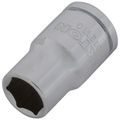
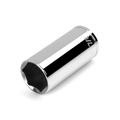
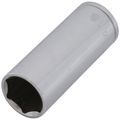
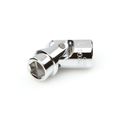
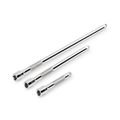
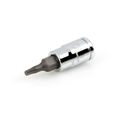
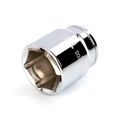
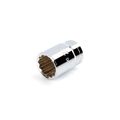
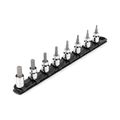
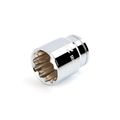
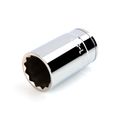
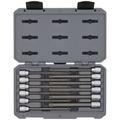

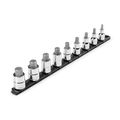
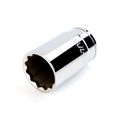
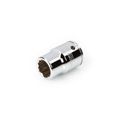
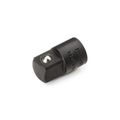
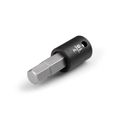
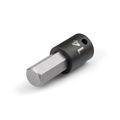
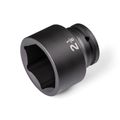
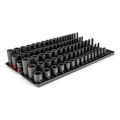
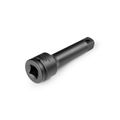
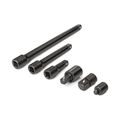
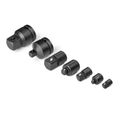
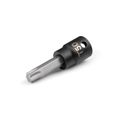
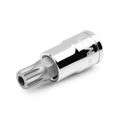
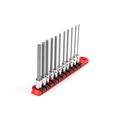
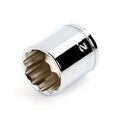
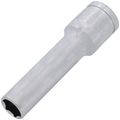
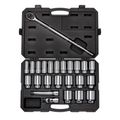
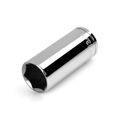
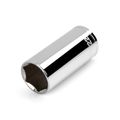
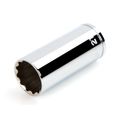
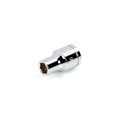
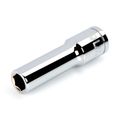
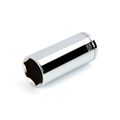
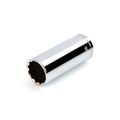
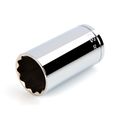
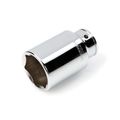
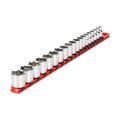
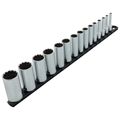
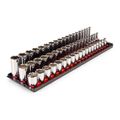
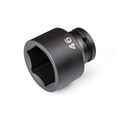
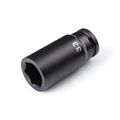
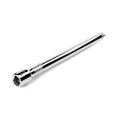

Ratcheting & Socket Wrenches are hand tools built to turn fasteners quickly without lifting the tool off the nut or bolt after every turn. A ratchet mechanism lets the handle swing back and reset without disengaging the fastener, which speeds up repetitive work in HVAC and plumbing installs. Many combination ratcheting wrenches use a 72-tooth mechanism, delivering a 5-degree swing arc so the tool can advance in tight quarters where a full swing isn't possible. Socket wrenches pair a ratchet handle with interchangeable sockets in a range of drive sizes, letting one handle cover dozens of fastener sizes instead of carrying a full set of fixed wrenches. For contractors working in mechanical rooms, crawlspaces, and behind appliances, low-clearance ratcheting action often makes the difference between finishing a job efficiently and fighting for every turn. Choosing the right combination of ratchet type, tooth count, and drive size keeps a service truck lighter and a technician faster on the next call.
Subcategories
- Ratcheting Combination Wrenches: Ratcheting combination wrenches combine a box end ratchet with an open end on a single fixed-size wrench body. Many models use a 72-tooth ratchet mechanism that produces a 5-degree swing arc, letting a technician turn a fastener in cramped spaces where a standard wrench can't complete a full stroke. Mechanics and HVAC installers use them on plumbing fittings, mounting bolts, and equipment panels where a socket and ratchet handle won't fit. They come in SAE and metric sizes and typically ship as sets covering a run of common fastener sizes.
- Socket Wrenches and Socket Sets: Socket wrenches pair a ratchet handle with a square drive that accepts separate sockets, most commonly in 1/4 inch, 3/8 inch, and 1/2 inch drive sizes. A 3/8 inch drive set, for example, commonly spans SAE sizes from 1/4 inch to 7/8 inch or metric sizes from 6mm to 19mm in a single kit. Installers and service technicians use them for general assembly, equipment mounting, and any job where fastener sizes vary throughout the workday. Sockets are available in 6-point and 12-point configurations and in standard or deep lengths to reach recessed fasteners.
- Ratcheting Refrigeration Wrenches: Ratcheting refrigeration wrenches are compact, multi-size tools built specifically for HVAC service work on valve stem sockets and refrigeration packing gland nuts. A typical model offers square drive openings such as 3/16 inch and 5/16 inch on one end and 1/4 inch and 3/8 inch on the other, with a ratchet mechanism and a reversing lever for quick direction changes. HVAC technicians rely on them to access valve stems and gland nuts in tight refrigeration cabinets without swapping tools. Their small swing arc, often in the single digits of degrees, suits the confined spaces typical of condensing units and line sets.
- Multi-Size Pass-Through Wrench Sets: Multi-size pass-through wrench sets fit several fastener sizes onto a single reversible ratchet body, often using a 90-tooth mechanism to reduce the swing arc further than standard 72-tooth designs. A two-piece SAE set, for instance, can cover eight hex sizes from 1/4 inch to 3/4 inch, with a pass-through design that accommodates long threaded rod. Plumbers and HVAC technicians use these sets to cut down on the number of individual wrenches carried on a truck while still reaching a wide range of fastener sizes. The reduced swing arc helps in equipment bays and mechanical closets where clearance is limited.
Buying Guide
Start with the fastener sizes actually encountered on the job. Plumbing and HVAC work tends to mix SAE and metric hardware, so a set that covers both, or two dedicated sets, saves a return trip for a missing size. Next, weigh drive size against the work: 1/4 inch drive suits small fasteners and confined access, 3/8 inch drive covers most general plumbing and HVAC fastening, and 1/2 inch drive handles larger bolts that need more torque. Ratcheting & Socket Wrenches vary widely in tooth count, and a higher tooth count translates to a smaller swing arc, which matters most in tight mechanical rooms, behind appliances, or inside equipment cabinets where a full wrench swing isn't possible. For refrigeration and valve stem work, a dedicated ratcheting refrigeration wrench with multiple square drive sizes on one body saves time over swapping standard sockets. Consider reversing levers, since a quick-flip mechanism speeds up back-and-forth fastening compared to flipping the wrench over. Socket point count matters too: 6-point sockets grip better on worn or rounded fasteners, while 12-point sockets offer more engagement angles in tight spaces. Finally, factor in construction and finish, since chrome-plated or laminated bodies hold up better against rust in humid mechanical rooms and outdoor equipment pads. Matching tool to task, rather than buying the largest set available, keeps a truck organized and ready for the next call.
Frequently Asked Questions
What's the difference between a ratcheting wrench and a standard socket wrench?
A ratcheting combination wrench has a fixed size box end built into the ratchet body, while a socket wrench uses a separate ratchet handle with interchangeable sockets in various sizes. Ratcheting combination wrenches work well in tight spots where a socket and handle combination won't fit, while socket wrenches offer more size flexibility from a single handle.
What drive size should a technician carry for HVAC and plumbing work?
A 3/8 inch drive set covers the majority of general HVAC and plumbing fastening tasks and commonly spans sizes from 1/4 inch to 7/8 inch SAE or 6mm to 19mm metric. A 1/4 inch drive set handles smaller fasteners in confined spaces, and a 1/2 inch drive set is better suited to larger bolts that require more torque.
Why does ratchet tooth count matter?
Tooth count determines the swing arc needed to advance the ratchet to the next engagement point. A 72-tooth ratchet produces a 5-degree swing arc, while higher tooth counts such as 90-tooth designs reduce that arc further, which helps in tight mechanical rooms and equipment cabinets where a full handle swing isn't possible.
What's a ratcheting refrigeration wrench used for?
A ratcheting refrigeration wrench is built for HVAC service on valve stem sockets and refrigeration packing gland nuts. It typically offers multiple square drive sizes on a single compact body, letting technicians reach fittings in confined refrigeration cabinets without carrying separate sockets for each size.
Should a socket set include both 6-point and 12-point sockets?
Both have a place on a service truck. 6-point sockets grip fastener corners more securely and resist rounding worn or corroded hardware, while 12-point sockets offer more engagement angles, which helps in tight spaces where the socket can't be positioned freely. Many mechanics keep sets of both on hand for different situations.
