




Filters
SORT
Product Availability –
Brand –
Voltage –
Amperage –
Review Score –
 --%3E %3Csvg version='1.1' id='Fill' xmlns='http://www.w3.org/2000/svg' xmlns:xlink='http://www.w3.org/1999/xlink' x='0px' y='0px' viewBox='0 0 100 100' enable-background='new 0 0 100 100' xml:space='preserve'%3E %3Cpath fill='%23F15C02' d='M79.44,0.95H20.56C9.78,0.95,0.95,9.78,0.95,20.56v58.87c0,10.79,8.82,19.61,19.61,19.61h58.87 c10.79,0,19.61-8.83,19.61-19.61V20.56C99.05,9.78,90.22,0.95,79.44,0.95z M65.38,58.24l9.38,29.58L49.69,69.78L24.5,87.82 l9.34-29.6L8.8,39.6l30.73-0.17c0,0,6.98-19.61,10-28.93c0.54,1.36,9.88,29.1,9.88,29.1H91.2L65.38,58.24z'/%3E %3C/svg%3E)
Price Range –
SPDT Relays

 --%3E %3Csvg version='1.1' id='No-RB' xmlns='http://www.w3.org/2000/svg' xmlns:xlink='http://www.w3.org/1999/xlink' x='0px' y='0px' viewBox='0 0 100 100' enable-background='new 0 0 100 100' xml:space='preserve'%3E %3Cpath fill='%23CECECE' d='M79.44,0.95H20.56C9.78,0.95,0.95,9.78,0.95,20.56v58.87c0,10.79,8.82,19.61,19.61,19.61h58.87 c10.79,0,19.61-8.83,19.61-19.61V20.56C99.05,9.78,90.22,0.95,79.44,0.95z M65.38,58.24l9.38,29.58L49.69,69.78L24.5,87.82 l9.34-29.6L8.8,39.6l30.73-0.17c0,0,6.98-19.61,10-28.93c0.54,1.36,9.88,29.1,9.88,29.1H91.2L65.38,58.24z'/%3E %3C/svg%3E)
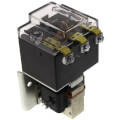
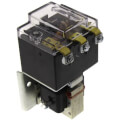
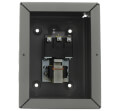
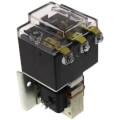
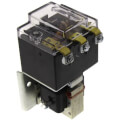
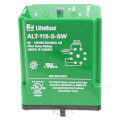
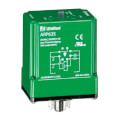

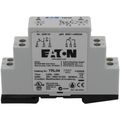
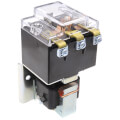
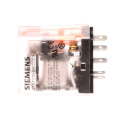
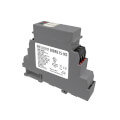
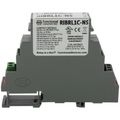


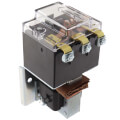
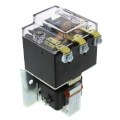
SPDT relays, short for single pole double throw, are electromechanical switches that use one common terminal to switch between two output paths: a normally open contact and a normally closed contact. Energizing the relay's coil pulls the internal armature, breaking the connection to the normally closed terminal and making the connection to the normally open terminal. Enclosed models such as the RIBU1C carry a 10 Amp SPDT contact rating with a 10-30 Vac/DC or 120 Vac coil, making them common in HVAC control panels for switching fan relays, damper actuators, and staging circuits. Because the switch offers both a normally open and normally closed path from a single input, control techs use SPDT relays to isolate a low-voltage thermostat signal from a higher-voltage motor or contactor circuit. This flexibility makes SPDT relays a staple in building automation panels, rooftop unit controls, and boiler staging circuits where one signal needs to trigger two different downstream actions.
Subcategories
- Enclosed Pilot Relays: These relays come mounted inside a plastic enclosure with a pigtail or terminal block for quick field wiring. Control techs use them as an interface between a thermostat or controller output and a higher-current load like a fan motor. The RIBU1C, for example, carries a 10 Amp SPDT contact rating with a wide 10-30 Vac/DC coil range. The enclosure protects the contacts from dust and moisture in mechanical rooms.
- Open-Frame SPDT Relays: Sold without an enclosure, these relays mount directly onto a control board or panel using a socket base. Panel builders use them where board space is tight and a plastic housing isn't needed. The bare relay still provides the same common, normally open, and normally closed terminal layout as an enclosed version. Techs replacing a failed relay in an existing panel often match the open-frame style already installed.
- Higher-Amperage SPDT Relays: Models like the RIB2401B step up to a 20 Amp SPDT contact rating with a 24 VAC/DC or 120 VAC coil, suited to larger motor loads or contactor coils. Techs working on commercial rooftop units or larger air handlers use these when a standard 10 Amp relay isn't sufficient for the load. The higher contact rating handles inrush current from bigger fan motors more reliably. Matching the amperage rating to the connected load prevents premature contact wear.
Buying Guide
Start with the coil voltage already available in the control circuit, since SPDT relays are built for specific ranges such as 10-30 Vac/DC or 24 VAC/DC/120 VAC, and matching the coil to the control signal avoids adding a transformer just to trigger the relay. Next, check the contact rating against the load being switched. A 10 Amp SPDT relay handles smaller fan motors and pilot duty loads, while a 20 Amp SPDT relay is a better fit for larger motors or contactor coils that draw more current on startup. SPDT relays give a normally open and normally closed path from one common terminal, so confirm which contact state the application needs before wiring, since using the wrong contact can leave a circuit energized when it should be off. Enclosed relays make sense for exposed locations like mechanical rooms or rooftop units where dust and moisture are a concern, while open-frame relays fit tighter panel spaces where an enclosure isn't practical. Techs replacing a failed relay in an existing control panel should match both the physical mounting style and terminal layout of the original part to avoid rewiring the whole circuit. Keeping a small stock of both 10 Amp and 20 Amp SPDT relays covers most residential and light commercial HVAC control jobs without special ordering.
Frequently Asked Questions
What does SPDT mean on a relay?
SPDT stands for single pole double throw, meaning the relay has one common terminal that can switch between two output paths, a normally open contact and a normally closed contact. Energizing the coil moves the connection from one path to the other. This gives a single input signal control over two different circuit states.
What's the difference between a 10 Amp and 20 Amp SPDT relay?
The amperage rating describes how much current the relay's contacts can safely switch without excessive wear. A 10 Amp SPDT relay, like the RIBU1C, suits smaller fan motors and pilot duty loads, while a 20 Amp SPDT relay, like the RIB2401B, handles larger motors or contactor coils. Matching the rating to the connected load prevents premature contact failure.
Can an SPDT relay be used to switch a 24V thermostat signal to a higher voltage load?
Yes, this is one of the most common uses for an SPDT relay in HVAC control panels. The relay's coil accepts the low-voltage control signal, such as 24 VAC, while the contacts switch a separate higher-voltage circuit like a fan motor or contactor coil. This isolates the thermostat wiring from the higher-current load.
What's the difference between an enclosed and open-frame SPDT relay?
An enclosed SPDT relay comes housed in a protective plastic case with pigtail or terminal wiring, suited to exposed mechanical room installs. An open-frame version mounts directly to a control board or panel using a socket base, without the added housing. Both use the same common, normally open, and normally closed terminal arrangement internally.
What coil voltage should be matched when selecting an SPDT relay?
Coil voltage needs to match the control signal already present in the circuit, such as 10-30 Vac/DC or 24 VAC/DC/120 VAC on common enclosed relays. Using a relay with a coil range outside the available control voltage means it won't energize properly or could be damaged. Checking the existing control transformer's output before ordering avoids this mismatch.
