




Filters
SORT
Product Availability –
Product Type –
Belt Type –
Material –
Grooves –
Outside Diameter –
Review Score –
 --%3E %3Csvg version='1.1' id='Fill' xmlns='http://www.w3.org/2000/svg' xmlns:xlink='http://www.w3.org/1999/xlink' x='0px' y='0px' viewBox='0 0 100 100' enable-background='new 0 0 100 100' xml:space='preserve'%3E %3Cpath fill='%23F15C02' d='M79.44,0.95H20.56C9.78,0.95,0.95,9.78,0.95,20.56v58.87c0,10.79,8.82,19.61,19.61,19.61h58.87 c10.79,0,19.61-8.83,19.61-19.61V20.56C99.05,9.78,90.22,0.95,79.44,0.95z M65.38,58.24l9.38,29.58L49.69,69.78L24.5,87.82 l9.34-29.6L8.8,39.6l30.73-0.17c0,0,6.98-19.61,10-28.93c0.54,1.36,9.88,29.1,9.88,29.1H91.2L65.38,58.24z'/%3E %3C/svg%3E)
 --%3E %3Csvg version='1.1' id='With-RB' xmlns='http://www.w3.org/2000/svg' xmlns:xlink='http://www.w3.org/1999/xlink' x='0px' y='0px' viewBox='0 0 100 100' enable-background='new 0 0 100 100' xml:space='preserve'%3E %3Cpath fill='%23FBC8B4' d='M79.44,0.95H20.56C9.78,0.95,0.95,9.78,0.95,20.56v58.87c0,10.79,8.82,19.61,19.61,19.61h58.87 c10.79,0,19.61-8.83,19.61-19.61V20.56C99.05,9.78,90.22,0.95,79.44,0.95z M65.38,58.24l9.38,29.58L49.69,69.78L24.5,87.82 l9.34-29.6L8.8,39.6l30.73-0.17c0,0,6.98-19.61,10-28.93c0.54,1.36,9.88,29.1,9.88,29.1H91.2L65.38,58.24z'/%3E %3C/svg%3E)
Price Range –
Sheaves

 --%3E %3Csvg version='1.1' id='No-RB' xmlns='http://www.w3.org/2000/svg' xmlns:xlink='http://www.w3.org/1999/xlink' x='0px' y='0px' viewBox='0 0 100 100' enable-background='new 0 0 100 100' xml:space='preserve'%3E %3Cpath fill='%23CECECE' d='M79.44,0.95H20.56C9.78,0.95,0.95,9.78,0.95,20.56v58.87c0,10.79,8.82,19.61,19.61,19.61h58.87 c10.79,0,19.61-8.83,19.61-19.61V20.56C99.05,9.78,90.22,0.95,79.44,0.95z M65.38,58.24l9.38,29.58L49.69,69.78L24.5,87.82 l9.34-29.6L8.8,39.6l30.73-0.17c0,0,6.98-19.61,10-28.93c0.54,1.36,9.88,29.1,9.88,29.1H91.2L65.38,58.24z'/%3E %3C/svg%3E)



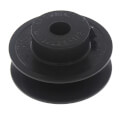
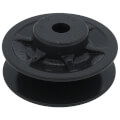
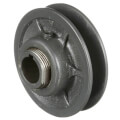
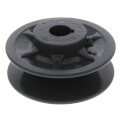
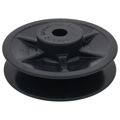
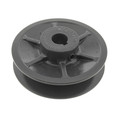
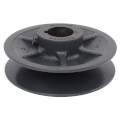
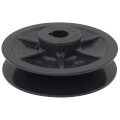
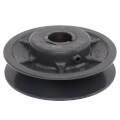
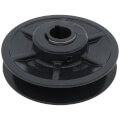
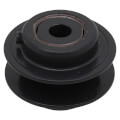
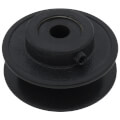
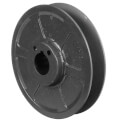
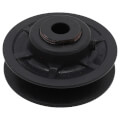
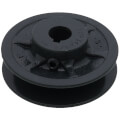
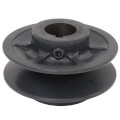
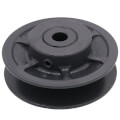
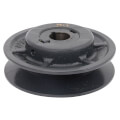
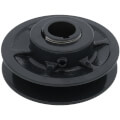
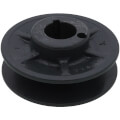
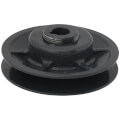
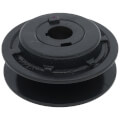
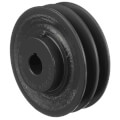
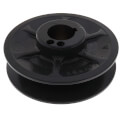

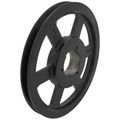
Sheaves are grooved pulleys that pair with a V-belt to transfer rotational power from a motor shaft to a blower, fan, or pump shaft in HVAC and mechanical equipment. Matching the right sheave to a motor and driven load lets a technician set the correct belt speed and torque for the application, which directly affects how much air a blower moves or how fast a pump turns.
Because sheaves come in fixed-bore and adjustable (variable-pitch) designs, they give service techs a practical way to fine-tune equipment performance in the field without swapping the motor or driven component itself. An adjustable sheave in particular lets a technician dial in blower speed to match a specific duct static pressure or airflow target during startup and commissioning.
Subcategories
- Fixed Bore Sheaves: Fixed bore sheaves have a set bore diameter machined to match a specific shaft size, offering a simple, lower-cost option when the drive ratio doesn't need field adjustment. They're common on equipment where the motor and blower speed relationship is already known and won't change over the equipment's service life. Installation requires matching bore size and keyway to the shaft exactly.
- Adjustable (Variable-Pitch) Sheaves: Adjustable sheaves let a technician change the effective pitch diameter by moving one flange in or out, changing the belt's ride height and effectively changing the drive ratio. An adjustable sheave is the standard choice when blower speed needs fine-tuning during commissioning to hit a target airflow or static pressure. They allow speed changes without swapping the sheave itself.
- Bushings: Bushings are the tapered inserts that mount a sheave to a shaft, allowing one sheave design to fit a range of shaft diameters by swapping the bushing rather than the sheave. QD (quick-detachable) bushings are a common standard that simplifies removal and reinstallation during motor or blower service.
Buying Guide
Selecting a sheave starts with the motor and driven equipment's shaft diameters, since the sheave's bore or bushing needs to match both ends of the drive. Confirming shaft size before ordering avoids a mismatched part showing up on the job.
Belt type matters just as much as bore size. Sheaves are grooved to match a specific belt cross-section, commonly A, B, or 3L/4L/5L profiles, and a sheave groove that doesn't match the belt profile will wear both parts prematurely and can slip under load.
For applications where blower speed needs field adjustment, an adjustable variable-pitch sheave gives more flexibility than a fixed-bore design, letting a technician tune airflow without replacing hardware. Fixed applications where the ratio is already set don't need that flexibility and can use the simpler, lower-cost fixed design.
Number of grooves needs to match the number of belts specified for the drive; a single-groove sheave won't work where the equipment calls for a multi-belt drive rated for higher horsepower.
Finally, check the outside diameter against available clearance in the equipment cabinet or mounting area. A larger-diameter sheave changes the drive ratio but also needs physical room to turn without contacting the housing or an adjacent component.
Frequently Asked Questions
What's the difference between a fixed and adjustable sheave?
A fixed sheave has a set pitch diameter that can't be changed, while an adjustable (variable-pitch) sheave has a movable flange that changes the effective pitch diameter, letting a technician adjust the drive ratio and blower speed without replacing parts.
How do I know what bushing size I need for a sheave?
Bushing size is determined by the shaft diameter on the equipment and the bushing bore range the sheave is designed to accept. Measuring the shaft diameter directly and matching it to the bushing manufacturer's size chart is the reliable way to confirm fit.
Can changing a blower's sheave increase airflow?
Yes, adjusting or replacing a sheave to change the drive ratio changes blower speed, which directly affects airflow. Any speed change needs to stay within the motor's horsepower and amperage rating, since pushing a blower faster than the motor is designed for can cause it to overload.
What belt profile do I need for a given sheave?
The sheave's groove profile has to match the belt's cross-section exactly, commonly designated A, B, or 3L/4L/5L. Checking the sheave and belt specifications together before ordering prevents a mismatch that causes slipping or premature wear.
Why would a technician choose an adjustable sheave over a fixed one?
An adjustable sheave lets a technician fine-tune blower or fan speed in the field to hit a target airflow or static pressure during commissioning, without having to source and install a different fixed-ratio sheave to make that adjustment.
