




Filters
SORT
Product Availability –
Review Score –
 --%3E %3Csvg version='1.1' id='Fill' xmlns='http://www.w3.org/2000/svg' xmlns:xlink='http://www.w3.org/1999/xlink' x='0px' y='0px' viewBox='0 0 100 100' enable-background='new 0 0 100 100' xml:space='preserve'%3E %3Cpath fill='%23F15C02' d='M79.44,0.95H20.56C9.78,0.95,0.95,9.78,0.95,20.56v58.87c0,10.79,8.82,19.61,19.61,19.61h58.87 c10.79,0,19.61-8.83,19.61-19.61V20.56C99.05,9.78,90.22,0.95,79.44,0.95z M65.38,58.24l9.38,29.58L49.69,69.78L24.5,87.82 l9.34-29.6L8.8,39.6l30.73-0.17c0,0,6.98-19.61,10-28.93c0.54,1.36,9.88,29.1,9.88,29.1H91.2L65.38,58.24z'/%3E %3C/svg%3E)
Price Range –
Siemens Pressure Switches

 --%3E %3Csvg version='1.1' id='No-RB' xmlns='http://www.w3.org/2000/svg' xmlns:xlink='http://www.w3.org/1999/xlink' x='0px' y='0px' viewBox='0 0 100 100' enable-background='new 0 0 100 100' xml:space='preserve'%3E %3Cpath fill='%23CECECE' d='M79.44,0.95H20.56C9.78,0.95,0.95,9.78,0.95,20.56v58.87c0,10.79,8.82,19.61,19.61,19.61h58.87 c10.79,0,19.61-8.83,19.61-19.61V20.56C99.05,9.78,90.22,0.95,79.44,0.95z M65.38,58.24l9.38,29.58L49.69,69.78L24.5,87.82 l9.34-29.6L8.8,39.6l30.73-0.17c0,0,6.98-19.61,10-28.93c0.54,1.36,9.88,29.1,9.88,29.1H91.2L65.38,58.24z'/%3E %3C/svg%3E)

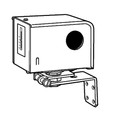




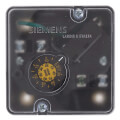
Siemens pressure switches are electromechanical devices used in HVAC and building control systems to monitor air or water pressure and trigger a control signal when pressure crosses a set threshold. They're commonly installed to verify airflow across a filter or coil, confirm draft proving on a combustion appliance, or monitor water pressure in a hydronic system. Siemens offers switches in fixed and adjustable setpoint versions, letting a contractor match the switch to the specific pressure range the application requires rather than settling for a single general-purpose part. Most of these switches wire into a control circuit as a safety interlock, so a switch that fails to trip at the correct setpoint can mask a real airflow or pressure problem in the system. Confirming the correct pressure range and connection type before installation keeps the switch functioning as intended and avoids a nuisance trip or a missed safety condition.
Subcategories
- Differential Pressure Switches: Differential pressure switches compare pressure at two points, commonly across a filter or coil, and trip when the difference crosses a set threshold that usually signals a clogged filter or restricted airflow. Contractors set the trip point based on the equipment manufacturer's recommended pressure drop. A switch set too sensitive can cause nuisance trips during normal filter loading.
- Air Proving Switches: Air proving switches confirm that combustion air or draft is present before allowing a burner or ignition sequence to proceed, acting as a safety interlock on gas and oil-fired equipment. They're wired in series with the ignition control so the appliance won't fire without confirmed airflow. A failed proving switch is a common cause of a no-heat call that traces back to a safety lockout rather than the burner itself.
- Water Pressure Switches: Water pressure switches monitor pressure in hydronic heating loops, boiler feed lines, or pump circuits and trigger a signal when pressure drops below or rises above a set point. They protect pumps and boilers from running dry or from overpressure conditions. Setpoint accuracy matters here since a switch that trips too early can shut down a system unnecessarily.
- Adjustable Setpoint Pressure Switches: Adjustable switches let a technician field-set the trip point within a specified range rather than relying on a fixed-setpoint part, which is useful when the exact required pressure isn't known until commissioning. They're a common choice on custom or variable-air-volume systems where pressure requirements can differ from a standard published value. Locking the adjustment screw after setpoint calibration prevents drift over time.
Buying Guide
Match the pressure range of a Siemens pressure switch to the actual operating range of the system before ordering, since a switch rated for a much wider range than needed can lose the sensitivity required to trip reliably at a small pressure change. Pulling the trip point from the equipment manufacturer's specifications, rather than estimating, avoids a switch that's either too sensitive or not sensitive enough.
Decide between a fixed-setpoint and an adjustable-setpoint switch based on whether the application's required trip point is already known. A fixed switch is simpler to install correctly on a standard application, while an adjustable model gives more flexibility on a custom system or when the exact setpoint needs field calibration during commissioning.
Confirm the electrical rating of the switch contacts against the control circuit it's wiring into, since a contact rated for a lower voltage or current than the circuit demands can fail prematurely. Choosing Siemens pressure switches rated for the specific control voltage in use avoids that failure mode.
Check the connection type, whether it's a barbed fitting for tubing or a threaded port, against the existing sensing line before ordering a replacement. A mismatched connection is one of the more common reasons a straightforward switch swap takes longer than expected on a service call.
Frequently Asked Questions
What does a differential pressure switch actually monitor?
It compares pressure at two points, most often across a filter or coil, and trips when the difference crosses a threshold that usually indicates a restricted or clogged filter. The trip point is normally set to match the equipment manufacturer's recommended pressure drop.
Why would a furnace lock out on a pressure switch fault?
An air proving switch acts as a safety interlock that confirms draft or combustion air is present before allowing ignition, so a failed or misadjusted switch can prevent the burner from firing even when the rest of the system is fine. Checking the switch and its tubing for blockage is a common troubleshooting step.
Should I use a fixed or adjustable pressure switch?
A fixed-setpoint switch works well when the required trip point is already known and standard, while an adjustable switch gives more flexibility on a custom system or when the setpoint needs field calibration. Choosing based on the application's known requirements avoids over-buying capability that isn't needed.
What causes a pressure switch to trip too easily?
A setpoint that's too sensitive for the application, a restricted sensing line, or a switch rated for a narrower range than the system's normal fluctuation can all cause nuisance trips. Reviewing the manufacturer's recommended setpoint against the actual system reading usually identifies the cause.
How is a water pressure switch different from an air pressure switch?
A water pressure switch is built to handle liquid-filled sensing lines in hydronic or pump circuits, while an air proving switch is designed for gas or combustion air sensing in furnace and boiler applications. Using the wrong type for the medium can lead to premature failure or an inaccurate reading.
