




Filters
SORT
Product Availability –
Brand –
Product Type –
Size –
Review Score –
 --%3E %3Csvg version='1.1' id='Fill' xmlns='http://www.w3.org/2000/svg' xmlns:xlink='http://www.w3.org/1999/xlink' x='0px' y='0px' viewBox='0 0 100 100' enable-background='new 0 0 100 100' xml:space='preserve'%3E %3Cpath fill='%23F15C02' d='M79.44,0.95H20.56C9.78,0.95,0.95,9.78,0.95,20.56v58.87c0,10.79,8.82,19.61,19.61,19.61h58.87 c10.79,0,19.61-8.83,19.61-19.61V20.56C99.05,9.78,90.22,0.95,79.44,0.95z M65.38,58.24l9.38,29.58L49.69,69.78L24.5,87.82 l9.34-29.6L8.8,39.6l30.73-0.17c0,0,6.98-19.61,10-28.93c0.54,1.36,9.88,29.1,9.88,29.1H91.2L65.38,58.24z'/%3E %3C/svg%3E)
 --%3E %3Csvg version='1.1' id='With-RB' xmlns='http://www.w3.org/2000/svg' xmlns:xlink='http://www.w3.org/1999/xlink' x='0px' y='0px' viewBox='0 0 100 100' enable-background='new 0 0 100 100' xml:space='preserve'%3E %3Cpath fill='%23FBC8B4' d='M79.44,0.95H20.56C9.78,0.95,0.95,9.78,0.95,20.56v58.87c0,10.79,8.82,19.61,19.61,19.61h58.87 c10.79,0,19.61-8.83,19.61-19.61V20.56C99.05,9.78,90.22,0.95,79.44,0.95z M65.38,58.24l9.38,29.58L49.69,69.78L24.5,87.82 l9.34-29.6L8.8,39.6l30.73-0.17c0,0,6.98-19.61,10-28.93c0.54,1.36,9.88,29.1,9.88,29.1H91.2L65.38,58.24z'/%3E %3C/svg%3E)
Price Range –
Sink and Faucet Tools


 --%3E %3Csvg version='1.1' id='Half' xmlns='http://www.w3.org/2000/svg' xmlns:xlink='http://www.w3.org/1999/xlink' x='0px' y='0px' viewBox='0 0 100 100' enable-background='new 0 0 100 100' xml:space='preserve'%3E %3Cg%3E %3Cpath fill='%23F15C02' d='M30.05,70.23l3.79-12.01L8.8,39.6l30.73-0.17c0,0,6.98-19.61,10-28.93c0.54,1.36,9.88,29.1,9.88,29.1h1.58 L93.71,7.18c-3.58-3.82-8.66-6.23-14.28-6.23H20.56C9.78,0.95,0.95,9.78,0.95,20.56v58.87c0,5.41,2.22,10.32,5.79,13.88 L30.05,70.23z'/%3E %3C/g%3E %3Cpath fill='%23FBC8B4' d='M93.71,7.18L60.98,39.6H91.2L65.38,58.24l9.38,29.58L49.69,69.78L24.5,87.82l5.55-17.59L6.75,93.32 c3.55,3.54,8.44,5.73,13.82,5.73h58.87c10.79,0,19.61-8.83,19.61-19.61V20.56C99.05,15.4,97.01,10.69,93.71,7.18z'/%3E %3C/svg%3E)
 --%3E %3Csvg version='1.1' id='No-RB' xmlns='http://www.w3.org/2000/svg' xmlns:xlink='http://www.w3.org/1999/xlink' x='0px' y='0px' viewBox='0 0 100 100' enable-background='new 0 0 100 100' xml:space='preserve'%3E %3Cpath fill='%23CECECE' d='M79.44,0.95H20.56C9.78,0.95,0.95,9.78,0.95,20.56v58.87c0,10.79,8.82,19.61,19.61,19.61h58.87 c10.79,0,19.61-8.83,19.61-19.61V20.56C99.05,9.78,90.22,0.95,79.44,0.95z M65.38,58.24l9.38,29.58L49.69,69.78L24.5,87.82 l9.34-29.6L8.8,39.6l30.73-0.17c0,0,6.98-19.61,10-28.93c0.54,1.36,9.88,29.1,9.88,29.1H91.2L65.38,58.24z'/%3E %3C/svg%3E)
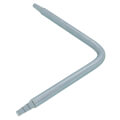
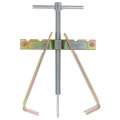
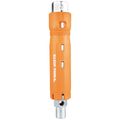
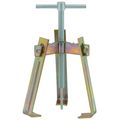
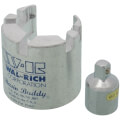
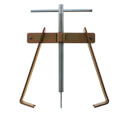

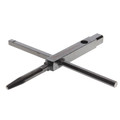
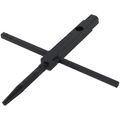


Sink and Faucet Tools are hand tools built to reach the tight, awkward spaces underneath sinks where standard wrenches and pliers cannot get a grip on mounting nuts and supply connections. Plumbers and installers rely on a basin wrench, such as Superior Tool's 11 inch model with a spring-loaded jaw that holds nuts up to 1 inch, to loosen and tighten faucet mounting hardware from above without removing the sink or crawling into the cabinet at an awkward angle. Telescoping versions extend reach further for deep or double-bowl cabinets, and specialty nut wrenches like the BasinBuddy fit common lock nuts and multi-tab plastic nuts found on modern faucet and supply line connections. Choosing the right tool for the specific nut style and cabinet depth speeds up both faucet installation and removal jobs, cutting down on time spent working blind in a cramped space.
Subcategories
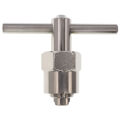
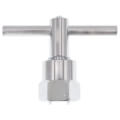
- Basin Wrenches: Standard basin wrenches feature a spring-loaded jaw on a long shaft that reaches up into the cabinet to grip faucet mounting nuts from below. Superior Tool's 11 inch model handles hex and square nuts up to 1 inch and includes a head that pivots to nearly any angle to get around obstructions like drain lines. Plumbers use these on most faucet installation and removal jobs where the mounting nut sits above the sink basin. The sliding stainless steel handle helps apply torque without a second tool.
- Telescoping Basin Wrenches: Telescoping basin wrenches extend further than fixed-length models, with options like Superior Tool's 17 inch telescoping wrench locking into four reach positions to handle deep cabinets or double-bowl sink setups. The extra reach helps when the mounting nut sits further back than a standard 11 inch wrench can comfortably access. Installers working on utility sinks, deep vanities, or commercial fixtures often keep one of these on hand. The same 1 inch nut capacity and spring-loaded jaw carry over from the standard design.
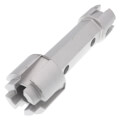
- Faucet Nut Wrenches: Specialty nut wrenches like the BasinBuddy target specific nut styles that a traditional basin wrench jaw does not grip well, including multi-tab plastic nuts and coupling nuts on supply lines. The BasinBuddy fits 7/8 inch and 1 inch nuts along with most 2, 3, and 4 tab plastic designs common on modern faucets and toilet supply connections. Its open-side body slips around a supply line that is already connected, avoiding the need to disconnect anything first. Plumbers add these to a basin wrench kit for jobs involving plastic mounting hardware.
- Supply Line and Tubing Tools: Supply line tools cover the flexible braided or plastic lines that connect a faucet to the shutoff valves below, along with the wrenches and cutters used to install them. Installers pick braided stainless steel lines for durability on higher-use fixtures, while basic PVC or vinyl lines suit lower-cost residential jobs. A basin wrench or nut wrench often finishes the job by tightening the supply line coupling nut at the valve and faucet ends. Keeping a range of supply line lengths and connection sizes on the truck covers most faucet replacement calls.
Buying Guide
Choosing the right basin wrench starts with cabinet depth and nut style. A standard 11 inch basin wrench handles most residential under-sink jobs, reaching mounting nuts positioned a typical distance back from the cabinet opening. Deeper cabinets, double-bowl sinks, or commercial installations often need a telescoping model that locks into a longer reach position to reach nuts set further back without forcing an installer to work at an awkward angle.
Nut style matters as much as reach. Traditional basin wrenches grip standard hex and square nuts well, but many modern faucets and supply connections use multi-tab plastic nuts or coupling nuts that a basin wrench jaw cannot always seat against securely. A dedicated nut wrench, sized to fit common tab counts and nut diameters, avoids stripped corners and repeated attempts that a basin wrench alone might cause on these fasteners.
Building out a full Sink and Faucet Tools kit means pairing a basin wrench with a supply line wrench or adjustable pliers for the connections at the shutoff valve, plus a set of braided supply lines sized to the job. Stainless steel braided lines hold up better over time than plastic or vinyl for fixtures that see frequent use. Stocking a couple of basin wrench lengths and a universal nut wrench on the truck covers the majority of faucet installation and replacement calls without needing a special trip for an odd-sized nut or a deep cabinet.
Frequently Asked Questions
What size basin wrench is needed for most sink installations?
An 11 inch basin wrench with a jaw capacity up to 1 inch covers most residential faucet mounting nuts and fits typical cabinet depths. Deeper cabinets or double-bowl sinks may need a telescoping model that extends further and locks into multiple reach positions. Checking cabinet depth before starting the job helps avoid switching tools partway through.
Why won't a standard basin wrench grip a plastic faucet nut?
Many modern faucets use multi-tab plastic nuts or coupling nuts shaped differently than the hex and square nuts a standard basin wrench jaw is built to grip. A dedicated nut wrench, such as the BasinBuddy style designed for 2, 3, and 4 tab plastic nuts, seats against these shapes without slipping or rounding the corners. Keeping both tool types on hand covers more nut styles encountered in the field.
What is the benefit of a telescoping basin wrench over a fixed-length one?
A telescoping basin wrench locks into multiple reach positions, extending further than a fixed-length model to access mounting nuts in deep cabinets or double-bowl sink setups. The extra reach reduces the need to work at an awkward angle or remove additional cabinet components to reach the nut. Fixed-length wrenches remain a lighter, simpler option for standard-depth cabinets.
Should braided stainless steel or plastic supply lines be used for a faucet installation?
Braided stainless steel supply lines generally hold up longer under repeated use and resist kinking better than plastic or vinyl lines. Plastic lines cost less and work fine for lower-use residential fixtures on a budget. The choice depends on expected fixture usage and how long the connection needs to last before replacement.
Can a basin wrench be used on both faucet mounting nuts and supply line nuts?
A basin wrench is built primarily for faucet mounting nuts positioned above the sink basin, while supply line coupling nuts at the valve typically need a separate nut wrench or adjustable pliers. Some nut wrenches, like the BasinBuddy, are designed to fit both faucet and supply line nut styles. Carrying both a basin wrench and a dedicated nut wrench covers most connection types found under a sink.
