




Stamped Steel 3-Way Registers, 1/2 Inch Spacing (683 Series)


 --%3E %3Csvg version='1.1' id='Fill' xmlns='http://www.w3.org/2000/svg' xmlns:xlink='http://www.w3.org/1999/xlink' x='0px' y='0px' viewBox='0 0 100 100' enable-background='new 0 0 100 100' xml:space='preserve'%3E %3Cpath fill='%23F15C02' d='M79.44,0.95H20.56C9.78,0.95,0.95,9.78,0.95,20.56v58.87c0,10.79,8.82,19.61,19.61,19.61h58.87 c10.79,0,19.61-8.83,19.61-19.61V20.56C99.05,9.78,90.22,0.95,79.44,0.95z M65.38,58.24l9.38,29.58L49.69,69.78L24.5,87.82 l9.34-29.6L8.8,39.6l30.73-0.17c0,0,6.98-19.61,10-28.93c0.54,1.36,9.88,29.1,9.88,29.1H91.2L65.38,58.24z'/%3E %3C/svg%3E)
 --%3E %3Csvg version='1.1' id='Half' xmlns='http://www.w3.org/2000/svg' xmlns:xlink='http://www.w3.org/1999/xlink' x='0px' y='0px' viewBox='0 0 100 100' enable-background='new 0 0 100 100' xml:space='preserve'%3E %3Cg%3E %3Cpath fill='%23F15C02' d='M30.05,70.23l3.79-12.01L8.8,39.6l30.73-0.17c0,0,6.98-19.61,10-28.93c0.54,1.36,9.88,29.1,9.88,29.1h1.58 L93.71,7.18c-3.58-3.82-8.66-6.23-14.28-6.23H20.56C9.78,0.95,0.95,9.78,0.95,20.56v58.87c0,5.41,2.22,10.32,5.79,13.88 L30.05,70.23z'/%3E %3C/g%3E %3Cpath fill='%23FBC8B4' d='M93.71,7.18L60.98,39.6H91.2L65.38,58.24l9.38,29.58L49.69,69.78L24.5,87.82l5.55-17.59L6.75,93.32 c3.55,3.54,8.44,5.73,13.82,5.73h58.87c10.79,0,19.61-8.83,19.61-19.61V20.56C99.05,15.4,97.01,10.69,93.71,7.18z'/%3E %3C/svg%3E)





 --%3E %3Csvg version='1.1' id='No-RB' xmlns='http://www.w3.org/2000/svg' xmlns:xlink='http://www.w3.org/1999/xlink' x='0px' y='0px' viewBox='0 0 100 100' enable-background='new 0 0 100 100' xml:space='preserve'%3E %3Cpath fill='%23CECECE' d='M79.44,0.95H20.56C9.78,0.95,0.95,9.78,0.95,20.56v58.87c0,10.79,8.82,19.61,19.61,19.61h58.87 c10.79,0,19.61-8.83,19.61-19.61V20.56C99.05,9.78,90.22,0.95,79.44,0.95z M65.38,58.24l9.38,29.58L49.69,69.78L24.5,87.82 l9.34-29.6L8.8,39.6l30.73-0.17c0,0,6.98-19.61,10-28.93c0.54,1.36,9.88,29.1,9.88,29.1H91.2L65.38,58.24z'/%3E %3C/svg%3E)


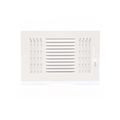
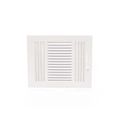
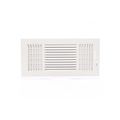
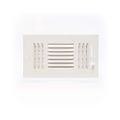

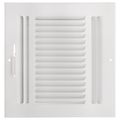
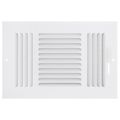
Stamped Steel 3-Way Registers in the 683 Series are supply air registers built from stamped steel with a three-way deflection pattern, meaning the fins direct airflow to the left, right, and straight ahead rather than in a single direction. The 1/2 inch fin spacing gives a denser, tighter-set louver pattern than wider-spaced registers, which offers more precise airflow direction and a finer visual grille appearance at the cost of slightly higher static pressure resistance compared to a more open spacing. Contractors install these registers on branch duct openings in walls, floors, or ceilings where air needs to be spread across a room rather than aimed in one direction, such as against an exterior wall serving a corner of a room. Stamped steel construction holds up well to repeated painting and everyday contact compared to lighter-gauge alternatives, making the 683 Series a common choice for both new construction and replacement register jobs where durability matters as much as appearance.
Subcategories
- Standard Duct Opening Sizes: Registers in this series come in a range of standard duct opening dimensions to match common branch duct sizes used in residential and light commercial construction. Measuring the actual rough duct opening, not the visible grille size, is the correct way to confirm fit before ordering a replacement register.
- Registers With Dampers: Damper-equipped versions include an integrated opposed-blade or single-blade damper that lets a contractor or homeowner adjust airflow volume at the register itself, which is useful for balancing air distribution across multiple rooms fed from the same duct run. Registers without a damper rely on balancing dampers located further back in the duct system.
- Finish Options: The 683 Series is typically available in a small set of baked enamel finish colors, most commonly white and brown, to match common wall and ceiling colors without requiring field painting. Matching the finish to the surrounding surface during selection avoids an added painting step after installation.
- Wall, Floor, and Ceiling Mount Styles: While the core stamped steel construction and 1/2 inch spacing stay consistent across the line, mounting style affects the frame depth and screw hole placement, so a register intended for wall mounting should not be substituted for a floor mount application without confirming the frame is rated for foot traffic.
Buying Guide
Measure the actual rough duct opening before ordering, not the size of the register currently installed, since register frames overlap the opening by a set margin that varies between manufacturers and series. Getting this measurement wrong is one of the most common reasons a replacement register does not fit cleanly on the first try. Next, decide whether the three-way deflection pattern suits the room's layout. A three-way register works well against an exterior wall or in a corner location where air needs to spread in multiple directions, while a single-direction register may be a better fit for a register positioned to blow air across an open room.
When comparing Stamped Steel 3-Way Registers, 1/2 Inch Spacing (683 Series) options against wider-spaced alternatives, keep in mind that the tighter 1/2 inch spacing restricts airflow slightly more than a register with wider fin gaps, which can matter on systems already running close to their static pressure limits. Decide whether a built-in damper is needed at the register or whether the duct system already has adequate balancing dampers upstream. Finally, confirm the finish color against the surrounding wall, floor, or ceiling, and check whether the mounting style, wall, floor, or ceiling, matches the intended installation location, since frame depth and screw placement differ between mounting types even within the same series.
Frequently Asked Questions
What does 1/2 inch spacing mean on a stamped steel register?
It refers to the distance between the fins in the register's louver pattern. Tighter, 1/2 inch spacing gives a denser visual appearance and more precise airflow direction than registers with wider fin spacing, though it can add slightly more resistance to airflow.
How is a 3-way register different from a 4-way register?
A 3-way register directs air to the left, right, and straight ahead, making it a good fit for placement against a wall or in a corner. A 4-way register spreads air in all four directions and is typically used when a register sits in the middle of a room rather than against a wall.
Do I need a register with a built-in damper?
A built-in damper is useful when a contractor needs to fine-tune airflow at the register itself, especially in rooms that run too hot or too cold relative to the rest of the house. If the duct system already has balancing dampers installed further back, a damper-free register can be sufficient.
What sizes should I measure before ordering a replacement register?
Measure the rough duct opening in the wall, floor, or ceiling, not the visible size of the current register grille, since the frame overlaps the opening by a set margin. Measuring the actual opening avoids ordering a register that does not fit correctly.
Can stamped steel registers be repainted to match a different wall color?
Yes, stamped steel construction holds paint well and can be repainted with standard interior paint if the available factory finish colors do not match the room. Lightly sanding the factory finish first helps the new paint adhere properly.
