




T-series Thermal Expansion Valves


 --%3E %3Csvg version='1.1' id='No-RB' xmlns='http://www.w3.org/2000/svg' xmlns:xlink='http://www.w3.org/1999/xlink' x='0px' y='0px' viewBox='0 0 100 100' enable-background='new 0 0 100 100' xml:space='preserve'%3E %3Cpath fill='%23CECECE' d='M79.44,0.95H20.56C9.78,0.95,0.95,9.78,0.95,20.56v58.87c0,10.79,8.82,19.61,19.61,19.61h58.87 c10.79,0,19.61-8.83,19.61-19.61V20.56C99.05,9.78,90.22,0.95,79.44,0.95z M65.38,58.24l9.38,29.58L49.69,69.78L24.5,87.82 l9.34-29.6L8.8,39.6l30.73-0.17c0,0,6.98-19.61,10-28.93c0.54,1.36,9.88,29.1,9.88,29.1H91.2L65.38,58.24z'/%3E %3C/svg%3E)






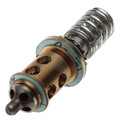
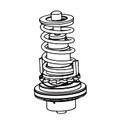
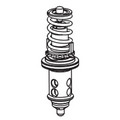
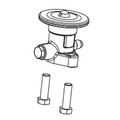
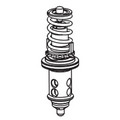
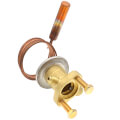
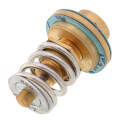
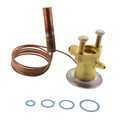

T-series thermal expansion valves are metering devices used in refrigeration and air conditioning systems to regulate the flow of liquid refrigerant into the evaporator coil. HVAC-R technicians select a valve from this line when replacing a failed or leaking expansion valve on a rooftop unit, walk-in cooler, or split system, matching the replacement to the original valve's capacity, refrigerant type, and connection size rather than swapping in a valve rated for a different application. Because system performance and compressor protection both depend on maintaining correct superheat, the valve determines how much liquid refrigerant reaches the coil under changing load conditions. A mismatched valve can starve the evaporator or flood the compressor with liquid refrigerant, so confirming the tonnage and refrigerant compatibility of the original equipment before ordering keeps the replacement straightforward and avoids a return trip to the job site.
Subcategories
- Bi-Flow Expansion Valves: Bi-flow expansion valves allow refrigerant to meter correctly regardless of which direction it flows through the valve, a feature technicians look for on heat pump systems that reverse refrigerant flow between heating and cooling modes. Standard single-direction valves bypass refrigerant around the metering element in reverse flow, so a bi-flow design keeps the check valve function built into the body itself. Technicians confirm the application is a heat pump before ordering a bi-flow valve rather than a straight cooling-only unit, since installing the wrong type on a straight air conditioning system adds unnecessary cost without any operating benefit.
- External Equalizer Valves: External equalizer valves route a sensing line from the outlet of the evaporator coil back to the valve body, which gives more accurate superheat control on coils with a meaningful pressure drop across the distributor and tubing. Contractors specify this style on multi-circuit evaporators or systems with a pressure drop, rather than a valve with equalization built into the valve body only. Getting the equalizer line routed and connected properly during installation is what allows the valve to sense conditions at the coil outlet accurately.
- Replacement Valve Kits: Replacement valve kits pair a T-series valve body with the connection fittings and sensing bulb needed for a straightforward swap on existing refrigeration or air conditioning equipment. Ordering a kit rather than a bare valve body saves a technician from separately sourcing flare fittings or bulb clamps that may not be on the truck. Matching the kit to the original equipment's tonnage and refrigerant type remains the technician's responsibility before installation.
- Power Elements and Bulbs: Power elements and remote bulbs are the temperature-sensing components that tell a thermal expansion valve how much to open or close in response to the refrigerant temperature leaving the evaporator. Technicians replace a power element on its own when a valve body is otherwise sound but is no longer responding correctly to load changes, rather than replacing the entire valve assembly. Confirming the refrigerant type stamped on the original element before ordering a replacement keeps the valve calibrated to the system it is installed on.
Buying Guide
Replacing a thermal expansion valve starts with identifying the exact specifications of the failed component rather than assuming a like-for-like swap will work across different equipment brands. Tonnage, refrigerant type, and connection size all need to match the original valve, since a valve sized for a different capacity will either starve the evaporator of refrigerant or flood it, both of which show up as poor cooling performance or compressor damage over time.
Technicians working through a call for T-series Thermal Expansion Valves should also confirm whether the application needs a bi-flow valve for heat pump service or a standard single-direction valve for straight cooling, since installing the wrong type on a heat pump will cause metering problems every time the system switches between heating and cooling modes. External equalizer valves deserve the same attention, since a system with a meaningful pressure drop across the distributor tubing needs the equalizer line connected at the coil outlet to maintain accurate superheat control, and skipping that connection undermines the valve's ability to respond to actual operating conditions at the coil.
Once the valve itself is matched correctly, checking whether the power element or sensing bulb can be replaced separately is worth doing before assuming the whole assembly needs to come out. A valve body in good condition with a failing power element often only needs that one component replaced, which keeps the job simpler and the system down for less time.
Frequently Asked Questions
How do I know if a thermal expansion valve needs bi-flow capability?
Bi-flow capability is needed on any heat pump system where refrigerant reverses direction between heating and cooling modes. A straight cooling-only system, like most standard air conditioners, only needs a single-direction valve.
What happens if a replacement expansion valve is undersized for the system?
An undersized valve restricts refrigerant flow into the evaporator, starving the coil and reducing cooling capacity. It also tends to cause erratic superheat readings that make the system harder to diagnose on future service calls.
Can a power element be replaced without swapping the entire valve body?
In many cases a power element can be replaced on its own if the valve body itself is undamaged. Confirming the refrigerant type stamped on the original element keeps the replacement calibrated correctly.
When is an external equalizer valve required instead of an internally equalized one?
An external equalizer is typically needed on multi-circuit evaporators or any coil with a meaningful pressure drop across the distributor tubing. Internally equalized valves work fine on simpler, single-circuit coils with minimal pressure drop.
What information should be on hand before ordering a replacement valve?
Having the original valve's tonnage rating, refrigerant type, and connection size on hand before ordering avoids a mismatch. The equipment's model and serial number also help confirm the correct replacement if the original valve's markings are worn or missing.
