




Filters
SORT
Product Availability –
Air Flow Capacity (CFM) –
Wattage –
Review Score –
 --%3E %3Csvg version='1.1' id='Fill' xmlns='http://www.w3.org/2000/svg' xmlns:xlink='http://www.w3.org/1999/xlink' x='0px' y='0px' viewBox='0 0 100 100' enable-background='new 0 0 100 100' xml:space='preserve'%3E %3Cpath fill='%23F15C02' d='M79.44,0.95H20.56C9.78,0.95,0.95,9.78,0.95,20.56v58.87c0,10.79,8.82,19.61,19.61,19.61h58.87 c10.79,0,19.61-8.83,19.61-19.61V20.56C99.05,9.78,90.22,0.95,79.44,0.95z M65.38,58.24l9.38,29.58L49.69,69.78L24.5,87.82 l9.34-29.6L8.8,39.6l30.73-0.17c0,0,6.98-19.61,10-28.93c0.54,1.36,9.88,29.1,9.88,29.1H91.2L65.38,58.24z'/%3E %3C/svg%3E)
Price Range –
Tamarack Whole House Fans

 --%3E %3Csvg version='1.1' id='No-RB' xmlns='http://www.w3.org/2000/svg' xmlns:xlink='http://www.w3.org/1999/xlink' x='0px' y='0px' viewBox='0 0 100 100' enable-background='new 0 0 100 100' xml:space='preserve'%3E %3Cpath fill='%23CECECE' d='M79.44,0.95H20.56C9.78,0.95,0.95,9.78,0.95,20.56v58.87c0,10.79,8.82,19.61,19.61,19.61h58.87 c10.79,0,19.61-8.83,19.61-19.61V20.56C99.05,9.78,90.22,0.95,79.44,0.95z M65.38,58.24l9.38,29.58L49.69,69.78L24.5,87.82 l9.34-29.6L8.8,39.6l30.73-0.17c0,0,6.98-19.61,10-28.93c0.54,1.36,9.88,29.1,9.88,29.1H91.2L65.38,58.24z'/%3E %3C/svg%3E)



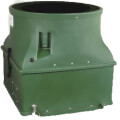
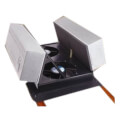


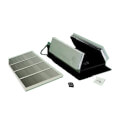
Tamarack whole house fans are ventilation systems built to draw cooler outdoor air through open windows and exhaust warm indoor air out through the attic, cutting down on air conditioning runtime during moderate weather. Contractors typically spec these fans for homes in climates with wide day-to-night temperature swings, where a homeowner can ventilate in the evening instead of running a compressor. Tamarack's lineup is built around quiet operation and insulated dampers that seal the attic opening when the fan isn't running, which keeps conditioned air from leaking out in the off season. That sealing detail is what separates a whole house fan installed correctly from the older, drafty attic fans many homeowners remember. For a trade professional, matching fan capacity to house square footage and attic venting is the core of a proper install, and it's why whole house fans keep showing up on retrofit and new-construction jobs alike as a low-cost way to extend the shoulder seasons before AC kicks on for good.
Subcategories
- Ducted Whole House Fans: Ducted models mount in the attic and connect to a grille in the ceiling below, routing air through insulated ductwork before it reaches the attic space. Installers use these where attic layout or noise concerns rule out a direct in-line fan, since the duct run lets the housing sit farther from the living space. They suit remodels where the existing ceiling opening doesn't line up with an ideal attic mounting spot.
- In-Line Whole House Fans: In-line units mount directly in the ceiling opening between the living space and the attic, with no duct run in between. They're the simpler install of the two, which makes them a common choice on new construction where the attic layout can be planned around the fan from the start. Contractors favor them when a shorter, more direct install is available.
- Fan Controls and Timers: Wall-mounted controls and timers let homeowners set the fan to run for a fixed window, or switch speeds without going into the attic. Techs typically wire these into the same run as the fan's power to keep the install to a single trip up top. A working control also protects against a fan left running all night by accident.
- Insulated Fan Dampers and Covers: Insulated dampers close over the attic opening automatically when the fan shuts off, cutting the air leaks that plagued older whole house fans in winter. Replacing a failed or missing damper is one of the most common service calls, since a stuck-open damper turns the fan into a year-round energy loss. These covers are sized to match the fan housing so they seat tightly.
Buying Guide
Sizing is the first decision on any whole house fan job: the fan needs enough airflow capacity to exchange the home's air volume several times an hour, and that number depends on square footage, ceiling height, and how much attic venting is already in place. Undersized attic venting is the most common reason a correctly sized fan still underperforms, since the air has to exit the attic as fast as the fan pulls it in, so check net free vent area before finalizing a fan choice. Mounting location matters just as much as capacity. A central hallway or landing usually pulls air evenly from bedrooms and living areas, while a fan tucked in a corner can leave far rooms stagnant. For homes with existing ductwork limitations, Tamarack Whole House Fans in the ducted lineup give installers more flexibility to route around joists and existing mechanicals than an in-line unit would. Noise is a real consideration too. Fans mounted closer to bedrooms benefit from insulated duct runs or vibration isolation to keep operation quiet enough for nighttime use, which is when most homeowners actually run them. Finally, don't skip the damper: a fan without a properly sealed, insulated damper undoes much of the energy savings the system is supposed to deliver once the weather turns cold. Pairing the right fan size with adequate venting and a working damper is what makes the difference between a fan that gets used and one that gets forgotten in the attic.
Frequently Asked Questions
How do I size a whole house fan for a given square footage?
Start with the home's total living area and ceiling height to estimate air volume, then match that to a fan rated for enough air changes per hour for the climate. Homes in hotter, more humid regions typically need a higher air-change rate than mild coastal climates. Always check the attic's net free vent area alongside fan capacity, since undersized venting will bottleneck even a correctly sized fan.
Where's the best place to mount the fan?
A central hallway or landing usually gives the most even draw across bedrooms and living spaces. Avoid corners or dead-end hallways where far rooms won't get enough airflow. On multi-story homes, mounting on the upper floor lets the fan pull air up through the whole house.
What's the difference between ducted and in-line models?
In-line fans mount straight into the ceiling opening with no duct run, which is the simpler install. Ducted fans route air through insulated ductwork to a housing set farther back in the attic, which helps on jobs where the ideal mounting spot doesn't line up with the ceiling opening.
Do these fans need a damper, and why does it matter?
Yes, the insulated damper seals the attic opening when the fan isn't running, which stops conditioned air from leaking out in cold weather. A missing or stuck damper is one of the most common callbacks on these installs, since it turns a seasonal fan into a year-round energy leak.
Can a whole house fan replace air conditioning entirely?
It's best framed as a complement, not a replacement. It works well in the shoulder seasons and cooler evenings but won't keep up during sustained high heat and humidity. Most homeowners run it to delay or reduce AC use rather than eliminate it.
