



'/%3E%3C/svg%3E)
 --%3E %3Csvg version='1.1' id='Fill' xmlns='http://www.w3.org/2000/svg' xmlns:xlink='http://www.w3.org/1999/xlink' x='0px' y='0px' viewBox='0 0 100 100' enable-background='new 0 0 100 100' xml:space='preserve'%3E %3Cpath fill='%23F15C02' d='M79.44,0.95H20.56C9.78,0.95,0.95,9.78,0.95,20.56v58.87c0,10.79,8.82,19.61,19.61,19.61h58.87 c10.79,0,19.61-8.83,19.61-19.61V20.56C99.05,9.78,90.22,0.95,79.44,0.95z M65.38,58.24l9.38,29.58L49.69,69.78L24.5,87.82 l9.34-29.6L8.8,39.6l30.73-0.17c0,0,6.98-19.61,10-28.93c0.54,1.36,9.88,29.1,9.88,29.1H91.2L65.38,58.24z'/%3E %3C/svg%3E)
 --%3E %3Csvg version='1.1' id='Half' xmlns='http://www.w3.org/2000/svg' xmlns:xlink='http://www.w3.org/1999/xlink' x='0px' y='0px' viewBox='0 0 100 100' enable-background='new 0 0 100 100' xml:space='preserve'%3E %3Cg%3E %3Cpath fill='%23F15C02' d='M30.05,70.23l3.79-12.01L8.8,39.6l30.73-0.17c0,0,6.98-19.61,10-28.93c0.54,1.36,9.88,29.1,9.88,29.1h1.58 L93.71,7.18c-3.58-3.82-8.66-6.23-14.28-6.23H20.56C9.78,0.95,0.95,9.78,0.95,20.56v58.87c0,5.41,2.22,10.32,5.79,13.88 L30.05,70.23z'/%3E %3C/g%3E %3Cpath fill='%23FBC8B4' d='M93.71,7.18L60.98,39.6H91.2L65.38,58.24l9.38,29.58L49.69,69.78L24.5,87.82l5.55-17.59L6.75,93.32 c3.55,3.54,8.44,5.73,13.82,5.73h58.87c10.79,0,19.61-8.83,19.61-19.61V20.56C99.05,15.4,97.01,10.69,93.71,7.18z'/%3E %3C/svg%3E)


Product Highlights


Description
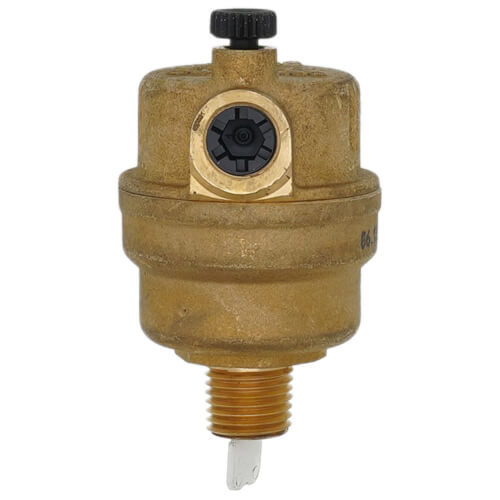
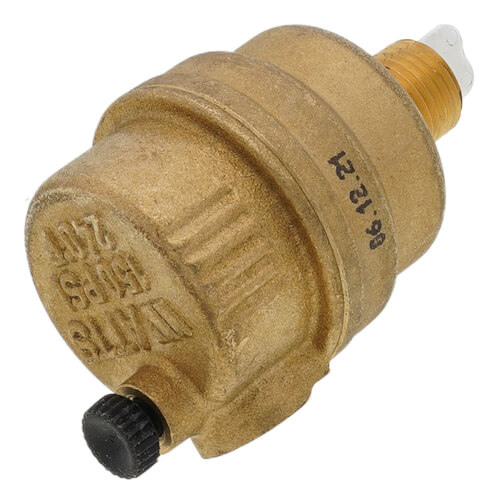
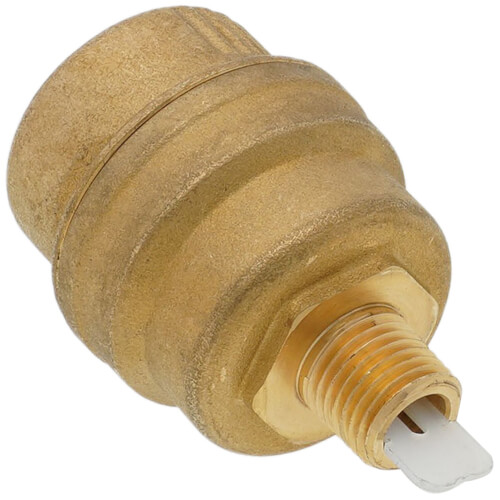
Series FV-4 Automatic Vent Valves are used in commercial and residential hydronic heating applications to provide automatic air venting for hot or cold water distribution systems. It consists of a brass body construction with female NPT connection, brass cover, air vent with silicone rubber seal, polyethylene float with valve plug, and automatic vent. Series FV-4M1 has a high temperature rating and is ideal for use with glycol systems or for use as an anti-vacuum device. It can also be installed to permit the separation and dispersal of air while fluid is circulating in the system. Can be disassembled for inspection and cleaning.
Specs
| Size: | 1/4" |
|---|---|
| System Type: | Hydronic (Water) |
| Temperature Range (F): | 33°F - 240°F |
| Min Temp (F): | 33°F |
| Max Temp (F): | 240°F |
| Max Pressure: | 150 psi |
| Min Pressure (PSI): | 1.45 |
| Material: | Brass |
| Body Pattern: | Straight |
| Mount: | Straight |
| Adjustability: | Non-Adjustable |
| Thread Type: | Male |
| Thread Size: | 1/4" |
Contact

Questions?
Compare Similar Products
You May Also Need
Product Reviews
Most Liked Positive Review
A great way to get air out of a hydronic system
Most Liked Negative Review
 --%3E %3Csvg version='1.1' id='With-RB' xmlns='http://www.w3.org/2000/svg' xmlns:xlink='http://www.w3.org/1999/xlink' x='0px' y='0px' viewBox='0 0 100 100' enable-background='new 0 0 100 100' xml:space='preserve'%3E %3Cpath fill='%23FBC8B4' d='M79.44,0.95H20.56C9.78,0.95,0.95,9.78,0.95,20.56v58.87c0,10.79,8.82,19.61,19.61,19.61h58.87 c10.79,0,19.61-8.83,19.61-19.61V20.56C99.05,9.78,90.22,0.95,79.44,0.95z M65.38,58.24l9.38,29.58L49.69,69.78L24.5,87.82 l9.34-29.6L8.8,39.6l30.73-0.17c0,0,6.98-19.61,10-28.93c0.54,1.36,9.88,29.1,9.88,29.1H91.2L65.38,58.24z'/%3E %3C/svg%3E)
I need to find a different 1/4 NPT air vent
Great product but do your own research
I need to find a different 1/4 NPT air vent
Direct replacement for hydronic air scoop
Good solid product.
I would buy again
It solved my problem with in my water system at my cabin.
Yes, I would buy this product again and again.
A great way to get air out of a hydronic system
auto air bleeder
I bought the wrong size part(1/4 inch, needed 1/8 inch)
Product Q&A
3 QuestionsQ: What size is the opening on the side? I'd like to install a fitting w/a hose barb so I can route the water.
Asked by Mark 11 years ago
Add your answer
There is no "opening" on the side. There is a plastic plug that is used to fill a leftover hole from the assembly process. The air comes out the top fitting. If the this device is working properly there is no water to route. Hope this helps. Steve
There is a 1/4" NTP on the bottom and an air vent on the top. This needs to be mounted vertically (as pictured) to work properly. No water comes out of the top (air) vent, so no barb is needed.
Q: can this device be used to purge automotive radiator heating and cooling system? if so how would you install it.
Asked by sam 12 years ago
Add your answer
This is an 'Automatic Air Vent'. The 'Auto' in the title is automatic not automotive. It is designed to sit vertically (as pictured) on a water pipe and trap small air bubbles going through the system. It uses a float and when enough air has accumulated, a port opens releasing the air. On an automobile, you already have a system like this. It's the top of the radiator / overflow tank on the coolant system. Air rises and gets trapped near the radiator cap. When the fluid is heated, the air gets pushed out the overflow tube into the overflow tank. When the fluid cools, fluid from the overflow tank is pulled back into the radiator. Over time (several driving cycles), all air is purged from the coolant system. In theory, you could install one on the coolant system, but it's redundant to the system in place.
Q: What is the adjustable screw device on the top and what is it used for?
Asked by Phil 13 years ago
Add your answer
The screw device on the top regulates the amount of air to be released from the air vent. Just like a bleeder valve. The instructions should have the correct setting labeled. (For example, tighten screw and then back off 1 1/2 turn for proper setting)
It's the vent for air to come out.
That is the air vent. In normal operation the vent is left open 1 to 2 turns, but if you need to keep air out for servicing some part of the system or a pressure test (of the float/vent) you can close this