



'/%3E%3C/svg%3E)
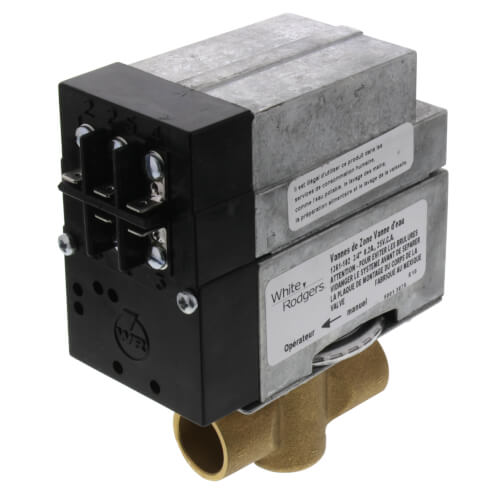
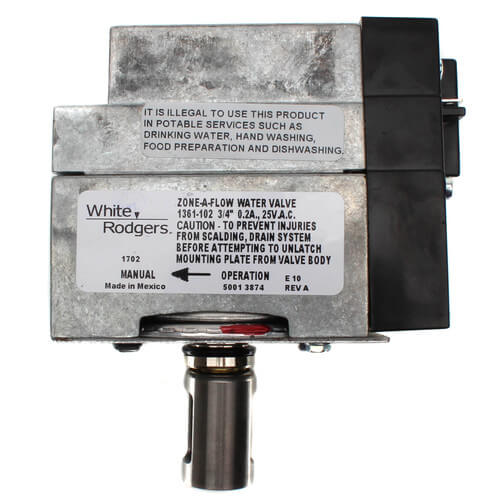
3/4" Sweat Zone Valve (Two Wire)
 --%3E %3Csvg version='1.1' id='Fill' xmlns='http://www.w3.org/2000/svg' xmlns:xlink='http://www.w3.org/1999/xlink' x='0px' y='0px' viewBox='0 0 100 100' enable-background='new 0 0 100 100' xml:space='preserve'%3E %3Cpath fill='%23F15C02' d='M79.44,0.95H20.56C9.78,0.95,0.95,9.78,0.95,20.56v58.87c0,10.79,8.82,19.61,19.61,19.61h58.87 c10.79,0,19.61-8.83,19.61-19.61V20.56C99.05,9.78,90.22,0.95,79.44,0.95z M65.38,58.24l9.38,29.58L49.69,69.78L24.5,87.82 l9.34-29.6L8.8,39.6l30.73-0.17c0,0,6.98-19.61,10-28.93c0.54,1.36,9.88,29.1,9.88,29.1H91.2L65.38,58.24z'/%3E %3C/svg%3E)
 --%3E %3Csvg version='1.1' id='Half' xmlns='http://www.w3.org/2000/svg' xmlns:xlink='http://www.w3.org/1999/xlink' x='0px' y='0px' viewBox='0 0 100 100' enable-background='new 0 0 100 100' xml:space='preserve'%3E %3Cg%3E %3Cpath fill='%23F15C02' d='M30.05,70.23l3.79-12.01L8.8,39.6l30.73-0.17c0,0,6.98-19.61,10-28.93c0.54,1.36,9.88,29.1,9.88,29.1h1.58 L93.71,7.18c-3.58-3.82-8.66-6.23-14.28-6.23H20.56C9.78,0.95,0.95,9.78,0.95,20.56v58.87c0,5.41,2.22,10.32,5.79,13.88 L30.05,70.23z'/%3E %3C/g%3E %3Cpath fill='%23FBC8B4' d='M93.71,7.18L60.98,39.6H91.2L65.38,58.24l9.38,29.58L49.69,69.78L24.5,87.82l5.55-17.59L6.75,93.32 c3.55,3.54,8.44,5.73,13.82,5.73h58.87c10.79,0,19.61-8.83,19.61-19.61V20.56C99.05,15.4,97.01,10.69,93.71,7.18z'/%3E %3C/svg%3E)


MANUALS (4)
'/%3E%3C/svg%3E)
Product Highlights


Description
Features
- 15 PSI Maximum Differential Across Valve
- 240 Degrees F Maximum Water Temperature
- 24 VAC
- 60Hz
- 50 PSI Maximum System Pressure
Specs
| Application: | Zoning |
|---|---|
| Size: | 3/4" |
| Connection Type: | Sweat |
| Voltage: | 24V |
| Flow Capacity (Cv): | 23.5 |
| Position: | Normally Closed |
| Material: | Stainless Steel |
| Wiring: | 2-Wire |
| Body Pattern: | 3-Way |
| Hertz: | 60 50 |
| Max Temp (F): | 240°F |
| Max Pressure (PSI): | 50 |
| Amperage: | 0.2 |
| Time Cycle: | Open 45 Seconds, Close 60 Seconds |
| Max Pressure Differential (PSI): | 15 psi |
| Friction Loss: | 2-1/2 Ft of Tubing |
| End Switch: | Yes |
| Width: | 4-5/8" |
| Depth (Inches): | 2-5/8" |
| Height: | 5-5/8" |

Questions?
Compare Similar Products

You May Also Need
3 Replacement Parts

Need help finding a replacement part?
Product Reviews
Most Liked Positive Review
White Rodgers zone valve
Most Liked Negative Review
 --%3E %3Csvg version='1.1' id='With-RB' xmlns='http://www.w3.org/2000/svg' xmlns:xlink='http://www.w3.org/1999/xlink' x='0px' y='0px' viewBox='0 0 100 100' enable-background='new 0 0 100 100' xml:space='preserve'%3E %3Cpath fill='%23FBC8B4' d='M79.44,0.95H20.56C9.78,0.95,0.95,9.78,0.95,20.56v58.87c0,10.79,8.82,19.61,19.61,19.61h58.87 c10.79,0,19.61-8.83,19.61-19.61V20.56C99.05,9.78,90.22,0.95,79.44,0.95z M65.38,58.24l9.38,29.58L49.69,69.78L24.5,87.82 l9.34-29.6L8.8,39.6l30.73-0.17c0,0,6.98-19.61,10-28.93c0.54,1.36,9.88,29.1,9.88,29.1H91.2L65.38,58.24z'/%3E %3C/svg%3E)
Not as good in quality as in the past
I would buy this again if needed. Great Company and service
Very quiet operation
This 1" Hydronic Zone Valve should be called "Old Reliable".
I would use company again
3/4" Sweat Zone in Floor Heating Valve
My new go to supply house
ALL GOOD
What I expected
These zone valves are a thing of the past
Perfect replacement, identical wiring
Product Q&A
12 QuestionsQ: Is this zone valve replaceable by just removing the top part and not removing the sweated bottom?
Asked by Rhino Jim 12 years ago
Add your answer
There are 2 tabs on the back side that need to be depressed, then rotate the entire valve to the left or right till it stops probably about 45 degrees then pull the unit out of the copper tubing. Drain water out of pipes before you attempt this. Sent from my iPhone
Just the top portion, clips in back need to be pushed in and twisted and it comes off that easy and new one on the same way. Sent from my iPad
For zone valves such as we-8010 I have just changed the top
Yes I did. works fine.
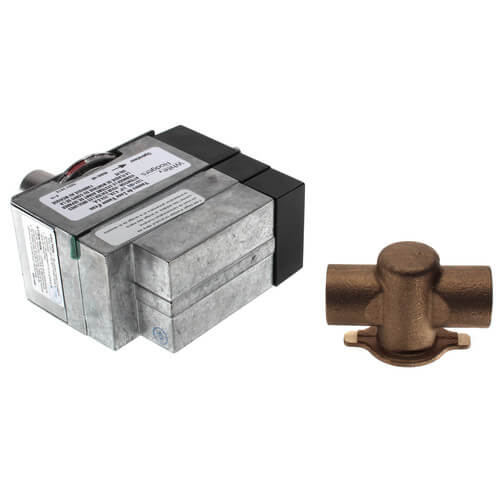
Rhino Jim, are we talking about a White Rogers Zone Valve here? If yes: then I do not understand the question. The White Rogers Valve has 2 parts. The valve part that fits into the sweated pipe and the motor and electric contact portion that is screwed to the valve portion. Both pieces can be replaced separately but come as one unit when new. The new valve comes with detailed installation instructions. I am not sure what you mean by the top and bottom portion. I hope this helps. H.
Yes, you can replace the zone valve mechanism without replacing the whole unit. I've replaced mine myself since it's just transferring the wiring from the old piece to the new and mounting the new valve box where the old one was.
Q: when replacing a new zone valve, the old one came apart with the valve being stuck in the brass body. Is there a certain way to reassemble the valve back to the control unit?
Asked by cootie 14 years ago
Add your answer
Verified Reply- PexSupply StaffThe valve body (part F94-0775) and motor (part F19-0104) are both available as replacement parts for the 3/4" 1361-102 zone valve.
Q: can the valve be fixed electrically without removing or replacing the valve itself?
Asked by 14 years ago
Add your answer
Verified Reply- PexSupply StaffYes, you can replace motor assembly, which is part F19-0104 for this 1361-102 zone valve.
It can't be fixed, but you can buy a new valve assembly and replace just the motor ... remove two sheet metal screws on the back of the motor assembly and remove the attached drive wheel and internal flow control valve. Leave the original (old) drive wheel and valve in place. The new motor can be installed on the old drive wheel and valve assembly without loosing a drop of water! Replace the two screws, and your done.
Q: Do the 2 Wire and 3 Wire Zone Valves fit on the same 1" Sweat fitting, or do I have to change out the fitting? Also does this include an Auxillary switch so I can tie the circulating pump into it for the Hot Water Heater?
Asked by 15 years ago
Add your answer
Verified Reply- PexSupply StaffYes, the valves use the same brass body. They do not come with an auxiliary switch that we are aware of.
Q: Could I put 5 of these valves in one system?
Asked by Frank 15 years ago
Add your answer
Verified Reply- PexSupply StaffYes, you can.
I think you can as long as you use aheavy duty 24 volt transforme
Q: Is the sweat zone valve easy to replace.Does it just twist on?
Asked by jay 15 years ago
Add your answer
Verified Reply- PexSupply StaffIt must be sweated on using a solder torch.
Q: I have 3 zones with my oil boiler. The 2nd floor is not getting hot. NO HEAT at all. All other zones are working. When I went to check on the pipes the 2nd floor zone pipe seems to be getting hot but not any where close to the other pipes for other zones and it gets cold FAST. How do I know if my zone valve is bad or if it is something else. Any help would be appreciated. Thanks Bucket
Asked by Bucket 15 years ago
Add your answer
Verified Reply- PexSupply StaffWe recommend that you check the zone valve with a volt meter to make sure the unit is still working.
You likely have an air block in the piping of the 2nd floor loop. Air blocks tend to build up in the top level of the building since the hydronic system is a closed system. You can try two things to relieve the air block before purging the system as a last resort. 1. If you have air bleeder valves on your baseboard radiators, go to the last radiator in the loop and open the bleeder screw to relieve air pressure and let it bleed until water starts to flow then tighten the screw. Your system may or may not have these air bleeder screws. If you have it, it will be located in or near the elbow of the water line behind the register cover. 2. Open the air bleeder screw on top of your air scoop. Leave the cap loose on the bleeder valve so air can be expelled by the system. If these things don't work, you need to purge air from your system by flushing line pressure water through the system and draining each zone with a water hose. This takes experience so get help the first time.
Air in the that zone is a possibility but I would simply turn the thumb wheel at the base of the zone valve and see if it response. It is marked with the words open or closed. If it opens on a call for heat and there still is no circulation then it is probably air but if it's remains closed on a call for heat something else is going on.
Q: what is the difference in a 2 way and a 3 way body pattern in a zone valve
Asked by frank 15 years ago
Add your answer
Verified Reply- PexSupply StaffA 2-way body pattern has two ports (in and out); a 3-way has three ports (in, out, and by-pass).
Q: Can I use the 1311-102 in place of this unit? I know the 1311-102 is a "three wire" and the 1361-102 is a "two wire" but wasn't sure if one could somehow wire the 1311-102 in a "two wire" mode. Thanks.
Asked by 15 years ago
Add your answer
Verified Reply- PexSupply StaffYou can use it as long as your system will work with a 2-wire.
Q: is this a manual valve or automatic
Asked by amir 15 years ago
Add your answer
Verified Reply- PexSupply StaffIt is an automatic zone valve and will require 24 volts of power.