




Filters
SORT
Product Availability –
Brand –
Review Score –
 --%3E %3Csvg version='1.1' id='Fill' xmlns='http://www.w3.org/2000/svg' xmlns:xlink='http://www.w3.org/1999/xlink' x='0px' y='0px' viewBox='0 0 100 100' enable-background='new 0 0 100 100' xml:space='preserve'%3E %3Cpath fill='%23F15C02' d='M79.44,0.95H20.56C9.78,0.95,0.95,9.78,0.95,20.56v58.87c0,10.79,8.82,19.61,19.61,19.61h58.87 c10.79,0,19.61-8.83,19.61-19.61V20.56C99.05,9.78,90.22,0.95,79.44,0.95z M65.38,58.24l9.38,29.58L49.69,69.78L24.5,87.82 l9.34-29.6L8.8,39.6l30.73-0.17c0,0,6.98-19.61,10-28.93c0.54,1.36,9.88,29.1,9.88,29.1H91.2L65.38,58.24z'/%3E %3C/svg%3E)
 --%3E %3Csvg version='1.1' id='With-RB' xmlns='http://www.w3.org/2000/svg' xmlns:xlink='http://www.w3.org/1999/xlink' x='0px' y='0px' viewBox='0 0 100 100' enable-background='new 0 0 100 100' xml:space='preserve'%3E %3Cpath fill='%23FBC8B4' d='M79.44,0.95H20.56C9.78,0.95,0.95,9.78,0.95,20.56v58.87c0,10.79,8.82,19.61,19.61,19.61h58.87 c10.79,0,19.61-8.83,19.61-19.61V20.56C99.05,9.78,90.22,0.95,79.44,0.95z M65.38,58.24l9.38,29.58L49.69,69.78L24.5,87.82 l9.34-29.6L8.8,39.6l30.73-0.17c0,0,6.98-19.61,10-28.93c0.54,1.36,9.88,29.1,9.88,29.1H91.2L65.38,58.24z'/%3E %3C/svg%3E)
Price Range –
Pneumatic Controls


 --%3E %3Csvg version='1.1' id='Half' xmlns='http://www.w3.org/2000/svg' xmlns:xlink='http://www.w3.org/1999/xlink' x='0px' y='0px' viewBox='0 0 100 100' enable-background='new 0 0 100 100' xml:space='preserve'%3E %3Cg%3E %3Cpath fill='%23F15C02' d='M30.05,70.23l3.79-12.01L8.8,39.6l30.73-0.17c0,0,6.98-19.61,10-28.93c0.54,1.36,9.88,29.1,9.88,29.1h1.58 L93.71,7.18c-3.58-3.82-8.66-6.23-14.28-6.23H20.56C9.78,0.95,0.95,9.78,0.95,20.56v58.87c0,5.41,2.22,10.32,5.79,13.88 L30.05,70.23z'/%3E %3C/g%3E %3Cpath fill='%23FBC8B4' d='M93.71,7.18L60.98,39.6H91.2L65.38,58.24l9.38,29.58L49.69,69.78L24.5,87.82l5.55-17.59L6.75,93.32 c3.55,3.54,8.44,5.73,13.82,5.73h58.87c10.79,0,19.61-8.83,19.61-19.61V20.56C99.05,15.4,97.01,10.69,93.71,7.18z'/%3E %3C/svg%3E)


 --%3E %3Csvg version='1.1' id='No-RB' xmlns='http://www.w3.org/2000/svg' xmlns:xlink='http://www.w3.org/1999/xlink' x='0px' y='0px' viewBox='0 0 100 100' enable-background='new 0 0 100 100' xml:space='preserve'%3E %3Cpath fill='%23CECECE' d='M79.44,0.95H20.56C9.78,0.95,0.95,9.78,0.95,20.56v58.87c0,10.79,8.82,19.61,19.61,19.61h58.87 c10.79,0,19.61-8.83,19.61-19.61V20.56C99.05,9.78,90.22,0.95,79.44,0.95z M65.38,58.24l9.38,29.58L49.69,69.78L24.5,87.82 l9.34-29.6L8.8,39.6l30.73-0.17c0,0,6.98-19.61,10-28.93c0.54,1.36,9.88,29.1,9.88,29.1H91.2L65.38,58.24z'/%3E %3C/svg%3E)





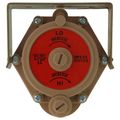


Pneumatic controls are the valves, actuators, thermostats, and related components that use compressed air rather than electrical signals to operate dampers, valves, and other HVAC equipment. Building maintenance teams and mechanical contractors still find these in older commercial buildings and schools where the original control system was built around a central air compressor feeding tubing throughout the building. A pneumatic thermostat senses temperature and adjusts air pressure sent to a connected actuator, which then opens or closes a damper or valve in response. Because these systems rely on physical air pressure instead of digital signals, they tend to be simple to troubleshoot with basic gauges once a technician understands the branch layout. Replacing a failed pneumatic component with an equivalent part, rather than converting the whole zone to electronic controls, is often the faster and less disruptive repair in an occupied building. Matching the replacement part's pressure range and connection type to the existing system keeps the branch operating as designed.
Subcategories
- Pneumatic Thermostats: Pneumatic thermostats sense room temperature and translate it into a proportional air pressure signal sent out to a connected actuator. Building engineers replace these when a zone runs consistently too hot or cold despite a working actuator downstream. Direct-acting and reverse-acting versions respond to temperature change in opposite directions. Matching the acting type to the original thermostat keeps the zone's heating or cooling response correct.
- Pneumatic Actuators: Pneumatic actuators convert an incoming air pressure signal into physical movement that opens or closes a damper or valve. Contractors size replacements by stroke length and force rating to match the damper or valve already installed. A failed actuator often shows up as a damper stuck fully open or closed. Swapping in a matched actuator restores normal modulation without replacing the damper itself.
- Pneumatic Valves & Switches: Pneumatic valves and switches route or restrict air within the control branch, including relays, selector switches, and pilot-positioning valves. Technicians use these to diagnose or isolate a specific branch during troubleshooting. Many mount directly to existing tubing with standard barbed or compression fittings. Replacing a single faulty valve is usually quicker than tracing the issue back to the compressor.
- Tubing & Fittings: Pneumatic tubing and fittings carry the compressed air signal between the compressor, thermostats, and actuators throughout a building's control branches. Maintenance teams keep common fitting sizes on hand since older tubing runs can develop slow leaks at joints over time. Compression and barbed fittings both see use depending on the original installation. Matching fitting type to the existing tubing avoids a mismatched, leak-prone connection.
Buying Guide
Identify what's failing before ordering a replacement part. Pneumatic controls fail in a few common ways, a thermostat that no longer sends a changing signal, an actuator that won't move despite a correct signal, or a leak somewhere in the tubing, and each points to a different part of the branch needing attention.
Match the replacement to the existing pressure range and acting type. Direct-acting and reverse-acting thermostats respond to temperature change in opposite directions, and installing the wrong type will make a zone run backward from what building staff expect, heating when it should cool or the reverse.
For actuators, confirm stroke length and force rating against the connected damper or valve. An actuator that's undersized for the damper it drives may not fully open or close it, leaving a zone stuck at partial airflow even though the actuator itself is technically working.
Keep basic tubing and fittings on hand for the branch sizes already in the building, since a slow leak in the tubing can mimic a failed thermostat or actuator by causing a zone to drift off its intended pressure and temperature setting.
Frequently Asked Questions
Can I replace a pneumatic thermostat with an electronic one?
Converting a single zone to electronic controls usually means adding a transducer or replacing the actuator too, since the rest of the branch still runs on air pressure. For a straightforward repair, matching the failed part with an equivalent pneumatic replacement is typically simpler.
How do I know if an actuator or the damper itself has failed?
Checking the air pressure signal reaching the actuator with a gauge is the first step. If the pressure changes correctly but the damper doesn't move, the actuator or its linkage to the damper is the likely problem rather than the thermostat.
What's the difference between direct-acting and reverse-acting thermostats?
A direct-acting thermostat increases output pressure as temperature rises, while a reverse-acting thermostat decreases output pressure as temperature rises. Installing the wrong type causes a zone to respond backward from what's expected.
Why does a pneumatic system develop leaks over time?
Tubing and fittings age and can loosen or crack at joints, especially in systems that have been running for many years without inspection. Routine checks with a gauge at branch takeoffs can catch a slow leak before it causes a noticeable comfort complaint.
Are pneumatic control parts still commonly available?
Yes, thermostats, actuators, and related tubing and fittings for pneumatic systems remain widely stocked, since many commercial buildings and schools still run on these controls. Matching pressure range, acting type, and connection style to the existing branch is the main consideration when ordering.
