




iO HVAC Controls Thermostats


 --%3E %3Csvg version='1.1' id='Fill' xmlns='http://www.w3.org/2000/svg' xmlns:xlink='http://www.w3.org/1999/xlink' x='0px' y='0px' viewBox='0 0 100 100' enable-background='new 0 0 100 100' xml:space='preserve'%3E %3Cpath fill='%23F15C02' d='M79.44,0.95H20.56C9.78,0.95,0.95,9.78,0.95,20.56v58.87c0,10.79,8.82,19.61,19.61,19.61h58.87 c10.79,0,19.61-8.83,19.61-19.61V20.56C99.05,9.78,90.22,0.95,79.44,0.95z M65.38,58.24l9.38,29.58L49.69,69.78L24.5,87.82 l9.34-29.6L8.8,39.6l30.73-0.17c0,0,6.98-19.61,10-28.93c0.54,1.36,9.88,29.1,9.88,29.1H91.2L65.38,58.24z'/%3E %3C/svg%3E)


 --%3E %3Csvg version='1.1' id='No-RB' xmlns='http://www.w3.org/2000/svg' xmlns:xlink='http://www.w3.org/1999/xlink' x='0px' y='0px' viewBox='0 0 100 100' enable-background='new 0 0 100 100' xml:space='preserve'%3E %3Cpath fill='%23CECECE' d='M79.44,0.95H20.56C9.78,0.95,0.95,9.78,0.95,20.56v58.87c0,10.79,8.82,19.61,19.61,19.61h58.87 c10.79,0,19.61-8.83,19.61-19.61V20.56C99.05,9.78,90.22,0.95,79.44,0.95z M65.38,58.24l9.38,29.58L49.69,69.78L24.5,87.82 l9.34-29.6L8.8,39.6l30.73-0.17c0,0,6.98-19.61,10-28.93c0.54,1.36,9.88,29.1,9.88,29.1H91.2L65.38,58.24z'/%3E %3C/svg%3E)


 --%3E %3Csvg version='1.1' id='With-RB' xmlns='http://www.w3.org/2000/svg' xmlns:xlink='http://www.w3.org/1999/xlink' x='0px' y='0px' viewBox='0 0 100 100' enable-background='new 0 0 100 100' xml:space='preserve'%3E %3Cpath fill='%23FBC8B4' d='M79.44,0.95H20.56C9.78,0.95,0.95,9.78,0.95,20.56v58.87c0,10.79,8.82,19.61,19.61,19.61h58.87 c10.79,0,19.61-8.83,19.61-19.61V20.56C99.05,9.78,90.22,0.95,79.44,0.95z M65.38,58.24l9.38,29.58L49.69,69.78L24.5,87.82 l9.34-29.6L8.8,39.6l30.73-0.17c0,0,6.98-19.61,10-28.93c0.54,1.36,9.88,29.1,9.88,29.1H91.2L65.38,58.24z'/%3E %3C/svg%3E)


 --%3E %3Csvg version='1.1' id='Half' xmlns='http://www.w3.org/2000/svg' xmlns:xlink='http://www.w3.org/1999/xlink' x='0px' y='0px' viewBox='0 0 100 100' enable-background='new 0 0 100 100' xml:space='preserve'%3E %3Cg%3E %3Cpath fill='%23F15C02' d='M30.05,70.23l3.79-12.01L8.8,39.6l30.73-0.17c0,0,6.98-19.61,10-28.93c0.54,1.36,9.88,29.1,9.88,29.1h1.58 L93.71,7.18c-3.58-3.82-8.66-6.23-14.28-6.23H20.56C9.78,0.95,0.95,9.78,0.95,20.56v58.87c0,5.41,2.22,10.32,5.79,13.88 L30.05,70.23z'/%3E %3C/g%3E %3Cpath fill='%23FBC8B4' d='M93.71,7.18L60.98,39.6H91.2L65.38,58.24l9.38,29.58L49.69,69.78L24.5,87.82l5.55-17.59L6.75,93.32 c3.55,3.54,8.44,5.73,13.82,5.73h58.87c10.79,0,19.61-8.83,19.61-19.61V20.56C99.05,15.4,97.01,10.69,93.71,7.18z'/%3E %3C/svg%3E)





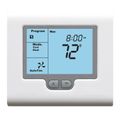


iO HVAC Controls Thermostats are low voltage heating controls built mainly around the Temp-Stat line, a series of preset, non-adjustable thermostats used on 24VAC heating circuits rated for less than 1 amp. Models like the TS-41 and TS-75 ship fixed to a single setpoint, covering a range from 41 to 75 degrees Fahrenheit across the lineup, so a contractor picks the model number that matches the temperature needed rather than adjusting a dial on site. Because the setpoint can't be changed after installation, these thermostats commonly go into service during building construction, where a standard adjustable thermostat left on site risks getting bumped by other trades and running the heat far higher or lower than intended. The category also includes the UT-SWM, a universal thermostat smart wire module that adapts between 2 and 5 wire thermostat configurations. Together, the lineup covers both temporary heating control and wiring compatibility on jobs with mismatched thermostat wiring.
Subcategories
- Low-Temperature Temp-Stat Models (41 to 55 degrees): Models like the TS-41 and TS-55 fix the heating setpoint low, protecting a building from freezing pipes during construction without running full occupied-space heat. General contractors specify these on job sites where the HVAC system is operating but the building isn't occupied yet. Because the setpoint is non-adjustable, no one on site can accidentally turn it up and waste energy.
- Mid to High-Temperature Temp-Stat Models (60 to 75 degrees): Models like the TS-65 and TS-75 fix the setpoint closer to a normal occupied comfort range, used once a building nears completion or during finish work that requires warmer conditions. Each model wires into a 24VAC heating-only circuit the same way as the lower temperature versions. Picking the right fixed setpoint means matching the model number to the construction phase rather than the building's final comfort target.
- Universal Thermostat Smart Wire Module: The UT-SWM adapts between 2 and 5 wire thermostat configurations, letting a contractor connect a thermostat that expects more wires than what's actually run to the equipment. It solves a common retrofit problem where an existing low voltage cable doesn't carry enough conductors for a newer thermostat. Technicians use it to avoid pulling new control wire through finished walls.
Buying Guide
Start by matching the model's fixed setpoint to the construction phase rather than the building's eventual occupied temperature. A low setpoint model like the TS-41 protects against freezing during rough framing and drywall, while a higher setpoint model closer to 70 or 75 degrees fits later finish stages when comfort during the workday matters more than freeze protection.
Confirm the circuit is heating-only and rated for 24VAC before wiring in a Temp-Stat model. Temp-Stat units are preset, non-adjustable, and built for low voltage heating circuits under 1 amp, so they aren't a fit for a cooling circuit or a system running higher voltage control wiring.
iO HVAC Controls Thermostats work well specifically because no one on site can change the setpoint, which matters on a job where multiple trades pass through a space daily. If adjustability is actually needed for the application, a standard programmable or non-programmable thermostat is the better fit rather than a Temp-Stat model.
Check existing thermostat wiring before ordering a replacement or temporary thermostat for a retrofit job. If the existing low voltage cable doesn't carry enough conductors for the new thermostat, the UT-SWM adapts between 2 and 5 wire configurations without requiring a new wire pull through finished walls, which saves significant labor on an occupied building retrofit.
Frequently Asked Questions
Can the temperature setpoint on an iO Temp-Stat thermostat be adjusted after installation?
No, Temp-Stat models like the TS-41 and TS-75 ship with a fixed, non-adjustable setpoint built into the thermostat. Changing the temperature means swapping in a different model number rather than turning a dial. The fixed design is exactly why contractors use them on construction sites where an adjustable thermostat risks getting changed by other trades.
What voltage and amperage do iO Temp-Stat thermostats run on?
Temp-Stat models are built for 24VAC heating-only circuits and rated for less than 1 amp. Wiring one into a higher voltage control circuit or a cooling circuit falls outside the intended application. Confirming the circuit voltage before installation avoids a thermostat that won't function correctly.
What temperature range do iO HVAC Controls Thermostats cover?
The Temp-Stat lineup covers fixed setpoints from 41 to 75 degrees Fahrenheit, with individual models like the TS-55 and TS-65 covering points in between. Picking a model means matching the setpoint to the construction phase or application rather than a comfort preference. Each model wires the same way regardless of its fixed temperature.
What does the UT-SWM module do?
The UT-SWM adapts between 2 and 5 wire thermostat configurations, letting a thermostat that needs more wires connect to existing low voltage cable that carries fewer conductors. It's commonly used on retrofit jobs where pulling new wire through finished walls isn't practical. Matching wire count between the thermostat and existing cable is the main reason to add this module.
Why would a contractor use a non-adjustable thermostat instead of a standard one?
Non-adjustable Temp-Stat thermostats protect against energy waste on job sites where multiple trades pass through daily and could bump a standard thermostat's setting. Construction sites commonly use a low fixed setpoint to prevent freezing without running full occupied heat. Once construction finishes, the Temp-Stat gets swapped out for a standard adjustable thermostat suited to the building's final use.
