



PEX Plumbing Supplies & Parts
PEX plumbing supplies cover the full range of products needed for a PEX-based water distribution system, from the tubing and fittings themselves to manifolds, valves, and the tools used to install everything. The category groups these product types together for plumbers building out a complete PEX system.
Standardizing on one PEX connection method across a job, whether crimp, expansion, or push-fit, keeps tooling consistent and simplifies training for crews less familiar with PEX installation. Installation accessories in this category, including support clips and nail plates, round out what a typical PEX rough-in needs.
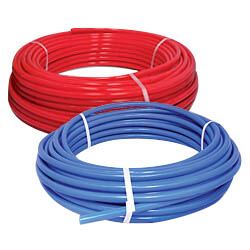

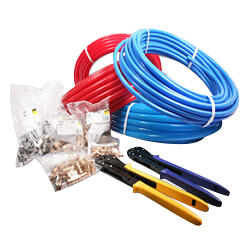

PEX Pipe & Tubing is the cross-linked polyethylene tube that forms the distribution network, available in sizes from 3/8 inch through 1 inch for residential applications and in coils from 100 to 500 feet. Non-oxygen barrier PEX is used for domestic water supply, while oxygen barrier PEX is used in closed hydronic heating systems. Red tubing designates hot supply and blue designates cold, though color does not affect rated properties.
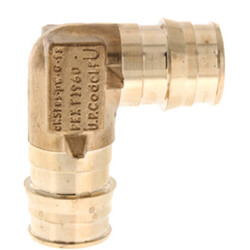
PEX Pipe Fittings are the connection components that join PEX tubing sections and connect PEX to valves and fixtures, available as straight couplings, elbows, tees, reducers, and transition fittings for connecting to copper, CPVC, or threaded pipe. Fitting bodies are typically brass or poly alloy. The connection method, whether expansion, crimp, clamp, or push-to-connect, must match the tooling and ring type specified for the fitting.
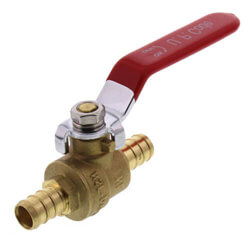
PEX Valves are isolation, shutoff, and balancing valves with end connections compatible with PEX tubing, including crimp ring, clamp ring, expansion, and push-to-connect configurations. Manifold-mounted zone valves and balancing valves allow individual circuit control in home-run manifold systems. All PEX valves used in domestic water service must be rated and listed for potable water contact.
PEX Manifolds & Water Manifold Systems are multi-port distribution headers used in home-run plumbing layouts where individual PEX runs connect each fixture directly to a central manifold. Manifold-based systems reduce the number of concealed fittings, simplify balancing, and allow individual fixture shutoffs without affecting other fixtures. Manifolds are available in 2 to 12 or more port configurations in brass and poly construction.
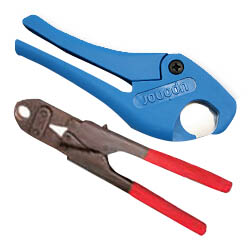
PEX Pipe Tools include crimping tools, clamp ring tools, expansion tools, pipe cutters, and deburring tools required to make reliable connections. Crimp tools use a go/no-go gauge to verify the crimp ring is compressed to the correct dimension. Expansion tools cold-expand the tube end before fitting insertion, and the tube contracts back onto the fitting. Proper tooling is essential, as under-crimped or under-clamped connections can leak after the system is pressurized.
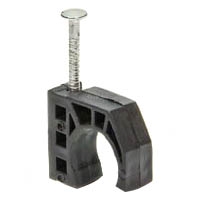
PEX Plumbing System Installation Parts & Accessories include pipe support clips, nail plates, tubing guides, crimp rings, clamp rings, expansion sleeves, and miscellaneous hardware. Nail plates protect PEX tubing from fastener penetration where the tubing is routed within 1.25 inches of the face of a framing member, as required by most plumbing codes. Pipe support clips hold the tubing to framing at code-required support intervals.
Home-run manifold systems and trunk-and-branch systems are the two primary PEX plumbing layouts. Home-run systems connect each fixture directly to a central manifold with a dedicated run, allowing individual shutoff and reducing concealed fittings. Trunk-and-branch systems use a main supply trunk with branch lines, similar to traditional copper layouts, using less tubing but more fittings.
What is the difference between PEX-A, PEX-B, and PEX-C?
PEX-A is produced by the Engel peroxide method and has the highest cross-linking degree. It is the most flexible, best resists kinking, and uses cold expansion fittings. A kinked PEX-A tube can be repaired by applying heat, which allows the tube to return to its original shape. PEX-B is produced by silane moisture-cure cross-linking, is stiffer, and uses crimp or clamp ring connections. PEX-C uses electron-beam irradiation. All three meet the same pressure and temperature ratings for potable water service.
Do I need special fittings for PEX, or can I use standard brass fittings?
PEX requires fittings specifically designed for the connection method being used. Standard threaded or sweat brass fittings cannot be used inside the PEX run. PEX-specific fittings with a barb or insert end that fits inside the tubing are required for crimp, clamp, and expansion connections. At the ends of the PEX run, transition fittings with a PEX-compatible end on one side and the appropriate connection type on the other side are used.
What is a home-run PEX manifold system?
A home-run manifold system is a PEX plumbing layout where each fixture has its own dedicated PEX run connecting directly from a central manifold to the fixture shutoff. The manifold has individual ports for each fixture, typically with a shutoff valve on each port, allowing any fixture to be isolated without interrupting water to other fixtures. The trade-off is that more tubing is used than in a trunk-and-branch system.
How do I know if a PEX crimp connection is correctly made?
A correctly made crimp connection is verified with a go/no-go gauge specific to the tubing size. If the ring fits within the go slot but not the no-go slot, the crimp is within the acceptable diameter range. A ring that does not fit in the go slot is under-crimped and will likely leak. After crimping, confirm the ring is at least 1/8 inch from the end of the tube and that the tube is fully inserted onto the fitting insert to the tube stop.
Can PEX be used for outdoor water supply lines?
PEX can be used for underground water service lines and outdoor supply runs but must be protected from UV exposure if installed above ground in direct sunlight. UV radiation degrades polyethylene over time. PEX for direct burial must be rated for that application, and burial depth must be below the local frost line in cold climates. PEX installed above grade outdoors must be shielded from sunlight using conduit, UV-resistant insulation jacket, or other UV-opaque protection.
Resources
PEX Pipe & Tubing is the cross-linked polyethylene tube that forms the distribution network, available in sizes from 3/8 inch through 1 inch for residential applications and in coils from 100 to 500 feet. Non-oxygen barrier PEX is used for domestic water supply, while oxygen barrier PEX is used in closed hydronic heating systems. Red tubing designates hot supply and blue designates cold, though color does not affect rated properties.
PEX Pipe Fittings are the connection components that join PEX tubing sections and connect PEX to valves and fixtures, available as straight couplings, elbows, tees, reducers, and transition fittings for connecting to copper, CPVC, or threaded pipe. Fitting bodies are typically brass or poly alloy. The connection method, whether expansion, crimp, clamp, or push-to-connect, must match the tooling and ring type specified for the fitting.
PEX Valves are isolation, shutoff, and balancing valves with end connections compatible with PEX tubing, including crimp ring, clamp ring, expansion, and push-to-connect configurations. Manifold-mounted zone valves and balancing valves allow individual circuit control in home-run manifold systems. All PEX valves used in domestic water service must be rated and listed for potable water contact.
PEX Manifolds & Water Manifold Systems are multi-port distribution headers used in home-run plumbing layouts where individual PEX runs connect each fixture directly to a central manifold. Manifold-based systems reduce the number of concealed fittings, simplify balancing, and allow individual fixture shutoffs without affecting other fixtures. Manifolds are available in 2 to 12 or more port configurations in brass and poly construction.
PEX Pipe Tools include crimping tools, clamp ring tools, expansion tools, pipe cutters, and deburring tools required to make reliable connections. Crimp tools use a go/no-go gauge to verify the crimp ring is compressed to the correct dimension. Expansion tools cold-expand the tube end before fitting insertion, and the tube contracts back onto the fitting. Proper tooling is essential, as under-crimped or under-clamped connections can leak after the system is pressurized.
PEX Plumbing System Installation Parts & Accessories include pipe support clips, nail plates, tubing guides, crimp rings, clamp rings, expansion sleeves, and miscellaneous hardware. Nail plates protect PEX tubing from fastener penetration where the tubing is routed within 1.25 inches of the face of a framing member, as required by most plumbing codes. Pipe support clips hold the tubing to framing at code-required support intervals.
Home-run manifold systems and trunk-and-branch systems are the two primary PEX plumbing layouts. Home-run systems connect each fixture directly to a central manifold with a dedicated run, allowing individual shutoff and reducing concealed fittings. Trunk-and-branch systems use a main supply trunk with branch lines, similar to traditional copper layouts, using less tubing but more fittings.
What is the difference between PEX-A, PEX-B, and PEX-C?
PEX-A is produced by the Engel peroxide method and has the highest cross-linking degree. It is the most flexible, best resists kinking, and uses cold expansion fittings. A kinked PEX-A tube can be repaired by applying heat, which allows the tube to return to its original shape. PEX-B is produced by silane moisture-cure cross-linking, is stiffer, and uses crimp or clamp ring connections. PEX-C uses electron-beam irradiation. All three meet the same pressure and temperature ratings for potable water service.
Do I need special fittings for PEX, or can I use standard brass fittings?
PEX requires fittings specifically designed for the connection method being used. Standard threaded or sweat brass fittings cannot be used inside the PEX run. PEX-specific fittings with a barb or insert end that fits inside the tubing are required for crimp, clamp, and expansion connections. At the ends of the PEX run, transition fittings with a PEX-compatible end on one side and the appropriate connection type on the other side are used.
What is a home-run PEX manifold system?
A home-run manifold system is a PEX plumbing layout where each fixture has its own dedicated PEX run connecting directly from a central manifold to the fixture shutoff. The manifold has individual ports for each fixture, typically with a shutoff valve on each port, allowing any fixture to be isolated without interrupting water to other fixtures. The trade-off is that more tubing is used than in a trunk-and-branch system.
How do I know if a PEX crimp connection is correctly made?
A correctly made crimp connection is verified with a go/no-go gauge specific to the tubing size. If the ring fits within the go slot but not the no-go slot, the crimp is within the acceptable diameter range. A ring that does not fit in the go slot is under-crimped and will likely leak. After crimping, confirm the ring is at least 1/8 inch from the end of the tube and that the tube is fully inserted onto the fitting insert to the tube stop.
Can PEX be used for outdoor water supply lines?
PEX can be used for underground water service lines and outdoor supply runs but must be protected from UV exposure if installed above ground in direct sunlight. UV radiation degrades polyethylene over time. PEX for direct burial must be rated for that application, and burial depth must be below the local frost line in cold climates. PEX installed above grade outdoors must be shielded from sunlight using conduit, UV-resistant insulation jacket, or other UV-opaque protection.