




Filters
SORT
Product Availability –
Review Score –
 --%3E %3Csvg version='1.1' id='Fill' xmlns='http://www.w3.org/2000/svg' xmlns:xlink='http://www.w3.org/1999/xlink' x='0px' y='0px' viewBox='0 0 100 100' enable-background='new 0 0 100 100' xml:space='preserve'%3E %3Cpath fill='%23F15C02' d='M79.44,0.95H20.56C9.78,0.95,0.95,9.78,0.95,20.56v58.87c0,10.79,8.82,19.61,19.61,19.61h58.87 c10.79,0,19.61-8.83,19.61-19.61V20.56C99.05,9.78,90.22,0.95,79.44,0.95z M65.38,58.24l9.38,29.58L49.69,69.78L24.5,87.82 l9.34-29.6L8.8,39.6l30.73-0.17c0,0,6.98-19.61,10-28.93c0.54,1.36,9.88,29.1,9.88,29.1H91.2L65.38,58.24z'/%3E %3C/svg%3E)
Price Range –
Aprilaire Zone Controls


 --%3E %3Csvg version='1.1' id='No-RB' xmlns='http://www.w3.org/2000/svg' xmlns:xlink='http://www.w3.org/1999/xlink' x='0px' y='0px' viewBox='0 0 100 100' enable-background='new 0 0 100 100' xml:space='preserve'%3E %3Cpath fill='%23CECECE' d='M79.44,0.95H20.56C9.78,0.95,0.95,9.78,0.95,20.56v58.87c0,10.79,8.82,19.61,19.61,19.61h58.87 c10.79,0,19.61-8.83,19.61-19.61V20.56C99.05,9.78,90.22,0.95,79.44,0.95z M65.38,58.24l9.38,29.58L49.69,69.78L24.5,87.82 l9.34-29.6L8.8,39.6l30.73-0.17c0,0,6.98-19.61,10-28.93c0.54,1.36,9.88,29.1,9.88,29.1H91.2L65.38,58.24z'/%3E %3C/svg%3E)
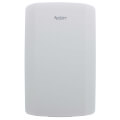
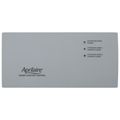
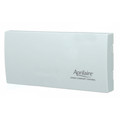


Aprilaire zone controls are the panels, dampers, and thermostats contractors use to divide a home's ductwork into independently controlled comfort zones. Aprilaire builds these systems around a central zone control panel that receives signals from zone thermostats and opens or closes motorized dampers in the ductwork to direct airflow where it's needed. A single-stage or multi-stage panel choice depends on the furnace or air handler it's paired with, since the control panel needs to match the equipment's staging to operate correctly. Zone control is most common in larger homes or additions where one thermostat can't keep every room comfortable at the same temperature. Getting the panel, dampers, and thermostats matched to the right zone count from the start prevents a system that short-cycles or fights itself once installed.
Subcategories
- Zone Control Panels: Zone control panels are the central component that reads input from each zone thermostat and drives the motorized dampers accordingly. Panels are built to support a specific number of zones, so choosing one with enough capacity for the current layout, plus some room to add a zone later, avoids a full panel swap down the road. Compatibility with the furnace or air handler's staging, single-stage, two-stage, or variable-speed, is one of the first things to confirm before ordering a panel. A panel mounted in an accessible location near the equipment makes future troubleshooting faster.
- Zone Dampers: Zone dampers mount inside the ductwork and open or close in response to signals from the control panel to direct airflow to the zone calling for heating or cooling. Round and rectangular damper styles are sized to match the existing duct dimensions, so measuring the duct before ordering avoids a fit problem during installation. A damper that fails in the closed position can starve an entire zone of airflow, so technicians typically check damper operation as part of routine system maintenance. Motorized dampers draw their power from the zone control panel rather than a separate transformer in most Aprilaire setups.
- Zone Thermostats: Zone thermostats are installed in each individually controlled area and send calls for heating or cooling back to the central zone panel. Programmable and non-programmable models are both compatible with most Aprilaire panels, so the choice usually comes down to how much scheduling flexibility the homeowner wants. Placement away from supply registers, direct sunlight, and other heat sources keeps the thermostat's reading accurate for the zone it controls. Wiring each thermostat back to the panel with the correct number of conductors is essential for multi-stage systems that need more signal wires than a basic single-stage setup.
- Bypass Dampers & Accessories: Bypass dampers relieve excess duct pressure when only one zone out of several is calling for conditioned air, protecting the blower motor from operating against a mostly closed system. Not every zoned system needs a bypass damper, and oversizing one can actually reduce comfort by mixing conditioned and return air. Static pressure sensors and other accessories work alongside the bypass damper to keep airflow balanced across all zones. Getting the bypass damper sized correctly is one of the more common points where a zoning retrofit goes wrong if it's skipped or guessed at.
Buying Guide
Start any Aprilaire zone controls project by counting the zones the layout actually needs, then choose a panel with enough capacity to support that count without maxing it out immediately. A panel with one or two zones of spare capacity gives room to add a bonus room or finished basement as a zone later without a full panel replacement. Match the panel's staging support, single-stage, two-stage, or variable-speed, to the furnace or air handler it will control, since a mismatch here is one of the most common causes of a zoning system that doesn't perform as expected. Measure existing ductwork carefully before ordering dampers, since round and rectangular duct dimensions vary by installation and a damper that doesn't fit the duct adds an extra trip back to the supply house. Decide early whether the system needs a bypass damper: systems with several small zones sharing one blower usually need one to prevent excess static pressure, while systems with two or three larger, balanced zones sometimes don't. Thermostat placement deserves the same attention as equipment selection, since a thermostat mounted near a supply register or in direct sun will call for conditioning at the wrong times regardless of how well the rest of the system is sized. Ordering the panel, dampers, and thermostats together as a matched set reduces compatibility questions during installation.
Frequently Asked Questions
How many zones can one Aprilaire control panel support?
Panel capacity varies by model, with smaller panels supporting just a couple of zones and larger panels handling several more. Choosing a panel with a bit more capacity than the current layout needs leaves room to add a zone later without replacing the whole panel. Checking the specific panel's rated zone count before ordering is the safest way to avoid running out of capacity mid-installation.
Does every zoned system need a bypass damper?
Not necessarily. Systems with several smaller zones sharing one blower often need a bypass damper to relieve excess static pressure when only one zone is calling. Larger, more balanced zone layouts sometimes operate fine without one, so it's worth evaluating the specific duct layout rather than adding a bypass damper by default.
Can I mix zone thermostats from different lines with an Aprilaire panel?
Compatibility depends on the communication protocol and wiring configuration the panel expects, so mixing thermostats from unrelated product lines isn't recommended without confirming compatibility first. Staying within a single, matched product line for the panel and thermostats is the more reliable path for a system that needs to communicate correctly across every zone. If in doubt, checking compatibility before wiring anything in saves a return trip.
What causes a zoned system to short-cycle after installation?
A mismatch between the panel's staging support and the furnace or air handler's actual staging is one of the most common causes. An undersized or missing bypass damper can also cause short-cycling by building excess static pressure when fewer zones are calling. Reviewing the panel's setup against the equipment's staging and airflow requirements usually resolves the issue.
Where should zone thermostats be placed for the most accurate reading?
Thermostats should go on interior walls away from supply registers, direct sunlight, and other heat sources like electronics or lamps. A thermostat placed too close to a register will read the immediate airflow instead of the zone's actual temperature and cause short cycling. Central, interior wall placement in a commonly used room of each zone gives the most representative reading.
