




Filters
SORT
Product Availability –
Size –
Capacity (BTU) –
Pressure Set Point –
Review Score –
 --%3E %3Csvg version='1.1' id='Fill' xmlns='http://www.w3.org/2000/svg' xmlns:xlink='http://www.w3.org/1999/xlink' x='0px' y='0px' viewBox='0 0 100 100' enable-background='new 0 0 100 100' xml:space='preserve'%3E %3Cpath fill='%23F15C02' d='M79.44,0.95H20.56C9.78,0.95,0.95,9.78,0.95,20.56v58.87c0,10.79,8.82,19.61,19.61,19.61h58.87 c10.79,0,19.61-8.83,19.61-19.61V20.56C99.05,9.78,90.22,0.95,79.44,0.95z M65.38,58.24l9.38,29.58L49.69,69.78L24.5,87.82 l9.34-29.6L8.8,39.6l30.73-0.17c0,0,6.98-19.61,10-28.93c0.54,1.36,9.88,29.1,9.88,29.1H91.2L65.38,58.24z'/%3E %3C/svg%3E)
Price Range –
Bell & Gossett Relief Valves


 --%3E %3Csvg version='1.1' id='No-RB' xmlns='http://www.w3.org/2000/svg' xmlns:xlink='http://www.w3.org/1999/xlink' x='0px' y='0px' viewBox='0 0 100 100' enable-background='new 0 0 100 100' xml:space='preserve'%3E %3Cpath fill='%23CECECE' d='M79.44,0.95H20.56C9.78,0.95,0.95,9.78,0.95,20.56v58.87c0,10.79,8.82,19.61,19.61,19.61h58.87 c10.79,0,19.61-8.83,19.61-19.61V20.56C99.05,9.78,90.22,0.95,79.44,0.95z M65.38,58.24l9.38,29.58L49.69,69.78L24.5,87.82 l9.34-29.6L8.8,39.6l30.73-0.17c0,0,6.98-19.61,10-28.93c0.54,1.36,9.88,29.1,9.88,29.1H91.2L65.38,58.24z'/%3E %3C/svg%3E)
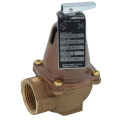
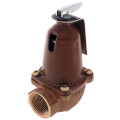
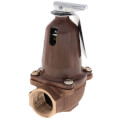
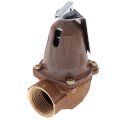

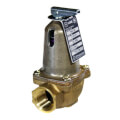
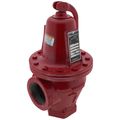
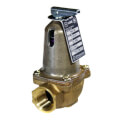
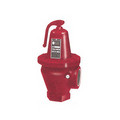


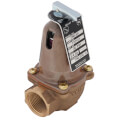
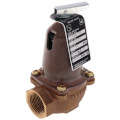
Bell & Gossett relief valves protect hydronic heating systems by releasing excess pressure before it can damage a boiler, expansion tank, or piping. Contractors install them on hot water boilers, hydronic loops, and some domestic water systems where pressure needs a controlled release point. A relief valve opens automatically once system pressure crosses its set threshold, then reseats once pressure drops back to a safe range. Sizing a relief valve to match the boiler's BTU input and the system's operating pressure keeps the valve responsive without nuisance discharge during normal operation. Technicians replace these valves when a unit starts weeping at the seat, fails to reseat cleanly, or reaches the end of its expected service interval. Because a relief valve is a core safety component rather than an optional part, keeping a properly matched replacement on hand helps a heating system pass inspection and keeps normal operation predictable.
Subcategories
- Boiler Relief Valves: Boiler relief valves mount directly on a hot water boiler to release pressure before it reaches an unsafe level. Contractors size them to the boiler's BTU input rating so the valve opens at the correct pressure setting for that specific unit. Replacing a boiler relief valve is a routine service task whenever the original valve fails to reseat properly. Matching thread size and pressure rating to the original valve keeps the swap straightforward.
- Water Heater Relief Valves: Water heater applications use a similar relief valve to release pressure that builds from thermal expansion in a closed system. Plumbers check these valves during routine water heater service, since a stuck or leaking valve is one of the more common service calls on a tank-style heater. Pressure rating needs to match the water heater's rated working pressure to function correctly. A valve that weeps constantly after installation usually points to an oversized expansion issue elsewhere in the system rather than a defective valve.
- Combination Pressure and Temperature Relief Valves: Combination relief valves respond to both excess pressure and excess temperature, giving a single safety device coverage for two failure modes. Technicians install them on water heaters and some boiler applications where both conditions need monitoring. Selecting the correct combination valve means matching both the pressure setting and the temperature setting to the equipment being protected. Periodic testing of the mechanism confirms it has not seized shut over time.
- Relief Valve Repair Kits: Repair kits give contractors a way to rebuild a relief valve's seat and spring assembly instead of replacing the entire valve body. Choosing a kit that matches the exact valve model keeps the seal surfaces and spring tension within the original specification. Rebuilding a valve on-site can shorten a service call when a full replacement is not available immediately. Kits vary by valve series, so matching the original valve's model number remains the first step before ordering parts.
Buying Guide
Selecting a relief valve starts with matching it to the equipment it protects rather than choosing by pipe size alone. A boiler relief valve needs a pressure rating that corresponds to the boiler's BTU input, while a water heater relief valve needs a rating that matches the tank's working pressure. Installing an oversized or undersized valve can either cause nuisance discharge during normal operation or fail to release pressure quickly enough during an actual fault.
Connection size and thread type come next. Most relief valves thread directly into a tapping on the boiler or water heater, so confirming NPT size against the existing tapping avoids a mismatched fit at installation. Bell & Gossett Relief Valves are sized and threaded to specific product lines, so cross-referencing the original valve's part number against the replacement keeps the swap straightforward.
Discharge piping matters as much as the valve itself. Local plumbing code typically dictates pipe material, minimum diameter, and termination point for relief valve discharge lines, so confirming those requirements before finishing an installation avoids a failed inspection.
Service history should factor into the decision as well. A valve that has weeped repeatedly, failed to reseat, or shows visible corrosion at the seat is due for replacement rather than another repair attempt. Keeping a properly sized valve on the truck for common boiler and water heater models cuts down on return trips for a routine safety-component failure.
Frequently Asked Questions
How do I know what size Bell & Gossett relief valve I need?
Match the valve's pressure rating to the boiler's BTU input or the water heater's rated working pressure, whichever equipment the valve protects. Cross-referencing the original valve's part number against the replacement is the most reliable way to confirm a correct match. Installing an incorrectly sized valve can cause either nuisance discharge or an unsafe pressure buildup.
Why does a relief valve keep leaking after installation?
Constant weeping after installation often points to excess system pressure rather than a defective valve, frequently caused by a failed or undersized expansion tank. Debris caught at the valve seat during installation can also cause a slow leak that clears after the valve is cycled a few times. If leaking continues after checking expansion tank pressure, the valve itself likely needs replacement.
Can a relief valve be repaired instead of replaced?
Some relief valve models support a rebuild kit that replaces the seat and spring assembly without swapping the entire valve body. Rebuilding works best when the valve body itself shows no corrosion or physical damage. For valves without an available rebuild kit, or with visible wear on the body, full replacement is the more reliable option.
What's the difference between a pressure relief valve and a combination relief valve?
A pressure relief valve responds only to excess system pressure, while a combination valve responds to both excess pressure and excess temperature. Water heaters typically require a combination valve because thermal expansion and thermostat failure are both realistic failure modes. Boilers more commonly use a pressure-only relief valve, though some applications call for combination protection as well.
How often should a relief valve be tested?
Most manufacturers recommend testing a relief valve at least once a year by manually lifting the test lever and confirming it reseats cleanly afterward. A valve that fails to reseat after testing needs replacement rather than continued service. Annual testing also gives an early warning if mineral buildup or corrosion has started to affect the seat.
