




Filters
SORT
Product Availability –
BTU Input –
Capacity (Gallons) –
Diameter (Inches) –
Review Score –
 --%3E %3Csvg version='1.1' id='Fill' xmlns='http://www.w3.org/2000/svg' xmlns:xlink='http://www.w3.org/1999/xlink' x='0px' y='0px' viewBox='0 0 100 100' enable-background='new 0 0 100 100' xml:space='preserve'%3E %3Cpath fill='%23F15C02' d='M79.44,0.95H20.56C9.78,0.95,0.95,9.78,0.95,20.56v58.87c0,10.79,8.82,19.61,19.61,19.61h58.87 c10.79,0,19.61-8.83,19.61-19.61V20.56C99.05,9.78,90.22,0.95,79.44,0.95z M65.38,58.24l9.38,29.58L49.69,69.78L24.5,87.82 l9.34-29.6L8.8,39.6l30.73-0.17c0,0,6.98-19.61,10-28.93c0.54,1.36,9.88,29.1,9.88,29.1H91.2L65.38,58.24z'/%3E %3C/svg%3E)
 --%3E %3Csvg version='1.1' id='With-RB' xmlns='http://www.w3.org/2000/svg' xmlns:xlink='http://www.w3.org/1999/xlink' x='0px' y='0px' viewBox='0 0 100 100' enable-background='new 0 0 100 100' xml:space='preserve'%3E %3Cpath fill='%23FBC8B4' d='M79.44,0.95H20.56C9.78,0.95,0.95,9.78,0.95,20.56v58.87c0,10.79,8.82,19.61,19.61,19.61h58.87 c10.79,0,19.61-8.83,19.61-19.61V20.56C99.05,9.78,90.22,0.95,79.44,0.95z M65.38,58.24l9.38,29.58L49.69,69.78L24.5,87.82 l9.34-29.6L8.8,39.6l30.73-0.17c0,0,6.98-19.61,10-28.93c0.54,1.36,9.88,29.1,9.88,29.1H91.2L65.38,58.24z'/%3E %3C/svg%3E)
Price Range –
Buderus Indirect Water Heaters


 --%3E %3Csvg version='1.1' id='No-RB' xmlns='http://www.w3.org/2000/svg' xmlns:xlink='http://www.w3.org/1999/xlink' x='0px' y='0px' viewBox='0 0 100 100' enable-background='new 0 0 100 100' xml:space='preserve'%3E %3Cpath fill='%23CECECE' d='M79.44,0.95H20.56C9.78,0.95,0.95,9.78,0.95,20.56v58.87c0,10.79,8.82,19.61,19.61,19.61h58.87 c10.79,0,19.61-8.83,19.61-19.61V20.56C99.05,9.78,90.22,0.95,79.44,0.95z M65.38,58.24l9.38,29.58L49.69,69.78L24.5,87.82 l9.34-29.6L8.8,39.6l30.73-0.17c0,0,6.98-19.61,10-28.93c0.54,1.36,9.88,29.1,9.88,29.1H91.2L65.38,58.24z'/%3E %3C/svg%3E)
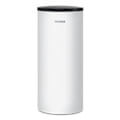
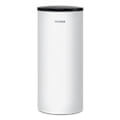

Buderus indirect water heaters use the heat from a connected boiler to warm domestic hot water, storing it in an insulated tank rather than heating water directly with a dedicated burner. Buderus has been building heating equipment since 1731 and operates today as part of the Bosch Group, giving its indirect water heater line the backing of a long-established European heating manufacturer. Pairing an indirect tank with an existing or new boiler is typically more efficient than running a standalone water heater, since the boiler is already sized to handle the building's heating load and the indirect tank simply draws off that same heat source. Sizing an indirect tank correctly depends on the boiler's output and the building's peak hot water demand, not just the tank's storage capacity alone. Choosing the right tank size and confirming boiler compatibility before installation keeps recovery times and hot water availability where the building actually needs them.
Subcategories
- Standard Capacity Indirect Tanks: Standard capacity tanks cover typical residential hot water demand paired with a residential boiler, sized to balance storage volume against available floor space in a mechanical room. Matching tank capacity to household size and peak demand periods, such as simultaneous showers, prevents running out of hot water during high-use times. These tanks are the most common configuration installed alongside a new boiler replacement. Recovery rate depends on the connected boiler's output as much as the tank's own size.
- High-Capacity Indirect Tanks: High-capacity tanks serve larger households, multi-family buildings, or commercial applications where hot water demand exceeds what a standard tank can support. Selecting a high-capacity tank still depends on the connected boiler having sufficient output to recover the larger stored volume in a reasonable time. Mechanical room space becomes more of a constraint at this size, since larger tanks need more floor area and ceiling clearance. Commercial applications with simultaneous multi-fixture demand typically call for this category.
- Replacement Tanks for Existing Boilers: Replacement tanks are sized and selected to work with a boiler that's already installed rather than as part of a full system replacement. Confirming the existing boiler's output capacity before ordering a replacement tank prevents pairing an undersized boiler with an oversized tank that never fully recovers. Connection sizing and coil configuration need to match what the existing boiler and piping can support. This category covers most straightforward water heater replacements where the boiler itself stays in service.
- Tank Accessories and Insulation Jackets: Insulation jackets and related accessories reduce standby heat loss from the storage tank between heating cycles, improving overall system efficiency without changing the tank's core specifications. Retrofitting an insulation jacket onto an older tank is a lower-cost efficiency improvement compared to a full tank replacement. Accessories in this category also include mounting hardware and connection kits specific to indirect tank installations. These add-ons matter most on tanks installed in unconditioned mechanical spaces where standby loss is higher.
Buying Guide
Sizing a Buderus indirect water heater correctly depends on two factors working together: the storage tank's capacity and the connected boiler's ability to recover that volume within a reasonable window. Buderus Indirect Water Heaters are designed to draw heat from an existing or new boiler rather than a dedicated burner, so a tank sized for a large household paired with an undersized boiler still won't deliver adequate hot water during peak demand. Starting with the building's peak hot water usage, such as the number of simultaneous showers or fixture draws expected during busy periods, gives a more accurate sizing target than tank capacity alone. Confirming the boiler's output rating against the tank manufacturer's recovery specifications before ordering prevents a mismatch that shows up as slow recovery after the first few draws deplete the stored hot water. Mechanical room space is a practical constraint at the higher end of the capacity range, since larger tanks require more floor area and clearance for service access. For straightforward replacements where the existing boiler stays in service, matching connection sizing and coil configuration to what the current piping supports avoids unnecessary rework. Insulation jackets and similar accessories offer a lower-cost efficiency improvement for tanks installed in unconditioned spaces, without requiring a full tank replacement. Confirming both boiler capacity and building demand before ordering keeps the finished installation matched to actual household or building needs.
Frequently Asked Questions
How is an indirect water heater different from a standard water heater?
An indirect water heater has no dedicated burner of its own. It stores water in an insulated tank and relies on a connected boiler to supply the heat, which is typically more efficient when a boiler is already installed for space heating.
What determines the right tank size for a Buderus indirect water heater?
Tank size depends on both the connected boiler's output and the building's peak hot water demand, such as simultaneous fixture draws, rather than storage capacity alone. A large tank paired with an undersized boiler still won't recover quickly enough during high-use periods.
Can a Buderus indirect tank be added to an existing boiler?
Yes, as long as the existing boiler has sufficient output capacity to recover the tank's stored volume in a reasonable time. Confirming the boiler's rated output before ordering a tank prevents a mismatch.
Who manufactures Buderus water heaters?
Buderus has built heating equipment since 1731 and is now part of the Bosch Group, which backs the indirect water heater line with a long-established heating equipment manufacturer.
Do accessories like insulation jackets make a meaningful difference?
Yes, particularly on tanks installed in unconditioned mechanical spaces, where an insulation jacket reduces standby heat loss between draws without requiring a full tank replacement.
