




Filters
SORT
Product Availability –
Size –
Connection Type –
Material –
Used With –
Review Score –
 --%3E %3Csvg version='1.1' id='Fill' xmlns='http://www.w3.org/2000/svg' xmlns:xlink='http://www.w3.org/1999/xlink' x='0px' y='0px' viewBox='0 0 100 100' enable-background='new 0 0 100 100' xml:space='preserve'%3E %3Cpath fill='%23F15C02' d='M79.44,0.95H20.56C9.78,0.95,0.95,9.78,0.95,20.56v58.87c0,10.79,8.82,19.61,19.61,19.61h58.87 c10.79,0,19.61-8.83,19.61-19.61V20.56C99.05,9.78,90.22,0.95,79.44,0.95z M65.38,58.24l9.38,29.58L49.69,69.78L24.5,87.82 l9.34-29.6L8.8,39.6l30.73-0.17c0,0,6.98-19.61,10-28.93c0.54,1.36,9.88,29.1,9.88,29.1H91.2L65.38,58.24z'/%3E %3C/svg%3E)
Price Range –
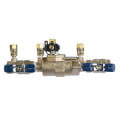
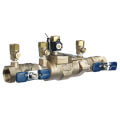
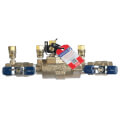
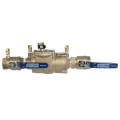
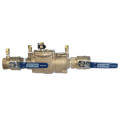
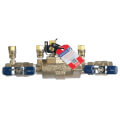
Febco 850 Double Check Valve Assemblies


 --%3E %3Csvg version='1.1' id='No-RB' xmlns='http://www.w3.org/2000/svg' xmlns:xlink='http://www.w3.org/1999/xlink' x='0px' y='0px' viewBox='0 0 100 100' enable-background='new 0 0 100 100' xml:space='preserve'%3E %3Cpath fill='%23CECECE' d='M79.44,0.95H20.56C9.78,0.95,0.95,9.78,0.95,20.56v58.87c0,10.79,8.82,19.61,19.61,19.61h58.87 c10.79,0,19.61-8.83,19.61-19.61V20.56C99.05,9.78,90.22,0.95,79.44,0.95z M65.38,58.24l9.38,29.58L49.69,69.78L24.5,87.82 l9.34-29.6L8.8,39.6l30.73-0.17c0,0,6.98-19.61,10-28.93c0.54,1.36,9.88,29.1,9.88,29.1H91.2L65.38,58.24z'/%3E %3C/svg%3E)

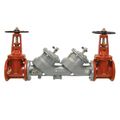
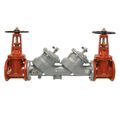


Febco 850 Double Check Valve Assemblies are backflow prevention devices installed on potable water lines to stop contaminated water from siphoning back into the clean water supply, most often at irrigation systems, fire lines, and other connections carrying a moderate, non-health hazard level of backflow risk. A plumber or backflow tester specifies the 850 series when a jurisdiction's cross-connection control program calls for double check protection rather than the higher-hazard reduced pressure zone assembly, which is typically reserved for connections with a direct health hazard. The assembly houses two independently acting check valves in series, so if one check fails to seat fully, the second still provides a barrier against backflow. Because these assemblies require periodic testing to confirm both checks are holding, confirming local backflow testing and reporting requirements before installation is part of a complete job, not an afterthought. Sizing the assembly correctly to the line's flow rate keeps pressure loss through the device within an acceptable range for the application.
Subcategories
- Standard 850 Assemblies: Standard 850 assemblies cover the core line sizes used on typical irrigation and commercial potable water connections. Each size is rated for a specific flow range, and choosing a size based on the line's actual demand, not just matching the existing pipe diameter, keeps pressure loss through the assembly manageable. Local backflow programs typically require periodic testing to confirm both check valves are seating properly.
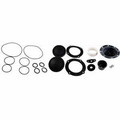
- Repair Kits & Test Cocks: Repair kits and test cocks provide the internal parts and access fittings a certified backflow tester needs to service and test an installed 850 assembly without replacing the whole unit. Worn seats or springs inside the check valves are typically found during annual testing, and a repair kit addresses that without pulling the assembly off the line. Test cocks give the tester the pressure-differential access points required to confirm each check valve is holding.
- Bronze and Iron Body Options: Bronze and iron body options let a contractor match the assembly's construction to the application's exposure and budget considerations, with bronze typically used on smaller line sizes and iron more common on larger commercial connections. Body material affects long-term corrosion resistance depending on the water quality and burial conditions at the installation site. Confirming which body material the local water authority accepts avoids a rejected installation, since some jurisdictions maintain their own approved-materials list.
Buying Guide
Choosing a Febco 850 Double Check Valve Assembly starts with confirming what level of backflow protection the local cross-connection control program actually requires for the specific connection, since double check assemblies are approved for moderate-hazard applications like irrigation and fire lines but not for connections posing a direct health hazard, which typically call for a reduced pressure zone assembly instead. Once double check protection is confirmed as the correct device type, sizing the 850 assembly to the line's actual flow demand, rather than simply matching existing pipe diameter, keeps pressure loss through the device within a range the system can tolerate. Bronze body assemblies cover smaller residential and light commercial line sizes, while iron body assemblies are more common on larger connections; checking which material the local water authority accepts before ordering avoids a rejected installation, since some jurisdictions maintain their own approved list of backflow devices. Installation location matters too. Most jurisdictions require the assembly to be installed above grade, accessible for annual testing, and protected from freezing, so confirming those placement requirements alongside the sizing decision saves a return trip if the initial location doesn't pass inspection. Keeping test cocks accessible and unobstructed after installation makes the annual certification testing straightforward for whichever backflow tester services the account going forward.
Frequently Asked Questions
When is a double check assembly the right choice instead of a reduced pressure zone assembly?
Double check assemblies like the Febco 850 are approved for moderate-hazard connections such as irrigation systems and fire lines. Connections posing a direct health hazard typically require a reduced pressure zone assembly instead, so checking the local cross-connection control program's requirements is the first step.
How often does a Febco 850 assembly need to be tested?
Testing frequency is set by the local water authority or cross-connection control program, but annual testing is common for backflow assemblies in most jurisdictions. A certified backflow tester checks that both check valves are seating properly during that test.
Does the assembly need to be sized to the pipe diameter or the flow rate?
Sizing should be based on the line's actual flow demand rather than matching the existing pipe diameter alone. An assembly sized only to pipe diameter can create more pressure loss than the application can tolerate.
Can a Febco 850 assembly be installed underground?
Most jurisdictions require backflow assemblies to be installed above grade in a location that's accessible for testing and protected from freezing. Confirming local placement requirements before installation avoids a failed inspection.
What's the difference between bronze and iron body options?
Bronze bodies are common on smaller residential and light commercial line sizes, while iron bodies are more typical on larger commercial connections. Checking which material the local water authority accepts is worth doing before ordering, since some jurisdictions maintain their own approved-materials list.
