




Dwyer

 --%3E %3Csvg version='1.1' id='No-RB' xmlns='http://www.w3.org/2000/svg' xmlns:xlink='http://www.w3.org/1999/xlink' x='0px' y='0px' viewBox='0 0 100 100' enable-background='new 0 0 100 100' xml:space='preserve'%3E %3Cpath fill='%23CECECE' d='M79.44,0.95H20.56C9.78,0.95,0.95,9.78,0.95,20.56v58.87c0,10.79,8.82,19.61,19.61,19.61h58.87 c10.79,0,19.61-8.83,19.61-19.61V20.56C99.05,9.78,90.22,0.95,79.44,0.95z M65.38,58.24l9.38,29.58L49.69,69.78L24.5,87.82 l9.34-29.6L8.8,39.6l30.73-0.17c0,0,6.98-19.61,10-28.93c0.54,1.36,9.88,29.1,9.88,29.1H91.2L65.38,58.24z'/%3E %3C/svg%3E)
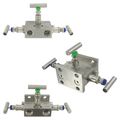
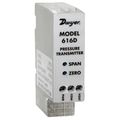
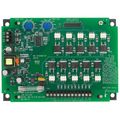
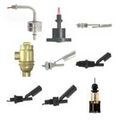

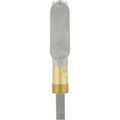
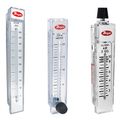
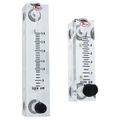
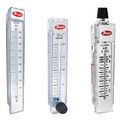
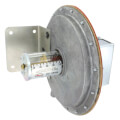
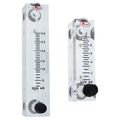
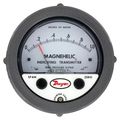
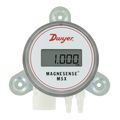
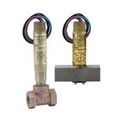
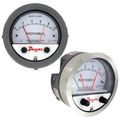
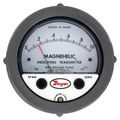

Dwyer Instruments traces its roots to 1931, when the F.W. Dwyer Manufacturing Company was founded in Chicago to produce liquid filled manometer test instruments. In 1953 the company developed the Magnehelic gauge, which grew into its flagship product and helped drive the company's expansion.
As the business grew, Dwyer moved its headquarters from Chicago to Michigan City, Indiana, where it remains today, with additional offices supporting customers across Asia, Europe, and Australia. The company now manufactures instrumentation for HVAC and process automation markets.
Product Lines
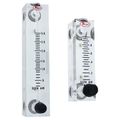
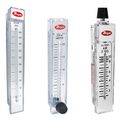
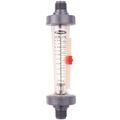
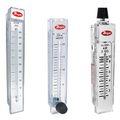
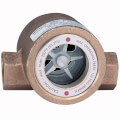
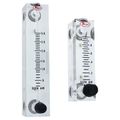
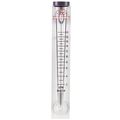
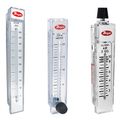
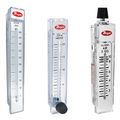
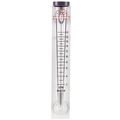
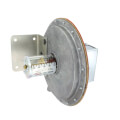
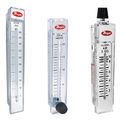
Dwyer's pressure product line includes the Series 2000 Magnehelic differential pressure gauges and Series MSX Magnesense differential pressure transmitters, both used to measure low air or non-corrosive gas pressure. The catalog also covers manometers, flow meters, flow switches, and flow indicators for measuring flow rate in liquids and gases.
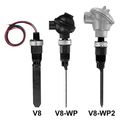
Beyond pressure and flow, Dwyer supplies controllers, data loggers, remote displays, and sensors for temperature, level, and air velocity, along with calibration services and accessories for the instruments it manufactures.
Why Contractors Specify Dwyer
Magnehelic gauges have been used in the field since the 1950s for tasks like filter monitoring, duct static pressure checks, and cleanroom pressure differential readings, giving contractors a design with a long track record. Because the gauge uses a frictionless internal movement, it reads pressure without external power.
Carrying pressure, flow, level, and temperature instruments under a single brand simplifies sourcing replacement parts and matching new installations to existing equipment already in the field. That range makes Dwyer instruments a common choice for HVAC balancing, air quality monitoring, and process control work.
How to Choose Dwyer Products
Begin with what needs to be measured: pressure, flow, level, or temperature, since Dwyer's product lines are organized around these measurement types. For pressure applications, decide between a mechanical gauge like the Series 2000 Magnehelic for local visual readings or a transmitter like the Series MSX Magnesense when a signal needs to reach a building automation or control system.
Check the pressure range, accuracy, and gas compatibility required for the application, and confirm whether the instrument will be exposed to corrosive gases before selecting a model. Mounting location and available power at the install point should also factor into the choice between a gauge and a transmitter.
Frequently Asked Questions
What is a Magnehelic gauge used for?
It measures low differential air or non-corrosive gas pressure, whether positive, negative, or differential, and is commonly used for filter monitoring, duct static pressure, and cleanroom pressure differential readings.
What is the difference between the Series 2000 Magnehelic gauge and the Series MSX Magnesense transmitter?
The Series 2000 is a mechanical dial gauge for local visual reading, while the Series MSX is an electronic transmitter that sends a signal to a building automation or control system.
Does a Magnehelic gauge need external power?
No, the Magnehelic gauge uses a frictionless internal movement and does not require external power to operate.
Where is Dwyer Instruments headquartered?
Dwyer is headquartered in Michigan City, Indiana, with additional offices in Asia, Europe, and Australia.
What industries rely on Dwyer instrumentation?
Dwyer instruments are used in HVAC and process automation applications, including air quality, flow, level, temperature, and process control monitoring.
