




'/%3E%3C/svg%3E)
 --%3E %3Csvg version='1.1' id='Fill' xmlns='http://www.w3.org/2000/svg' xmlns:xlink='http://www.w3.org/1999/xlink' x='0px' y='0px' viewBox='0 0 100 100' enable-background='new 0 0 100 100' xml:space='preserve'%3E %3Cpath fill='%23F15C02' d='M79.44,0.95H20.56C9.78,0.95,0.95,9.78,0.95,20.56v58.87c0,10.79,8.82,19.61,19.61,19.61h58.87 c10.79,0,19.61-8.83,19.61-19.61V20.56C99.05,9.78,90.22,0.95,79.44,0.95z M65.38,58.24l9.38,29.58L49.69,69.78L24.5,87.82 l9.34-29.6L8.8,39.6l30.73-0.17c0,0,6.98-19.61,10-28.93c0.54,1.36,9.88,29.1,9.88,29.1H91.2L65.38,58.24z'/%3E %3C/svg%3E)
 --%3E %3Csvg version='1.1' id='Half' xmlns='http://www.w3.org/2000/svg' xmlns:xlink='http://www.w3.org/1999/xlink' x='0px' y='0px' viewBox='0 0 100 100' enable-background='new 0 0 100 100' xml:space='preserve'%3E %3Cg%3E %3Cpath fill='%23F15C02' d='M30.05,70.23l3.79-12.01L8.8,39.6l30.73-0.17c0,0,6.98-19.61,10-28.93c0.54,1.36,9.88,29.1,9.88,29.1h1.58 L93.71,7.18c-3.58-3.82-8.66-6.23-14.28-6.23H20.56C9.78,0.95,0.95,9.78,0.95,20.56v58.87c0,5.41,2.22,10.32,5.79,13.88 L30.05,70.23z'/%3E %3C/g%3E %3Cpath fill='%23FBC8B4' d='M93.71,7.18L60.98,39.6H91.2L65.38,58.24l9.38,29.58L49.69,69.78L24.5,87.82l5.55-17.59L6.75,93.32 c3.55,3.54,8.44,5.73,13.82,5.73h58.87c10.79,0,19.61-8.83,19.61-19.61V20.56C99.05,15.4,97.01,10.69,93.71,7.18z'/%3E %3C/svg%3E)


MANUALS (2)
Product Highlights


Description
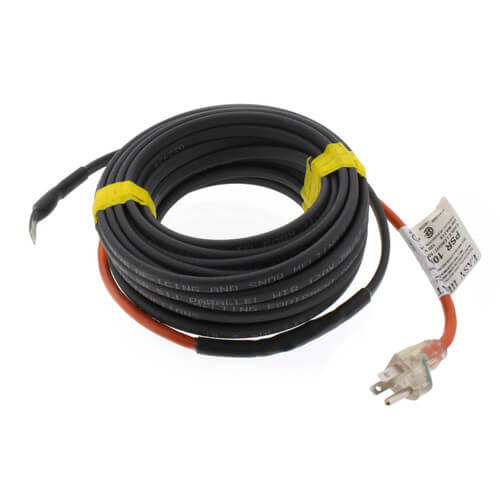
EasyHeat, your industry leader in pipe freeze prevention and roof-and-gutter deicing applications, introduces PSR pre-terminated, self-regulating heating cable. Imagine the convenience: each PSR cable is a pre-terminated, off-the-shelf product with the efficiency and functionality of self-regulating technology. With this built-in application flexibility, PSR becomes a first-choice solution for your heat tracing needs.
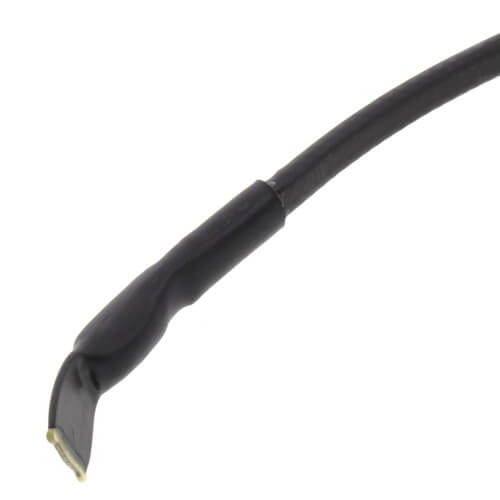
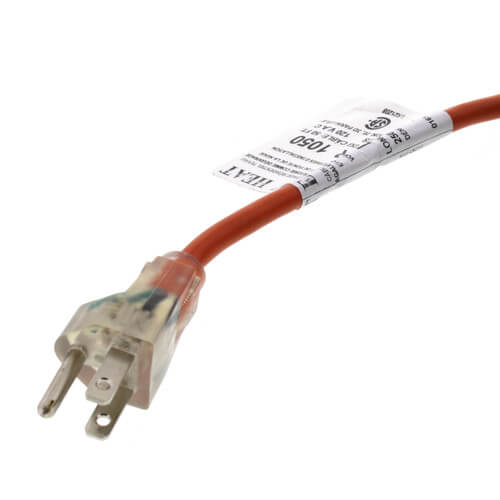
PSR is a parallel resistance cable with factory sealed connections. It is manufactured with water-resistant TPE outer jacket, UL Listed to Canadian safety standards and CSA Certified for ordinary locations. Rated at 5 watts per foot at 50ºF. 120 VAC models have integral three-wire plug with pilot light; 240 VAC models have three-wire pigtail.
Features:
- Prevent water pipes from freezing
- Prevent the formation of ice dams on roof tops
- Suitable for use on metal and plastic pipes up to 2-1/2" in diameter
- All cables have a 30" cold lead
- Pilot light in the plug on 120 VAC
- PSR 120 VAC heating cables have a power indicator light in the plug, visual assurance that the system is energized.
- Cable can be overlapped if necessary
- Self-regulating heating cable means energy efficiency. The heat output is varied in relation to the ambient temperature. As the surrounding temperature increases, the heat output of the PSR cable decreases. But when the temperature decreases, the cable heat output increases and provides the heat needed along the length of the cable.
The PSR system can be installed with the confidence that it will operate satisfactorily for years. When it comes to freeze protection, stay with the leader - Easy Heat.
Specs
| Length (Feet): | 50' |
|---|---|
| Application: | Freeze Prevention |
| Voltage: | 120v |
| Wattage: | 250 |
| Type: | PSR Heat Cable |


Questions?
You May Also Need
Product Reviews
Most Liked Positive Review
 --%3E %3Csvg version='1.1' id='With-RB' xmlns='http://www.w3.org/2000/svg' xmlns:xlink='http://www.w3.org/1999/xlink' x='0px' y='0px' viewBox='0 0 100 100' enable-background='new 0 0 100 100' xml:space='preserve'%3E %3Cpath fill='%23FBC8B4' d='M79.44,0.95H20.56C9.78,0.95,0.95,9.78,0.95,20.56v58.87c0,10.79,8.82,19.61,19.61,19.61h58.87 c10.79,0,19.61-8.83,19.61-19.61V20.56C99.05,9.78,90.22,0.95,79.44,0.95z M65.38,58.24l9.38,29.58L49.69,69.78L24.5,87.82 l9.34-29.6L8.8,39.6l30.73-0.17c0,0,6.98-19.61,10-28.93c0.54,1.36,9.88,29.1,9.88,29.1H91.2L65.38,58.24z'/%3E %3C/svg%3E)
Installation of PSR Heat Cable in copper gutter & downspout
Most Liked Negative Review
It seems to work
Would buy again
Would buy again
Good product
Easy to install
Heating Tape ... excellent solution!
Great product to prevent pipes from freezing.
Yes
Yes this heat trace has passed the test,
Good product
Works
Product Q&A
21 QuestionsQ: can you use under ground?
Asked by edward 4 years ago
Add your answer
Verified Reply- SupplyHouseHello Edward! Unfortunately, no PSR can't be used underground.
Q: can it be used on pex plumbing supply lines in crawl space.
Asked by don 8 years ago
Add your answer
Verified Reply- Supplyhouse.com TeamYes you should be able to use that. Safe for polybutylene and PVC type pipes which PEX is a type of cross-linked polyethylene. Also says PSR cable is suitable for shingle, slate, metal, wood, and flat roofs with either plastic or metal gutters/downspouts, so material/space it would be going in within a crawl space should be okay. Link to instructions: https://s3.amazonaws.com/s3.supplyhouse.com/manuals/1255718308643/18216_PROD_FILE.pdf
Q: My water lines run along the attic of my ranch home on the shores of lake Erie. The hot water and cold water lines run along the wood attic ceiling joists. The lines are a combinatinon of plastic and cooper pipes. About 80 feet of water line for each one. Is this procuct safe on plastic pipe and okay to be close or touching wood joists.
Asked by do it yourself 10 years ago
Add your answer
Verified Reply- Supplyhouse StaffThis unit is suitable for use on metal and plastic pipes up to 2-1/2" in diameter and suitable for shingle, slate, metal, wood and flat roofs with either plastic or metal gutters/downspouts according to the manufacturer.
Q: Does this heat tape have some type of thermometer or switching device that is located on a particular end. Where I want to install this heat tape has the plug end in the heated area and the rest of the tape will be in the cold area. Is that sufficient or is the thermometer on the plug end, or does the heat tape itself sense the cold.
Asked by Ed 11 years ago
Add your answer
Verified Reply- SupplyHouse StaffUsing self-regulating technology, a thermostat is not usually required with this heat cable; the cable can be overlapped if necessary. Self regulating heating cable varies its heat output in relation to the ambient temperature. As the surrounding temperature increases, the heat output of the PSR cable decreases. But when the temperature decreases, the cable heat output increases and provides the heat needed along the length of the cable.
Q: Can this product be used in a "French Drain" (4" Perforated Drain Pipe) to prevent the drain from freezing at the discharge/exit point?
Asked by Philibert 11 years ago
Add your answer
Verified Reply- SupplyHouse StaffThe PSR1050 is NOT approved for installation inside French Drains or drain lines (same goes for any of the Easy Heat cables). The PSR can be installed on a drain pipe above ground.
Q: Have water softener drain pipe, can I run this inside the drain pipe to prevent the outlet pipe freezing. (Set up is 3/4" copper pipe entering 2" PVC pipe to drain outside, copper pipe stops about 4 inches inside the PVC)
Asked by Ed 11 years ago
Add your answer
Verified Reply- SupplyHouse StaffThe PSR for pipe freeze protection is applied on the drain line and not inside. Although, it is used inside a downspout. In a downspout, it provides sufficient heat inside the downspout enough to keep water flowing downward. To protect both outside pipes and pipes inside, the right amount of heat needs to be applied by the PSR on the 2" drain line. The pipe must be exposed above ground.
Q: Can this be used in a 3" PVC garage drain?
Asked by Duva 11 years ago
Add your answer
Verified Reply- SupplyHouse StaffYes, the PSR heating cable is suitable for use on metal and plastic pipes (such as PVC or polybutylene) but not on flexible vinyl tubing (such as garden hose).
Q: Can this heater tape be used in the storage area under myy kitchen sink? I have been told it is only for outdoor or external use. My sink is on an outside wall and even though they are well insulated, when very cold and or windy, the pipes will freeze. Also, is the 30 inch lead pretty standard or are longer leads available? Thank you!
Asked by Lt. 11 years ago
Add your answer
Verified Reply- SupplyHouse StaffThe PSR is used to prevent water pipes or drain pipes from freezing, but is for outdoor use as noted. The Freeze Free product line can be placed on pipes inside walls provided the following conditions are observed: 1. Cable is accessible at any time for inspection 2. Clear from any combustible material 3. Must check with local electrical inspector for guidance and approvals
I like the pipe tracing cables but this isn't the right application. This cable would be right if you were concerned about an external pipe because it uses the ambient temperature as a kind of switch. Heat tape comes on when the air around the pipe is around or below freezing.If you have below freezing ambient air in your under sink cabinet you have a much bigger problem. Chances are that you don't and using this would just be a waste of money.If you are really concerned about freezing these pipes then I would invest in some pipe insulation instead and then look for the source of outdoor air infiltration. Look for a source of light under the sink that comes from outside. If you find that you should be able to seal off that area and be fine shape.
Q: Can this be installed in a gutter that is rubber? Its for a flat roof application.
Asked by AT 11 years ago
Add your answer
Verified Reply- SupplyHouse StaffThe PSR is designed to be use on a rubber flat roof and downspouts, so that seems fine.
Q: Can this product be used on a rubber flat roof, then dropping it down the down spouts to prevent ice build-up? Also, if I use two of these, will it run my electric bill up a lot?
Asked by Randy 11 years ago
Add your answer
Verified Reply- SupplyHouse StaffYes, the PSR is designed to be use on a rubber flat roof and downspouts. The specific details on how to install is covered in the PSR Installation Instructions. The electric bill is subjective depending on use and location, so the added cost could not be confirmed.
Randy,The product you selected is meant to be wrapped around or run the length of a pipe. Other products are designed for roofs and are used differently.The 24ft 120 watt cable uses the same power as 2 60 watt light bulbs. So it would raise your bill about the same as turning on 2 lamps and leaving them on for the time that the outside temperature is between approximately 15 degrees and 40 degrees. Don't know about using either product on a rubber roof but it should work if the cable contacts the surface well. You might have to drill into the rubber to attach the cable well enough. Good luck!Ric